What to Expect Before, During, and After a Move
Learn what to expect before, during, and after a move, from planning and packing to moving day and settling in, with practical tips for a smoother relocation.
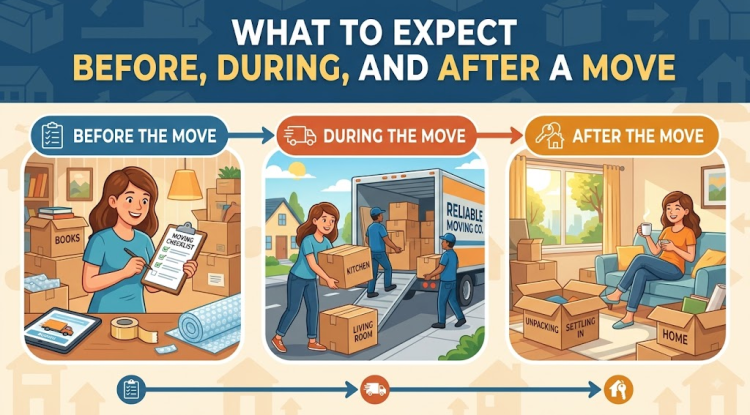
What to Expect Before, During, and After a Move
Moving to a new home can be exciting, but it also involves dozens of decisions, deadlines, and practical tasks. Knowing what to expect before, during, and after a move makes the process easier to manage and helps you avoid common last-minute problems. A successful relocation is usually less about rushing through packing and more about planning each stage in the right order.


Whether you are moving across town or to another state, understanding the process can help you prepare your household, budget realistically, and keep important tasks from falling through the cracks. If you are comparing professional Moving Services Boston options, for example, it is helpful to understand what happens at every stage so you know what to prepare before the movers arrive and what to check once everything is delivered.
What to Expect Before a Move
The period before moving day is when most of the important preparation happens. Starting early gives you time to make decisions carefully instead of dealing with everything under pressure.
Create a Moving Timeline
Begin by establishing a realistic moving timeline. Ideally, start planning several weeks before your moving date, especially if you have a large household, are moving long-distance, or need to coordinate work and school schedules.
Break the process into manageable stages. Early tasks may include choosing a moving date, creating a budget, researching moving companies, and deciding what you will take with you. As the move gets closer, your focus can shift toward packing, confirming arrangements, preparing essential items, and handling final administrative details.
A written timeline can be particularly useful because moving involves many small tasks that are easy to overlook.
Set a Realistic Moving Budget
Moving costs can include more than the basic transportation or labor charge. Depending on your circumstances, you may need to account for packing materials, specialty-item handling, storage, travel expenses, cleaning, utility connections, deposits, and other unexpected costs.
Ask for a clear estimate and understand what services are included. If you are hiring professional movers, confirm whether the estimate is based on an hourly rate, the weight of your shipment, the distance traveled, or another pricing method.
It is also wise to keep a small financial buffer for unexpected expenses. A realistic budget gives you greater control and reduces unpleasant surprises.
Declutter Before Packing
One of the most effective ways to make a move easier is to avoid moving items you no longer need. Go room by room and decide what should be kept, donated, sold, recycled, or discarded.
Decluttering can reduce the number of boxes you need, make packing more efficient, and simplify unpacking at your new home. It is particularly helpful to deal with rarely used belongings, duplicate household items, outdated paperwork, and clothing that no longer fits before packing begins.
Organize and Label Your Belongings
Once you know what you are taking, create a basic packing system. Pack similar items together and label each box with its destination room and a brief description of its contents.
For example, a box labeled “Kitchen – Everyday Plates and Bowls” is much more useful than one simply marked “Kitchen.” Consider adding a note indicating whether the contents are fragile or whether the box should be opened immediately.
Keep important documents, medications, valuables, keys, chargers, and other essential items separate from regular household boxes.
What to Expect During a Move
Moving day is usually the most physically active and time-sensitive stage of the relocation. Good preparation can make the day considerably more organized.
Prepare Before the Movers Arrive
Before loading begins, make sure pathways are clear and boxes are properly sealed. If possible, keep children and pets away from active loading areas to reduce distractions and safety risks.
Have your phone charged and keep important contact information readily available. If you are working with professional movers, review the agreed services and confirm any special instructions before work begins.
You should also identify items that should not go on the moving truck. Personal documents, cash, jewelry, certain medications, and irreplaceable valuables are generally better transported separately according to the circumstances and applicable rules.
Expect the Loading Process to Take Time
Loading a home is not simply a matter of carrying boxes to a truck. Movers need to handle furniture safely, protect certain surfaces, arrange items efficiently, and secure the load for transportation.
Large or awkward furniture may require additional care, while fragile belongings can take longer to handle properly. Weather, stairs, narrow hallways, parking conditions, and building access can also affect the pace of the move.
Instead of focusing solely on how quickly everything is loaded, pay attention to whether belongings are being handled carefully and according to the agreed plan.
Keep an Essentials Bag With You
One of the most practical moving tips is to prepare an essentials bag that stays with you rather than going into the moving truck.
Include basic toiletries, a change of clothes, important documents, medications, chargers, snacks, water, basic cleaning supplies, and anything you may need during the first night. If you have children or pets, include their immediate necessities as well.
Think of this bag as if you were staying away from home overnight. Having essential items accessible can make the first day much less stressful.
What to Expect During Transportation
Once everything is loaded, the next stage is transportation. The length of this stage depends on the distance, route, weather, traffic, and type of move.
For a local move, your belongings may arrive on the same day. A longer relocation may involve more travel time or additional scheduling considerations. Make sure you understand the expected delivery window and how you will be contacted if plans change.
Keep your important personal items with you whenever practical. If your belongings are traveling separately, maintain access to the items you need immediately after arrival.
What to Expect After a Move
Arriving at your new home does not mean the moving process is completely finished. The first few days are usually focused on receiving your belongings, checking the property, and establishing basic functionality.
Inspect Your Home Before Unpacking
Before opening dozens of boxes, take a quick look around the new property. Check for obvious issues such as damage, leaks, electrical concerns, or problems that should be documented.
If you are renting, compare the property's condition with any required move-in documentation. Taking photographs can provide a useful record of the property's condition at the beginning of your tenancy.
Check Your Belongings
As boxes and furniture arrive, inspect them for visible damage. If you notice a problem, document it promptly with photographs and follow the mover's process for reporting issues.
Avoid throwing away relevant paperwork until you are certain the move is complete. Keep estimates, agreements, receipts, inventory information, and other important documents organized.
Unpack Strategically
You do not need to unpack the entire house in one day. Start with the areas that support your immediate needs.
The bedroom, bathroom, and kitchen are often good starting points because they allow you to sleep comfortably, maintain personal hygiene, and prepare basic meals. Once those areas are functional, move on to less urgent rooms.
Unpack one room at a time rather than opening every box simultaneously. This approach reduces clutter and makes it easier to decide where belongings should go.
Complete the Post-Move Tasks
After the initial unpacking, take care of practical administrative tasks. Update your address where necessary, confirm that utilities and internet services are working, and make sure important accounts have the correct information.
Depending on your circumstances, you may also need to update insurance records, government documents, financial accounts, subscriptions, schools, employers, or healthcare-related records.
Give yourself time to learn the new home's systems as well. Locate the main water shutoff, electrical panel, heating and cooling controls, smoke alarms, and other important features.
How to Make the Entire Moving Process Easier
The most effective moving strategy is to treat the relocation as a series of smaller projects rather than one enormous task. Planning, decluttering, organized packing, clear communication, and careful unpacking all contribute to a smoother experience.
Do not wait until moving week to make every decision. Confirm important arrangements early, label belongings clearly, and maintain a written record of essential details. If you are hiring professional movers, ask questions before moving day rather than making assumptions about what is included.
It is also important to leave some flexibility in your schedule. Delays can happen because of traffic, weather, building access, or other circumstances outside your control. A little extra time can prevent one delay from disrupting the entire day.
Frequently Asked Questions About Moving
How far in advance should I start preparing for a move?
For most households, starting several weeks in advance provides enough time to organize belongings, compare moving options, declutter, and pack without unnecessary pressure. Larger or more complicated moves may require additional preparation.
What should I pack first when moving?
Start with items you rarely use, such as seasonal clothing, decorative items, books, and infrequently used kitchen equipment. Save everyday essentials for closer to moving day.
What should I keep with me during a move?
Keep important documents, medications, valuables, chargers, basic toiletries, a change of clothing, and other immediate necessities accessible rather than packed deep inside the moving truck.
What should I do immediately after moving?
First, inspect the property and document any concerns. Then confirm that essential utilities are working, check delivered belongings for visible damage, and unpack the rooms you need most.
Conclusion
Knowing what to expect before, during, and after a move can turn a complicated relocation into a series of manageable steps. Before moving day, focus on planning, budgeting, decluttering, and organized packing. During the move, prioritize communication, safe handling, and access to essential belongings. After arrival, inspect your home, check your items, and unpack gradually instead of trying to finish everything at once.
A well-organized move does not require everything to go perfectly. It requires preparation, realistic expectations, and a clear plan for handling each stage. Whether you are coordinating the move independently or working with East Coast Boston Movers, approaching the process step by step can help you settle into your new home with less stress and greater confidence.
What's Your Reaction?