Plastic Injection Molding Technologies Shaping the Future of Manufacturing
Discover how plastic injection molding delivers precision, consistent quality, cost efficiency, and scalable production for diverse manufacturing needs.
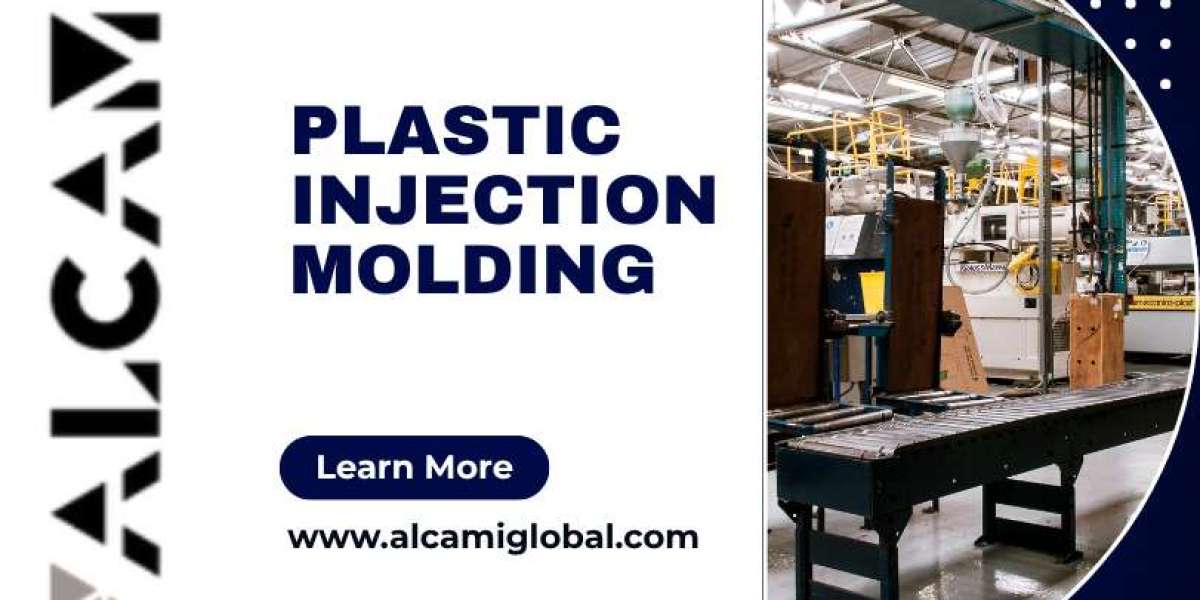
Plastic products are part of almost every industry today, from automotive and electronics to medical equipment, consumer goods, and industrial machinery. As product requirements become more demanding, manufacturers need production methods that can deliver consistent quality while keeping costs and lead times under control. This is where plastic injection molding continues to play an important role.


Plastic injection molding allows manufacturers to produce detailed components in large quantities with a high level of repeatability. Once the mold and production process are properly developed, the same design can be reproduced thousands or even millions of times with consistent dimensions and appearance.
For companies looking for reliable production, working with an experienced plastic injection molding factory can provide access to advanced equipment, skilled engineering teams, quality inspection, mold development, and production support under one roof.
What Is Plastic Injection Molding?
Plastic injection molding is a manufacturing process in which plastic material is heated until it becomes molten and then injected into a specially designed mold under pressure. Inside the mold, the material takes the required shape and is allowed to cool before the finished component is removed.
The process may appear straightforward, but achieving reliable results requires careful attention to many factors. Mold design, material selection, injection pressure, temperature, cooling time, and machine settings can all influence the final product.
A well-developed injection molding process can produce components with precise dimensions, smooth surfaces, complex geometries, and consistent performance. This makes the technology suitable for both relatively simple parts and highly detailed components with tight tolerances.
Why Precision Matters in Plastic Manufacturing
Precision is more than simply making a product look good. In many applications, even a small dimensional variation can affect how a component fits, functions, or interacts with another part.
For example, an automotive component may need to fit precisely into a larger assembly. An electronic housing may need accurate mounting points for internal components. Medical and industrial products can also require consistent dimensions to meet demanding performance and quality requirements.
Modern injection molding machines and advanced molds help manufacturers maintain tight control over production. Automated systems can also monitor important production parameters, helping reduce variation between individual parts.
For plastic manufacturers, maintaining this level of consistency is particularly important when producing large volumes. A small defect rate may become a significant issue when thousands of parts are manufactured every day.
The Role of Mold Design
The mold is one of the most important elements of the injection molding process. Its design directly influences production efficiency, product appearance, dimensional accuracy, and overall manufacturing cost.
A properly designed mold considers factors such as wall thickness, draft angles, gate locations, cooling channels, material flow, and part ejection. Engineers must understand how molten plastic will move through the cavity and how the material will behave as it cools.
Poor mold design can result in problems such as warping, sink marks, short shots, weld lines, flashing, or uneven shrinkage. These issues can lead to additional production costs and delays.
For this reason, experienced manufacturers typically evaluate the product design before production begins. Design-for-manufacturing considerations at an early stage can make the final production process much smoother.
Choosing the Right Plastic Material
Not every plastic material behaves in the same way. The right material depends on the product's intended application and performance requirements.
Manufacturers may select materials based on strength, flexibility, chemical resistance, temperature resistance, impact performance, appearance, weight, or cost. Common materials used in injection molding include ABS, polypropylene, polyethylene, polycarbonate, nylon, and various engineering plastics.
Material selection should also take the manufacturing process into account. Some materials require specific temperature ranges or drying conditions before processing. Using an unsuitable material can create production problems and affect the long-term performance of the finished product.
An experienced plastic injection molding factory can help customers evaluate material options based on both product requirements and manufacturing considerations.
Quality Control Throughout Production
Quality should not be treated as a final inspection step. It needs to be considered throughout the entire manufacturing process.
Before production begins, manufacturers can inspect the mold, verify material specifications, and review initial samples. During production, important dimensions and visual characteristics can be monitored to identify problems early.
Depending on the application, quality checks may include dimensional inspection, visual inspection, functional testing, weight measurement, and material verification.
Consistent quality control is especially valuable for businesses producing components for demanding industries. When every batch needs to meet the same specifications, having a documented and controlled manufacturing process helps reduce unexpected variation.
Plastic Injection Molding and Large-Scale Production
One of the biggest advantages of injection molding is its suitability for high-volume production.
The initial investment in tooling can be significant, particularly for complex molds. However, once the mold is ready and the process is optimized, each individual part can become relatively economical to produce.
This makes injection molding attractive for products that require large quantities. Short cycle times, automated material handling, robotic part removal, and other production technologies can further improve manufacturing efficiency.
For businesses planning to scale a product, selecting a manufacturing partner with sufficient production capacity is important. A factory should be able to support current requirements while also having the resources to accommodate future increases in demand.
Automation and Modern Manufacturing
Automation is changing the way plastic components are manufactured. Modern production facilities can integrate robotics, automated inspection systems, machine monitoring, and process controls into the injection molding workflow.
Automation can improve repeatability and reduce the risk of human error during repetitive operations. It can also help manufacturers maintain production schedules when demand increases.
However, technology alone does not guarantee good results. Skilled engineers and production teams are still essential for mold development, process optimization, troubleshooting, and quality management.
The strongest manufacturing environments combine modern equipment with practical experience.
Plastic Injection Molding vs. Plastic Thermoforming
Injection molding is not the only option for producing plastic products. Plastic thermoforming is another widely used manufacturing process, particularly for larger, lightweight parts and products made from plastic sheets.
In thermoforming, a plastic sheet is heated and formed over or into a mold. It can be useful for applications such as trays, covers, packaging components, equipment housings, and other products where the design is well suited to sheet forming.
Injection molding, on the other hand, is often preferred when manufacturers require complex three-dimensional shapes, detailed features, repeatable dimensions, or high-volume production.
The right process depends on the product design, material, required quantity, tooling budget, performance requirements, and desired finish. In some cases, manufacturers may offer both processes to provide customers with greater flexibility.
Sustainability in Plastic Manufacturing
Sustainability has become an increasingly important consideration for manufacturers and product developers.
Injection molding can support material efficiency because the process is designed to deliver a controlled amount of material into the mold. Depending on the product and manufacturing setup, production scrap may also be reduced or recycled where appropriate.
Lightweight plastic components can provide additional benefits in applications such as transportation, where reducing component weight may contribute to lower energy consumption.
Manufacturers are also exploring recycled and bio-based materials, although material selection must always consider product performance and application requirements.
Sustainable manufacturing is not simply about choosing a different material. It involves looking at the complete production process, including material usage, energy consumption, waste management, product lifespan, and recyclability.
Selecting the Right Manufacturing Partner
Choosing the right supplier can have a major impact on the success of a plastic product.
Businesses should look beyond the basic question of whether a supplier owns injection molding machines. A capable manufacturing partner should understand product development, mold design, material selection, process optimization, quality control, and production planning.
It is also useful to consider production capacity, communication, quality systems, lead times, and experience with similar products.
Working with an established plastic manufacturer can simplify communication and reduce the need to coordinate multiple suppliers. When engineering, tooling, production, and quality activities are connected, potential problems can often be identified earlier.
Supporting Product Development From Concept to Production
A strong injection molding partner can become involved long before the first production run.
During product development, engineers can review the design and identify features that may create manufacturing difficulties. Changes made at this stage are usually easier and less expensive than modifications made after the mold has been completed.
Prototype testing can then help confirm the design before full-scale production. Once the product is approved, the manufacturing process can be optimized for repeatability and efficiency.
This approach creates a smoother transition from concept to commercial production and can help businesses bring products to market with greater confidence.
Conclusion
Plastic injection molding remains one of the most practical manufacturing technologies for producing precise, consistent, and scalable plastic components. Its combination of repeatability, design flexibility, production speed, and cost efficiency makes it suitable for a wide range of industries.
However, successful injection molding depends on much more than the molding machine itself. Mold design, material selection, process control, automation, inspection, and engineering expertise all contribute to the final result.
For businesses developing new plastic products or expanding existing production, partnering with an experienced plastic injection molding factory can provide valuable support throughout the manufacturing process. Whether the requirement involves injection molding, plastic thermoforming, or other plastic production methods, the right manufacturing approach can help deliver reliable products while supporting long-term production goals.
As technology continues to advance, plastic manufacturers are finding new ways to improve precision, reduce waste, automate production, and respond to increasingly demanding customer requirements. With the right combination of technology and manufacturing expertise, plastic injection molding will remain an important part of modern production for years to come.
What's Your Reaction?