How Pipeline Construction Companies in the UAE Are Powering the Region's Energy Future
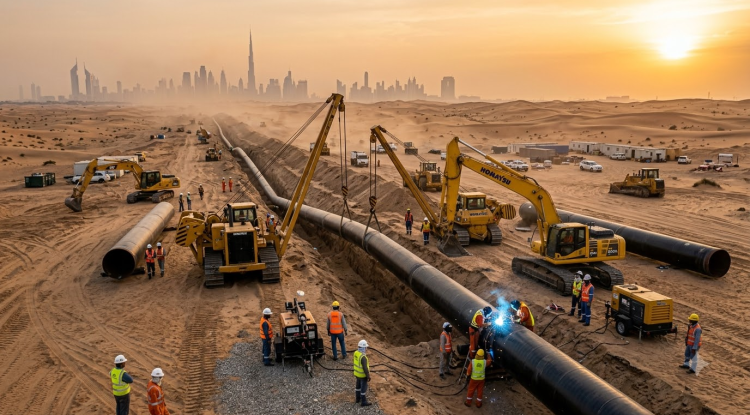
The United Arab Emirates has built its modern identity on energy — first through oil discovery in the mid-20th century, and now through an ambitious push to diversify into gas, water infrastructure, and even green hydrogen. None of that transformation would be possible without the extensive networks of pipelines that crisscross the country, connecting offshore fields, desalination plants, and industrial zones to cities and export terminals. Behind this infrastructure are the pipeline construction companies in the UAE that design, build, and maintain some of the most demanding projects in the world.


This post takes a closer look at what makes the UAE's pipeline construction sector distinctive, the challenges local contractors navigate, and where the industry is headed next.
Why the UAE Is a Global Hub for Pipeline Construction
The UAE's position as a leading oil and gas producer, combined with its role as a logistics and trade hub, has made it one of the most active pipeline construction markets in the Middle East. Abu Dhabi alone holds the majority of the country's proven oil reserves, and state-owned ADNOC operates an extensive network of onshore and offshore pipelines transporting crude, gas, and refined products across the emirate and beyond.
Beyond oil and gas, the UAE has invested heavily in water pipeline infrastructure to support desalination-dependent cities, along with district cooling networks that reduce electricity demand in a country where air conditioning accounts for a significant share of power consumption. More recently, the UAE has begun exploring hydrogen and carbon capture pipelines as part of its broader net-zero ambitions, opening a new frontier for contractors already skilled in high-pressure pipeline systems.
This diversity of pipeline types — oil, gas, water, district cooling, and emerging low-carbon fuels — means pipeline construction companies in the UAE need broad technical capability, not just experience in a single commodity.
What Sets UAE Pipeline Projects Apart
Extreme Environmental Conditions
Few regions test pipeline construction equipment and materials the way the UAE does. Summer temperatures regularly exceed 45°C, and construction crews must contend with shifting desert sands, high humidity in coastal areas, and corrosive saline conditions near the Gulf. Materials and coatings used for pipelines in the UAE are often specified to withstand thermal expansion, sand abrasion, and saltwater exposure far beyond what would be required in temperate climates.
Offshore and Subsea Complexity
A significant share of the UAE's oil and gas production comes from offshore fields in the Arabian Gulf, requiring subsea pipeline construction and tie-backs to onshore processing facilities. This work demands specialized vessels, remotely operated vehicles (ROVs) for underwater welding and inspection, and rigorous corrosion protection systems designed for prolonged submersion in seawater.
Urban and Industrial Density
Unlike pipeline projects that run through open countryside, many UAE pipelines must be routed through or near densely developed urban and industrial areas — including free zones, ports, and rapidly expanding cities like Dubai and Abu Dhabi. This raises the stakes for precise route planning, utility clash detection, and coordination with multiple stakeholders, since even a short pipeline segment may cross roads, other utility corridors, and active construction sites.
Strict Regulatory and Safety Standards
The UAE has developed a robust regulatory framework for pipeline construction, drawing on international codes such as ASME B31 series standards alongside local requirements set by entities like ADNOC, the Abu Dhabi Department of Energy, and various municipal authorities. Companies operating in the sector must also comply with rigorous HSE (Health, Safety, and Environment) protocols, reflecting the scale and hazard profile of oil and gas infrastructure work in the region.
The Pipeline Construction Process in a UAE Context
While the fundamental stages of pipeline construction — surveying, trenching, welding, coating, testing, and commissioning — remain consistent worldwide, the sequence takes on distinct characteristics in the UAE:
Route Surveying and Land Coordination: Given the mix of government-owned desert land, free zones, and private industrial plots, early-stage surveying often involves close coordination with multiple regulatory bodies and landowners before route approval is finalized.
Trenching in Desert Terrain: Loose sand and variable ground conditions require careful trench stabilization techniques to prevent collapse, along with dust control measures to protect both workers and nearby facilities.
High-Specification Welding: Given the pressure ratings involved in oil and gas transmission lines, welding crews typically operate under stringent quality control programs, with radiographic testing applied to a high percentage of welds before pipe is lowered into the trench.
Corrosion Protection: Because of the corrosive coastal environment, cathodic protection systems and specialized coatings are considered essential rather than optional on most UAE pipeline projects, particularly for buried and subsea sections.
Hydrostatic Testing and Commissioning: Before any pipeline enters service, it undergoes hydrostatic testing to confirm it can safely handle operating pressures — a step subject to strict oversight given the high-value product typically carried through UAE pipelines.
Challenges Facing Pipeline Construction Companies in the UAE
Skilled Labor and Certification
Large-scale pipeline projects require certified welders, engineers, and inspectors, and demand for this skilled workforce can outpace local supply during peak construction periods. Many contractors invest in training academies and international certification programs to build a reliable talent pipeline (no pun intended) for future projects.
Supply Chain and Material Logistics
Sourcing large-diameter pipe, specialized coatings, and valves often involves complex international supply chains, and delays at ports or customs can ripple through tightly scheduled projects. Leading contractors mitigate this risk through early procurement planning and strong relationships with regional steel and materials suppliers.
Balancing Speed with Safety
The UAE's fast-paced development culture creates pressure to complete infrastructure projects quickly, but pipeline construction — particularly for high-pressure hydrocarbon systems — cannot safely be rushed. Reputable companies build realistic schedules around testing, inspection, and quality assurance rather than compressing these critical steps.
Sustainability Expectations
As the UAE pursues its Net Zero by 2050 strategy, pipeline construction companies face growing expectations to reduce the environmental footprint of their operations — from methane leak detection on gas pipelines to lower-carbon construction equipment and materials.
Innovation and the Road Ahead
Pipeline construction companies operating in the UAE are increasingly adopting digital tools to manage this complexity. Geographic information systems (GIS) and digital twin modeling help teams anticipate utility clashes before excavation begins, while drone-based surveying speeds up progress monitoring across large desert sites. Automated and orbital welding systems are also gaining traction on major transmission projects, improving weld consistency while easing pressure on the skilled labor market.
Looking ahead, the sector's growth will likely be shaped by the UAE's broader energy transition. Hydrogen pipeline pilot projects, carbon capture and storage infrastructure, and continued expansion of water and district cooling networks are all expected to create new opportunities — and new technical demands — for contractors in this space. Companies that combine deep regional experience with the ability to adapt to these emerging pipeline types will be best positioned to lead the next phase of the UAE's infrastructure development.
For a country whose economic story has always been closely tied to what flows beneath its surface — whether crude oil, natural gas, or desalinated water — the pipeline construction companies in the UAE will remain central to its continued growth, diversification, and long-term energy security.
What's Your Reaction?