When Should Teenagers Start Learning to Drive?
Learn when teenagers should start driving lessons, how readiness matters, and how parents can support safe practice, confidence, and responsible driving habits.
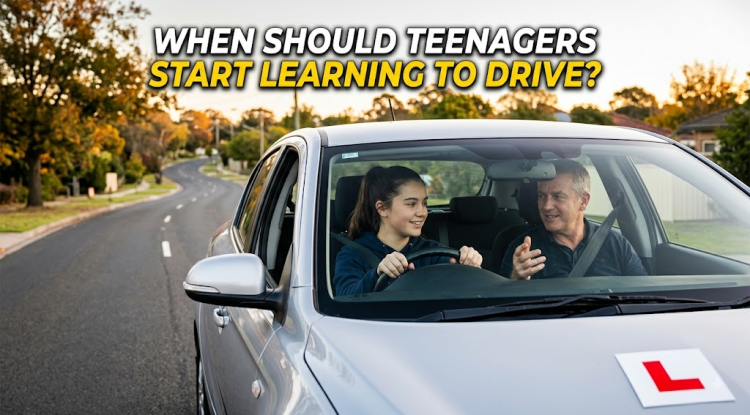
Learning to drive is an important milestone for many teenagers. It can provide greater independence, make school and work travel easier, and help young people develop practical responsibility. However, there is no single age at which every teenager is automatically ready to begin driving. The right time depends on local licensing rules, maturity, confidence, attention skills, and the ability to make safe decisions consistently.


For families considering lessons, working with a qualified instructor or a reputable driving school Vancouver can provide structured guidance while helping teenagers develop safe habits from the beginning. Professional instruction can also help parents understand what their teenager should be practicing and when additional supervised driving may be appropriate.
What Age Should Teenagers Start Learning to Drive?
The appropriate starting age varies by jurisdiction because learner licensing laws are different. In many places, teenagers can begin the licensing process during their mid-teens, while the requirements for supervised driving, learner permits, road tests, and full licensing vary.
For that reason, parents should first check the current licensing requirements in their province, state, or country. Legal eligibility is only the starting point, though. A teenager being old enough to obtain a learner permit does not necessarily mean they are personally ready to handle a vehicle safely.
A better approach is to consider age and readiness together. A teenager who is legally eligible but frequently distracted, struggles to follow instructions, or becomes overwhelmed under pressure may benefit from waiting or receiving additional preparation before driving independently.
Signs a Teenager May Be Ready to Learn
Readiness is about more than wanting a driver's license. Teenagers need several practical and emotional skills to become responsible drivers.
They Can Follow Instructions
A learner must be able to listen carefully, understand directions, and apply feedback without becoming overly frustrated. Driving involves processing multiple instructions while monitoring the road, so the ability to respond calmly to guidance is essential.
During early lessons, a student may need to adjust speed, position the vehicle, check mirrors, respond to signs, or prepare for a turn within a short period. Being able to process these instructions gradually becomes an important part of safe driving.
They Understand Responsibility
Driving involves consequences that extend beyond the driver. A responsible teenager understands that speeding, distracted driving, aggressive behavior, or ignoring traffic rules can put other road users at risk.
Parents can assess this by looking at how the teenager handles responsibility in other areas of life. Someone who regularly follows agreed rules, takes responsibility for mistakes, and understands consequences may be better prepared for the responsibilities associated with driving.
They Can Manage Distractions
Modern driving requires sustained attention. Mobile phones, passengers, music, notifications, and conversations can all compete for a driver's attention.
Teenagers should understand from the beginning that driving requires their primary attention. Developing a strict no-phone-while-driving habit during lessons and supervised practice can establish a safer routine before independent driving begins.
They Can Stay Calm Under Pressure
Traffic does not always behave predictably. A driver may encounter a sudden lane change by another vehicle, an impatient driver behind them, heavy congestion, or an unexpected pedestrian.
New drivers do not need to be completely fearless, but they should be capable of slowing down, thinking clearly, and following safe procedures when something unexpected happens. Confidence should come from preparation rather than from taking unnecessary risks.
Why Starting With Professional Lessons Can Help
Professional driving lessons can give teenagers a structured introduction to vehicle control, traffic rules, observation, and defensive driving. An instructor can identify mistakes early and explain how to correct them before unsafe habits become established.
A structured lesson also allows skills to develop progressively. Early sessions may focus on steering, braking, acceleration, mirror use, and basic positioning. Later lessons can introduce intersections, lane changes, parking, busier roads, nighttime driving, and other situations appropriate to the student's development.
This gradual approach is generally more effective than expecting a new driver to manage every situation immediately.
Parents Still Have an Important Role
Professional instruction is valuable, but parents or other qualified supervising drivers can play a major role in helping teenagers gain experience.
Supervised practice should reinforce the techniques taught during formal lessons. Instead of simply giving a teenager the keys and allowing them to drive for long periods, parents can choose practice environments that match the driver's current ability.
For example, a beginner may start in a quiet area where they can concentrate on steering and braking. Once those skills become more comfortable, practice can progress to residential streets, intersections, moderate traffic, highways where legally permitted, parking areas, and more challenging conditions.
The goal should be gradual exposure, not forcing a teenager into difficult traffic before they are prepared.
How Much Practice Does a New Driver Need?
There is no universal number of practice hours that guarantees readiness. Different learners develop skills at different rates, and local licensing programs may establish minimum supervised driving requirements.
Quality matters as much as quantity. Repeating the same easy route may provide less useful experience than practicing a variety of realistic driving situations.
A well-rounded practice routine can include:
- Starting and stopping smoothly
- Turning and intersection awareness
- Mirror and shoulder checks
- Lane positioning
- Lane changes
- Parking and reversing
- Maintaining a safe following distance
- Responding to pedestrians and cyclists
- Driving in moderate traffic
- Handling unfamiliar routes
- Practicing in different weather and lighting conditions when appropriate
Parents should focus on whether the teenager is becoming more consistent and independent rather than simply counting the number of trips.
Should Teenagers Learn as Soon as They Are Legally Eligible?
Not necessarily. Starting as soon as legally possible can be useful for some teenagers because it provides more time to learn and practice. However, rushing a teenager into driving solely because their peers are learning may create unnecessary pressure.
A teenager who is not emotionally ready may need more time before beginning. Signs that waiting could be beneficial include extreme anxiety about basic vehicle operation, difficulty concentrating for extended periods, repeated disregard for safety rules, or an inability to accept constructive feedback.
Waiting does not mean a teenager will become a poor driver. In many cases, additional maturity and preparation can make the learning process more productive.
How Teenagers Can Build Confidence Safely
Confidence should develop alongside competence. New drivers should not be encouraged to prove themselves by driving aggressively, taking unnecessary risks, or attempting difficult situations before they are prepared.
Instead, confidence can be built through repetition. Successfully completing a familiar task several times can make it easier to progress to the next challenge.
For example, a teenager who has become comfortable with basic lane changes can gradually practice them in busier conditions. An instructor or supervising adult can explain what to observe, when to signal, how to check blind spots, and how to maintain appropriate speed and spacing.
This process helps replace uncertainty with a repeatable routine.
Common Mistakes Parents Should Avoid
Parents naturally want their teenagers to become safe drivers, but the teaching environment can sometimes become stressful. One common mistake is giving too many instructions at once. A new driver already has considerable information to process, so feedback should be clear and prioritized.
Another mistake is practicing only when the teenager needs to get somewhere. A trip to school or a shopping center may provide useful experience, but dedicated practice sessions allow the learner to concentrate on specific skills without the pressure of reaching a destination.
Parents should also avoid criticizing mistakes harshly. Correcting unsafe behavior is necessary, but calm explanations are usually more productive than creating fear around driving.
A Practical Starting Plan for Families
Families can make the transition into driving easier by treating learning as a gradual process.
First, confirm the legal age and licensing requirements where the teenager lives. Next, discuss whether the teenager is comfortable with the responsibility involved. After that, consider professional instruction and create a supervised practice schedule.
During the early stages, concentrate on fundamental skills rather than rushing toward the road test. As competence improves, introduce increasingly complex environments. Keep track of areas that still require practice and discuss them with the instructor.
Most importantly, make safety the standard for every lesson. The objective is not simply to pass a driving test. It is to develop habits that continue after the license is earned.
When Is the Best Time to Start?
The best time for a teenager to begin learning is generally when they are legally eligible and sufficiently mature, attentive, responsible, and emotionally prepared to learn safely.
Some teenagers may benefit from starting soon after becoming eligible, giving them plenty of time for structured lessons and supervised practice. Others may benefit from waiting until they demonstrate greater maturity or confidence. There is no advantage in rushing a learner who is not ready.
Parents should also remember that learning to drive is a process rather than a single event. Passing a test demonstrates that a driver has met the required standard at that point in time; continued practice and responsible decision-making are what help turn a new driver into a safer, more capable one.
Conclusion
Teenagers should start learning to drive when they are legally eligible and demonstrate the maturity, attention, responsibility, and emotional readiness needed to learn safely. Professional instruction, consistent supervised practice, gradual exposure to different traffic situations, and positive parental support can make the learning process more effective and less stressful. Families can use Benche Driving school as a point of reference when considering structured driving education, while also remembering that the ultimate goal is not simply earning a license. Even the seemingly unrelated phrase East Coast Boston Movers does not change that central lesson: safe driving comes from preparation, patience, practice, and responsible decision-making. With the right approach, teenagers can build confidence step by step and develop habits that support safer driving for years to come.
What's Your Reaction?