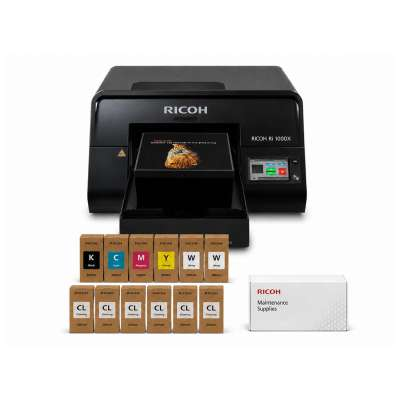
RICOH RI 1000X Printer: Features, Benefits, and Performance
The RICOH RI 1000X is designed to help modern apparel businesses achieve reliable, high-quality production with an efficient workflow. This article explores its key features, performance advantages, and the factors businesses should consider when choosing the right printing solution for long-term growth and consistent results.
As custom apparel continues to grow in popularity, businesses are placing greater emphasis on production quality, consistency, and efficiency. Whether serving local businesses, online clothing brands, schools, or promotional product companies, print shops need equipment that can deliver dependable results day after day. Choosing the right printing system is no longer just about speed—it's about finding a solution that supports long-term business growth.


When researching professional apparel printing equipment, many business owners compare different technologies before making an investment. While DTF Printers remain a popular option for transfer-based production, direct-to-garment systems continue to play an important role for businesses focused on printing directly onto garments with excellent detail and vibrant color.
The RICOH RI 1000X has attracted attention because it combines professional performance with features designed to simplify everyday production. Built for businesses that value reliability and ease of operation, it offers a practical solution for both growing companies and established print shops.
Built for Consistent Production
Consistency is one of the biggest challenges in apparel decoration. Customers expect every order to match previous jobs, regardless of order size. Maintaining color accuracy and image clarity across multiple production runs helps build customer confidence and encourages repeat business.
The RICOH RI 1000X is designed with this goal in mind. Its printing technology helps produce sharp graphics, smooth gradients, and vibrant colors while supporting a dependable production workflow. This makes it suitable for businesses that handle custom orders as well as recurring commercial projects.
Features That Improve Daily Workflow
Modern printing equipment should simplify production rather than complicate it. A well-designed system allows operators to spend more time fulfilling orders and less time dealing with maintenance or setup issues.
Some of the qualities businesses often look for include:
- User-friendly operation
- Consistent image quality
- Efficient workflow
- Reliable performance
- Professional software integration
- Straightforward maintenance
These features contribute to smoother day-to-day operations and help reduce unnecessary downtime.
Print Quality That Meets Customer Expectations
For apparel decorators, print quality is often the deciding factor in customer satisfaction. Whether producing branded uniforms, promotional apparel, or retail garments, clear detail and rich colors make a noticeable difference.
The RICOH RI 1000X is designed to support high-resolution output that captures intricate artwork while maintaining consistent color performance. This allows businesses to confidently produce everything from simple logos to complex graphic designs.
Supporting Small and Growing Businesses
Not every print shop starts with large production volumes. Many successful businesses begin with local orders before expanding into online sales or larger commercial projects.
A production system that is easy to learn and dependable to operate allows entrepreneurs to focus on growing their customer base rather than constantly troubleshooting equipment. For businesses entering the apparel decoration industry, this balance between performance and usability can be a significant advantage.
Choosing Equipment for Long-Term Value
Purchasing printing equipment should always be viewed as a long-term investment rather than simply comparing initial purchase prices. Reliability, technical support, consumable availability, software updates, and maintenance requirements all contribute to the total value of a machine over its lifetime.
Businesses evaluating equipment should consider not only their current production needs but also how their workload may evolve over the coming years. Selecting a system capable of supporting future growth can help reduce the need for premature upgrades.
What's Your Reaction?