How Professional Battery Repair Can Extend Battery Life
Learn how professional battery repair can restore performance, prevent further damage, and extend battery life while helping you avoid unnecessary replacement costs.
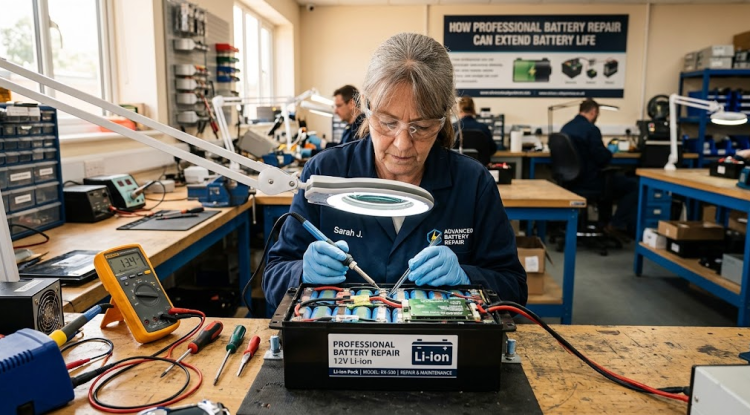
Batteries are easy to overlook until they stop working when you need them most. Whether it powers a vehicle, backup system, industrial equipment, or everyday device, a battery that loses capacity too quickly can become an unnecessary expense. While replacing a weak battery may seem like the simplest solution, professional battery repair can sometimes restore performance, address underlying problems, and help extend the useful life of a battery.


For people who depend on reliable power, choosing the right service provider can make a meaningful difference. A reputable Battery Store Plano can inspect a battery, identify signs of damage or deterioration, and determine whether repair, maintenance, or replacement makes the most sense. Professional attention is particularly valuable when the problem is caused by a correctable issue rather than permanent battery failure.
What Does Professional Battery Repair Involve?
Professional battery repair is more than simply charging a battery and hoping it works again. A qualified technician can examine the battery's condition and look for problems affecting its performance. Depending on the battery type, the inspection may involve checking voltage, charging behavior, terminals, connections, internal condition, and signs of physical damage.
The exact repair process depends on the battery. Some batteries may benefit from cleaning and connection repairs, while others may require specialized testing or component-level service. In certain cases, professional technicians can identify an imbalance or charging problem that would otherwise cause the battery to continue losing performance.
The goal is to determine why the battery is struggling rather than treating only the visible symptom.
Why Batteries Lose Their Performance
Understanding battery deterioration helps explain why professional repair can sometimes extend battery life.
Age and Normal Wear
Most rechargeable batteries gradually lose their ability to hold a charge. Chemical reactions inside a battery become less efficient over time, reducing available capacity. This is a normal part of battery aging.
However, a battery reaching the end of its expected service life is different from one that is underperforming because of poor maintenance or another correctable problem. Professional testing can help distinguish between these situations.
Corroded or Dirty Connections
Battery terminals and connections can accumulate dirt, corrosion, or oxidation. These contaminants can interfere with the flow of electricity and create resistance.
A battery may appear to be weak when the real problem is a poor connection. Cleaning and servicing the terminals can restore a more reliable electrical connection and prevent unnecessary strain on the battery and connected equipment.
Incorrect Charging
Charging habits have a major influence on battery health. Overcharging, undercharging, using an unsuitable charger, or repeatedly allowing a battery to become deeply discharged can accelerate deterioration.
Professional technicians can often identify charging-related issues and recommend a more suitable charging routine. Correct charging does not reverse all existing damage, but it can help prevent additional wear.
How Professional Repair Can Extend Battery Life
Professional repair can extend battery life in several practical ways.
1. Identifying the Real Problem
One of the biggest benefits of professional service is accurate diagnosis. A battery that does not start a vehicle or hold a charge may not necessarily be completely defective.
For example, poor connections, charging-system problems, excessive electrical drain, or other equipment issues can create symptoms that look like battery failure. Replacing the battery without identifying the cause could simply lead to the same problem again.
Professional testing helps determine whether the battery itself is responsible.
2. Restoring Electrical Connections
Connections are essential for efficient battery operation. Loose, dirty, or corroded terminals can reduce electrical flow and make a healthy battery appear unreliable.
Technicians can inspect the connection points and address problems that may interfere with performance. Maintaining clean and secure connections also reduces the risk of recurring electrical problems.
3. Correcting Charging Problems
A battery can deteriorate faster when its charging system is not functioning correctly. If the battery is consistently undercharged, it may not receive enough energy to operate effectively. Excessive charging can also create problems, depending on the battery chemistry and design.
Professional service can include checking whether the charging equipment is appropriate and functioning correctly. Fixing the underlying charging issue may protect both the battery and the equipment that depends on it.
4. Preventing Unnecessary Replacement
Replacing a battery is not always the most economical option. If a technician discovers that a battery has a serviceable issue, repairing it may provide additional useful life at a lower cost than immediate replacement.
That does not mean every battery should be repaired. Some batteries are too damaged, too old, unsafe, or severely degraded to justify further service. A professional assessment helps make that decision based on condition rather than guesswork.
Signs Your Battery May Need Professional Attention
Knowing when to seek help can prevent a small problem from becoming a complete failure. Watch for signs such as:
-
The battery repeatedly loses its charge.
-
Equipment takes longer than usual to start or operate.
-
The battery becomes unusually hot during charging.
-
Corrosion appears around terminals or connections.
-
A rechargeable battery runs for much less time than it once did.
-
Voltage readings seem inconsistent.
-
The battery requires frequent charging.
-
The battery shows signs of swelling, cracking, leaking, or other physical damage.
Physical damage deserves particular attention. A swollen, leaking, cracked, or excessively hot battery should not be handled casually. Depending on its chemistry, it may present safety risks and require professional evaluation.
Professional Repair vs. DIY Battery Maintenance
Basic battery maintenance can be useful, but there is a limit to what should be attempted at home.
Keeping accessible terminals clean, following the manufacturer's charging instructions, and avoiding extreme temperatures are sensible maintenance practices. However, opening a sealed battery, attempting internal repairs, using incompatible charging equipment, or trying to revive a visibly damaged battery can create safety hazards.
Professional technicians have the appropriate tools and experience to test battery performance more accurately. They can also determine when a battery is no longer suitable for repair.
The best approach is often a combination of routine owner maintenance and professional inspection when performance begins to change.
Battery Maintenance After Professional Repair
Repair is only part of the process. How a battery is treated afterward can have a major impact on how long it continues to perform.
Use the charger recommended for the specific battery whenever possible. Avoid leaving compatible batteries in extreme heat or cold for extended periods, as temperature can affect both performance and long-term durability.
If the battery is used in a vehicle or piece of equipment, pay attention to unusual electrical behavior. Slow starts, warning indicators, unexplained power loss, or frequent battery discharge may point to another issue that needs attention.
Regular inspections can also help catch problems before they cause significant damage. A battery does not necessarily need to be serviced every time it is used, but periodic evaluation can be worthwhile for batteries that are expensive, heavily used, or essential to daily operations.
When Battery Replacement Is the Better Choice
Professional repair is not a solution for every battery. Sometimes replacement is safer, more practical, and more cost-effective.
A battery that has suffered severe physical damage, has reached the end of its service life, or has experienced significant internal degradation may not be worth repairing. Continuing to use a compromised battery can also create reliability and safety concerns.
A trustworthy technician should be willing to recommend replacement when repair is unlikely to provide dependable results. The purpose of professional service is not simply to keep an old battery operating at any cost. It is to help you make an informed decision based on condition, safety, expected performance, and overall value.
How to Get More Life From Your Battery
You can take several simple steps to support long-term battery health:
Follow the Manufacturer's Instructions
Different battery chemistries have different charging and storage requirements. Following the manufacturer's recommendations is one of the easiest ways to avoid unnecessary stress.
Avoid Extreme Conditions
Excessive heat can accelerate chemical degradation, while very cold temperatures can temporarily reduce available performance. Whenever practical, store and operate batteries within their recommended temperature range.
Don't Ignore Warning Signs
A battery that repeatedly struggles should not simply be charged over and over without investigating the cause. Recurring problems are often a signal that testing is needed.
Maintain Connections
For batteries with accessible terminals, keeping connections clean and secure can support efficient operation and reduce electrical resistance.
Schedule Professional Testing When Needed
Professional testing is especially useful when a battery is becoming unreliable but has not completely failed. Identifying the issue early may provide more options than waiting until the battery stops working altogether.
Conclusion
Professional battery repair can be a practical way to extend battery life when the underlying problem is repairable. By identifying issues such as poor connections, charging problems, or other performance-related faults, qualified technicians can sometimes restore reliable operation and delay the need for replacement. Just as importantly, professional testing can tell you when a battery has reached the point where replacement is the safer and more sensible choice.
For dependable battery care, Battery Rescue can help you approach battery problems with a focus on proper diagnosis, maintenance, and long-term performance. Taking action when you first notice signs of weakness is often far better than waiting for a complete failure. With appropriate care, correct charging practices, timely repairs, and professional guidance when needed, you can get the most practical service life from your battery while avoiding unnecessary expenses.
What's Your Reaction?