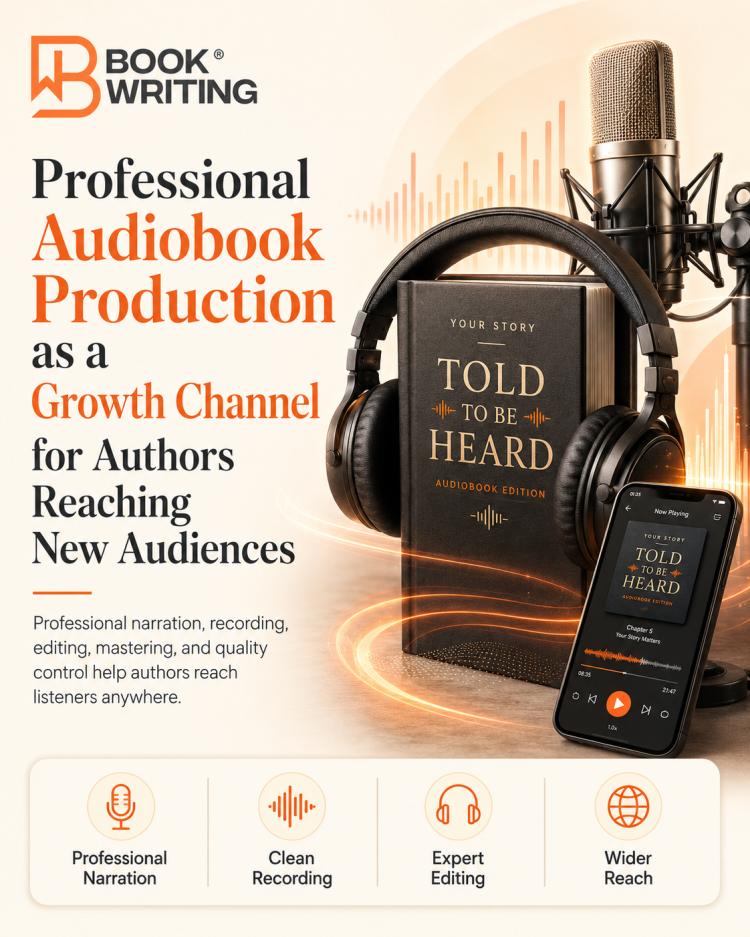
Professional Audiobook Production as a Growth Channel for Authors Reaching New Audiences
Discover how professional audiobook production services help authors reach new audiences, expand book visibility, and create engaging audio experiences.
Professional Audiobook Production as a
Growth Channel for Authors Reaching New Audiences
Audio Expands the Ways Readers Can Experience a Book
Reading no longer happens only when someone is sitting with a printed page or screen. Many people consume books while commuting, exercising, doing household tasks, traveling, or resting their eyes after a long day of screen use. Audio gives authors access to those moments. It turns time that may not be available for traditional reading into an opportunity for listening.


That shift can expand the practical audience for a title. A reader who likes the subject but struggles to find uninterrupted reading time may still complete the book in audio form. Others simply prefer listening because voice adds a different kind of emotional connection. For authors, audiobook production services can help make audio more than a secondary format and support it as an additional distribution and engagement channel.
The Listening Experience Is Its Own Product
An audiobook should not be treated as a manuscript read aloud without further thought. Spoken language has rhythm, breath, emphasis, and pacing. Sentences that work perfectly on a page may need careful interpretation to sound natural when heard. Chapter transitions, quotations, lists, dialogue, footnotes, and visual references all need decisions that support the listener.
The goal is to preserve the author’s meaning while adapting the experience to a format that unfolds in real time. Listeners cannot scan backward as easily as print readers, so clarity matters. Thoughtful narration and editing help maintain orientation, prevent fatigue, and make complex ideas easier to follow.
Narrator Selection Shapes the Identity of the Audio Edition
The voice becomes the listener’s guide through the entire book. Tone, age impression, pacing, accent, warmth, authority, and emotional range all influence how the content is received. A voice that works for a reflective memoir may not suit a fast-paced thriller, instructional title, or humorous children’s story.
Narrator selection should therefore begin with the intended audience and the emotional role of the voice. Fiction may require convincing dialogue and character differentiation. Nonfiction may need credibility, calm explanation, and consistent energy. The right narrator does not compete with the writing. The performance makes the writing easier to absorb.
Author Narration Can Work When It Serves the Book
Some authors are natural choices to narrate their own work, particularly when personal authority, lived experience, or a distinctive speaking style is central to the book. Readers may value hearing a memoir, leadership perspective, or specialized guidance in the author’s own voice. That authenticity can create a strong connection.
However, familiarity with the material does not automatically produce a professional listening experience. Microphone technique, pacing, breath control, consistency, retakes, and long-session vocal stamina all matter. Authors considering self-narration should evaluate whether their performance strengthens the material and whether they can maintain quality across many hours of recording.
Recording Quality Affects Perceived Professionalism
Listeners notice inconsistent volume, room echo, background noise, mouth sounds, harsh sibilance, and sudden changes in microphone tone. Even when they cannot name the technical issue, poor audio can make listening tiring. Clean recording creates the stable foundation needed for editing and mastering.
A controlled recording environment reduces unwanted reflections and noise before they enter the file. Proper microphone positioning and gain settings help capture a natural voice without distortion. These technical decisions are important because many problems are difficult to remove completely after recording. Prevention is usually more effective than aggressive correction.
Editing Creates a Smooth and Natural Performance
Raw narration includes retakes, pauses, breaths, mistakes, page noises, and changes in energy. Editing removes distractions while preserving enough natural rhythm that the performance does not feel artificial. The goal is not to eliminate every breath or pause. It is to create consistency so the listener can focus on the book rather than the recording process.
Dialogue timing, chapter openings, long pauses, and pronunciation corrections may all require special attention. A careful editor also monitors continuity. If a narrator records across multiple days, subtle changes in voice, microphone distance, or room sound need to be managed so the final experience feels seamless.
Mastering Prepares the Files for Consistent Listening
After editing, the finished audio needs level control and technical preparation. Mastering balances loudness, peak levels, noise floor, and overall tonal consistency. It also ensures that separate chapters do not feel dramatically different in volume. This is particularly important for listeners who move between chapters in environments where they cannot constantly adjust playback level.
Professional
typically include checks that go beyond performance alone, covering file structure, chapter separation, opening and closing credits, naming conventions, and technical specifications. These details reduce the risk of delays when the finished files move into distribution.
Audio Can Reach Audiences With Different Accessibility Needs
A listening format can make a book more practical for people who experience visual fatigue, reading difficulties, or other barriers to sustained text reading. It can also support readers who learn better through spoken information. While one format cannot meet every accessibility need, offering audio gives audiences another way to engage with the same ideas.
This broader usability can be especially meaningful for educational, motivational, professional, and narrative nonfiction. The content becomes available in contexts where visual reading may be inconvenient or difficult. For authors, expanding format options is a way to reduce friction between the audience and the material.
A New Format Can Extend the Commercial Life of a Title
Audio can create a second promotional moment for a book that has already been released in print or digital form. Instead of relying on the original launch forever, authors can use the audio edition to reopen conversations with readers, media contacts, communities, and existing supporters. A format expansion gives the campaign a legitimate new development to talk about.
It can also strengthen a backlist strategy. Books with evergreen themes may continue to find listeners long after the initial publication period. When audio is planned as part of a long-term catalog rather than a short launch tactic, it can add another layer of discoverability and revenue potential.
Promotion Should Be Designed Around Listening Behavior
Marketing an audio edition requires more than announcing that it exists. Short narration excerpts, behind-the-scenes recording moments, author commentary, thematic clips, and quote-based audio snippets can give potential listeners a sample of the experience. These assets help people understand the tone and narrator performance before making a decision.
The promotional message can also emphasize convenience and context. A book that fits commuting, professional development, bedtime listening, travel, or family listening can be positioned around those use cases. The goal is to show not only what the book is about, but also where it can fit into the listener’s life.
Planning Early Prevents Production Delays
Audio production involves more moving parts than many first-time authors expect. Narrator availability, pronunciation research, recording schedules, corrections, editing, mastering, quality review, and final file preparation all take time. Starting late can force rushed decisions or push the audio release far beyond the rest of the publishing schedule.
Early planning also allows the author to prepare pronunciation notes, character guidance, foreign-language terms, abbreviations, and special instructions before recording begins. A clear production brief reduces unnecessary retakes and gives the narrator a stronger understanding of tone, audience, and intent.
Quality Control Protects the Listener Experience
A final quality-control pass should be completed with fresh ears and in more than one listening environment. Reviewers can check pronunciation, missing lines, repeated phrases, abrupt edits, chapter order, credit wording, and changes in background noise. Listening through headphones and ordinary speakers can reveal different problems. This stage is especially important for long recordings because a small error may be difficult to notice when the same team has heard the material repeatedly during production. A documented review process makes approval more reliable and reduces the chance that avoidable mistakes reach the audience.
Final Thoughts
Audio gives authors a practical way to meet readers where they already spend time. It converts a book from something that requires dedicated visual attention into content that can travel through a much wider range of daily routines. That flexibility can increase completion, strengthen connection, and create a new reason for audiences to discover an existing title.
The opportunity is strongest when the audio edition is treated as a professional product in its own right. The right voice, clean recording, careful editing, consistent mastering, and thoughtful promotion all contribute to the experience. When those elements are planned together, audio can become a durable growth channel rather than an afterthought added at the end of publication.
BookWriting.us helps authors transform finished manuscripts into professional audio editions with narration guidance, recording support, editing, mastering, and quality control. If you want to reach listeners with a polished audio experience, work with BookWriting.us and let our team take your book from manuscript to listener-ready production.
What's Your Reaction?