How ERPNext Helps Calicut Wholesalers Manage Inventory and Orders
How ERPNext Helps Calicut Wholesalers Manage Inventory and Orders
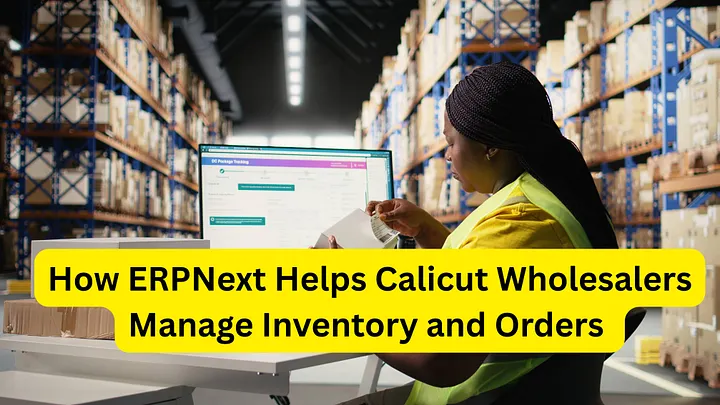
For a wholesale business, inventory is more than a list of products sitting in a warehouse. Every purchase, sale, stock transfer, delivery, and return changes the amount of stock available to the business. When these activities increase, managing everything through spreadsheets, notebooks, or disconnected software can become difficult.


A wholesaler may need to answer simple questions throughout the day:
-
How much stock is currently available?
-
Which products need to be reordered?
-
Has a customer's order been delivered?
-
Which warehouse has the required items?
-
How much stock was purchased and sold?
-
Are inventory records matching the actual warehouse quantity?
When this information is maintained manually, even small errors can affect purchasing, sales, deliveries, and customer service.
This is where an ERPNext inventory management system can help. By connecting inventory, purchasing, sales, warehouses, and orders within one business platform, ERPNext can give wholesalers better visibility into their daily operations.
For Calicut wholesalers, particularly growing businesses handling large product ranges or multiple warehouses, understanding how ERPNext works for inventory and order management can help determine whether an integrated ERP system is suitable for their operations.
Why Inventory Management Matters for Wholesalers
Wholesalers typically deal with larger quantities of products and more frequent transactions than many smaller businesses. A single day may involve receiving products from suppliers, allocating stock to warehouses, processing customer orders, preparing deliveries, and updating inventory records.
Without an organised system, several problems can develop.
For example, imagine a wholesaler receives 500 units of a product. During the following days, 150 units are sold to one customer, 100 units to another customer, and 50 units are transferred to a different warehouse.
If these transactions are recorded manually, employees may have to update several spreadsheets or systems. If one transaction is missed, the reported stock may no longer match the actual quantity.
An inventory management system can help bring these transactions together and provide a clearer picture of stock movement.
For wholesalers, better inventory management can help with:
-
Monitoring stock quantities
-
Tracking stock movement
-
Managing warehouses
-
Identifying products that need replenishment
-
Recording purchases and sales
-
Reducing manual data entry
-
Improving order visibility
The objective isn't simply to know how many products are available. It is to understand where the products are, how they are moving, and how current orders affect future stock requirements.
How ERPNext Helps Wholesalers Manage Inventory
ERPNext provides inventory-related functionality that can help businesses organise products, warehouses, stock transactions, and related processes within one system.
Instead of maintaining separate records for different inventory activities, wholesalers can connect these processes within their ERP workflow.
1. Centralised Stock Information
One of the biggest advantages of using ERPNext inventory management is having inventory information available from a central system.
A wholesaler can maintain information about products, quantities, warehouses, and stock transactions within ERPNext. This can make it easier for authorised users to understand current inventory without checking multiple spreadsheets or manually combining different records.
This becomes increasingly useful as the business grows and the number of products and transactions increases.
2. Better Stock Movement Tracking
Inventory changes whenever products are purchased, sold, transferred, returned, or otherwise moved.
ERPNext can record these stock transactions so businesses have a clearer history of how inventory has moved.
For example, if products move from a main warehouse to another location, the stock transfer can be recorded within the system. This helps businesses maintain better visibility of warehouse-level inventory.
3. Warehouse Management
Many wholesalers operate from more than one warehouse or storage location.
Managing stock across multiple locations manually can make it difficult to determine where a particular product is available.
ERPNext can help businesses organise warehouses and track inventory according to different locations. This can help employees identify available stock before processing customer orders or arranging transfers.
For a growing wholesale business in Calicut, this type of visibility can become increasingly important as the company expands its distribution network.
How ERPNext Helps Manage Wholesale Orders
Inventory is only one side of wholesale operations. The other important part is order management.
A typical wholesale order can involve several stages:
Customer requirement → Sales Order → Stock preparation → Delivery → Invoice
When these stages are handled separately, employees may need to update multiple records manually.
ERPNext can connect different stages of the sales process so that businesses can maintain a more structured workflow.
Sales Order Management
When a customer places an order, the sales order can be recorded in ERPNext along with relevant product and quantity information.
This gives the business a central record of what the customer has requested.
Employees can then use the order information when preparing the next stages of fulfilment.
Delivery Management
Once products are ready to be delivered, delivery information can be recorded as part of the business workflow.
This helps the company maintain a record of what has been dispatched and connect the delivery with the relevant customer order.
Invoicing
Orders and deliveries can also connect with the financial side of the business.
This reduces the need to repeatedly enter the same information into separate systems and can help maintain more consistent records.
Connecting Inventory, Sales and Purchasing
One of the main benefits of an ERP system is that business functions do not have to operate as isolated processes.
Consider a simple wholesale example.
A customer orders 100 units of a product, but the warehouse has only 40 units available.
With disconnected systems, the sales team may need to contact the warehouse, check another spreadsheet, or ask the purchasing team about incoming stock.
With an integrated ERP software for wholesalers, inventory information can be connected with sales and purchasing workflows.
The business can then identify:
-
Current stock availability
-
Existing customer orders
-
Purchase requirements
-
Incoming stock
-
Warehouse availability
This creates better operational visibility and can help employees make decisions using more up-to-date information.
Managing Reordering More Effectively
Running out of fast-moving products can create problems for wholesalers.
A customer may place an order, but the business may discover that the required quantity is not available. This can lead to delays, partial fulfilment, or lost sales opportunities.
On the other hand, purchasing too much stock can tie up working capital and increase storage requirements.
A structured ERPNext inventory workflow can help businesses monitor stock levels and identify products that may require replenishment.
The exact approach depends on how the business has configured its inventory processes, but the broader objective is the same: maintain sufficient stock without unnecessarily overstocking.
For wholesalers handling many products, having organised inventory information can make purchasing decisions more manageable.
How ERPNext Can Reduce Inventory Errors
Inventory errors can occur for many reasons.
An employee may enter the wrong quantity, forget to update a transaction, record stock against the wrong warehouse, or accidentally duplicate information.
These seemingly small errors can eventually create significant discrepancies between system records and physical inventory.
Using an integrated ERPNext inventory management workflow can help reduce reliance on manual record-keeping.
For example, when a stock transaction is recorded properly, the corresponding inventory information can be updated through the system rather than requiring employees to maintain multiple independent records.
However, ERP software does not automatically eliminate every inventory error. Businesses still need:
-
Proper processes
-
Accurate data entry
-
Employee training
-
Regular stock verification
-
Appropriate system configuration
ERPNext works best when the technology and the business processes are designed to support each other.
How ERPNext Helps Calicut Wholesalers Improve Business Visibility
For a growing wholesale business in Calicut, one of the biggest challenges can be understanding what is happening across different parts of the organisation.
Sales may be increasing while inventory management remains manual. A business may add another warehouse while continuing to maintain separate spreadsheets. More customers may create more orders, but employees may still depend on phone calls and messages to track fulfilment.
An ERP system can bring these activities into a more connected environment.
With ERPNext, businesses can work towards having better visibility across:
-
Sales
-
Purchases
-
Inventory
-
Warehouses
-
Customer orders
-
Deliveries
-
Invoicing
-
Business reporting
This can help management understand operations more clearly and identify areas that require attention.
ERPNext for Businesses Managing Multiple Warehouses
Warehouse expansion is a common challenge for growing wholesalers.
Suppose a business has one warehouse in Calicut and later adds another storage location. Employees need to know how much stock is available at each location and when products need to be transferred.
A system designed for wholesale inventory management can help organise these locations within the overall business structure.
ERPNext can be configured to support multiple warehouses and inventory movements between them.
This can help businesses answer practical questions such as:
Where is the product currently stored?
Which warehouse has sufficient stock?
Does stock need to be transferred?
How much inventory is available across locations?
Having this information organised within one system can make inventory planning easier as the business grows.
How Calicut Wholesalers Can Get More from ERPNext
Simply installing ERPNext is not enough to improve inventory and order management.
The system needs to reflect the way the business actually operates.
Before implementation, wholesalers should consider:
Understand Existing Processes
Map how products currently move from suppliers to warehouses and from warehouses to customers.
Clean Existing Data
Product names, item codes, customer records, supplier information, and inventory data should be organised before migration.
Define User Responsibilities
Employees should understand who is responsible for purchasing, sales orders, stock management, deliveries, and financial records.
Configure Workflows Carefully
ERPNext should be configured around the company's actual processes rather than forcing employees to follow unnecessary steps.
Train Employees
Even a capable ERP system will provide limited value if employees do not understand how to use it correctly.
Review the System Regularly
As the wholesale business changes, its ERP workflows may also need to evolve.
Is ERPNext Suitable for Every Wholesaler?
ERPNext can be useful for businesses that want to connect inventory, sales, purchasing, accounting, and other operations. However, every wholesaler has different requirements.
A small business with a limited number of products and very few transactions may not require a complex ERP setup immediately.
On the other hand, ERPNext may become more valuable when a business has:
-
A large product catalogue
-
High transaction volumes
-
Multiple warehouses
-
Multiple employees handling operations
-
Frequent purchasing and sales
-
Growing customer orders
-
Increasing inventory complexity
-
A need for centralised business information
The important question is not simply whether a company should use ERPNext. It is whether the business's current processes are becoming difficult to manage with its existing tools.
Frequently Asked Questions
1. Can ERPNext manage inventory for wholesale businesses?
Yes. ERPNext includes inventory-related functionality that can help businesses manage products, stock transactions, warehouses, and inventory movements.
2. Can ERPNext manage wholesale orders?
Yes. Businesses can use ERPNext to organise sales orders and connect them with related fulfilment and invoicing processes.
3. Can ERPNext manage multiple warehouses?
ERPNext can be configured to manage inventory across multiple warehouses, helping businesses maintain better visibility of stock at different locations.
4. Is ERPNext suitable for small wholesalers?
It can be suitable for small and growing wholesalers, particularly when manual processes are becoming difficult to manage. The required configuration should depend on the business's size and operational requirements.
5. Can ERPNext connect inventory with purchasing and sales?
Yes. One of the key benefits of an ERP system is connecting different business processes so that inventory, purchasing, and sales information can work together.
6. Does ERPNext eliminate inventory errors?
No ERP system can guarantee that all errors will disappear. Accurate data entry, appropriate workflows, employee training, and regular stock verification are still important.
Conclusion
For wholesalers, effective inventory and order management becomes increasingly important as the number of products, customers, transactions, and warehouses grows. Relying entirely on spreadsheets or disconnected records can make it difficult to maintain accurate stock information and track customer orders efficiently.
ERPNext for wholesalers provides an integrated approach that can connect inventory, purchasing, sales, warehouse operations, deliveries, and related business processes. This can help businesses improve visibility, reduce repetitive manual work, and create more organised workflows.
For Calicut wholesalers, the value of ERPNext ultimately depends on how well the system is configured around their actual business processes. With proper implementation, data preparation, employee training, and ongoing support, ERPNext can become a useful platform for managing the operational complexity of a growing wholesale business.
If your business is looking for ERP solutions and implementation support, KyleSolutions, one of the leading business solution providers in Calicut and across Kerala, can help businesses evaluate their requirements and explore suitable ERPNext solutions for inventory, orders, and broader business operations.
What's Your Reaction?