Getting a Better Airport Experience: What Wheelchair Travel Can Teach Us About Accessibility
When you think of a day at the airport, your mind probably first goes to the flight, the airport check-in queues, lines and baggage. But for a passenger with mobility needs, it begins much sooner. It begins at the front door.
When you think of a day at the airport, your mind probably first goes to the flight, the airport check-in queues, lines and baggage. But for a passenger with mobility needs, it begins much sooner. It begins at the front door.


How does the passenger get into the vehicle?
Can they stay in their wheelchair?
Where will their mobility equipment go?
Where does the vehicle stop at the airport?
What happens after they leave the vehicle?
These questions underline an important principle that business analysts work with on a regular basis: that a service has to be designed around the whole journey, not just a single step.
Thinking of Airport Travel as a Process
There are a number of ways to approach the airport journey from a business analysis perspective, but one way is to think of it as the following connected steps:
Home → Accessible Transport → Airport Drop-off → Check-in → Security → Boarding → Flight
If one step is out of sync, the whole journey can be affected.
A passenger may have booked airline assistance and checked off all of the accessibility requirements, but it won't matter if the vehicle taking them to the airport cannot actually safely fit their wheelchair.
This is the value of designing for the entire journey rather than just a feature.
First Miles Count
The initial leg of the airport trip can often be forgotten about.
With a passenger needing to use mobility equipment before booking a standard taxi from home to Melbourne Airport, some consideration might be needed. The transport provider needs to know what sort of wheelchair they are bringing and whether the passenger is remaining in the wheelchair for the duration of the trip, how many passengers will travel and what additional mobility equipment or luggage will need to be carried.
From a process design point of view, these aren't details; they are requirements.
Gathering this information in advance enables the transport provider to allocate the correct vehicle and make arrangements for collection.
It's a lot like requirements gathering for a business project; if there's a requirement missing at the start, there is a good chance it will show up as an issue further down the line.
Accessibility Is a Journey, Not Solely a Destination
It is common for services like this to prioritise a building level of accessibility.
For example:
"Is the building accessible for wheelchairs?"
This is good, but it doesn't tell you if the process of getting through the airport is accessible.
A more useful line of questioning would be:
· Can the customer safely access the building?
· Can they get from the vehicle to the building?
· Can they get around the premises?
· Is assistance available if they need it?
· Are staff trained for the journey?
· Can the customer make the whole journey without unnecessary transfers?
This thinking applies as well as to airports.
Melbourne Airport offers Mobility Hubs and its Airport Assist service to help customers move through the airport with disabilities or mobility requirements.
This is a key service-design principle: that the gaps between individual stages are equally as important as the individual stages.
Where Can the Journey Break Down?
Here's a sample airport journey for a customer.
They:
1. Book an accessible taxi.
2. Arrive at the booked time.
3. Get into the vehicle.
4. Have their wheelchair fixed and secured.
5. Travel to the airport.
6. The vehicle pulls into the right part of the airport.
7. Get out of the vehicle.
8. Enter the terminal.
9. Complete their journey.
There are a number of points where a miscommunication can lead to an issue:
Perhaps the transport provider wasn't told the wheelchair is powered; perhaps there is more baggage than expected; perhaps they need to stay in their wheelchair for the trip; perhaps the driver doesn't know which drop-off point at the airport is best.
None of these issues necessarily stem from any reluctance to help, but rather from information gaps.
Business analysts will recognize the situation all too well; that even a seemingly reasonable process can produce a poor experience if requirements, handoffs and exceptions haven't been carefully mapped.
The Importance of Handoffs
The most interesting aspect of accessible airport travel can often be the handoff from different service providers:
· The taxi company manages the trip on the road.
· The airport manages movement within the airport.
· The airline manages boarding and aircraft assistance.
Although these are different organizations, they are experienced by the passenger as one journey.
At Melbourne Airport, the assistance is provided by two very different teams. Airport Assist is there to help you navigate the airport precinct, while your airline's assistance team will handle check-in, security, boarding, and getting you from plane to baggage claim.
It goes to show how important the whole journey is. Sure, each team can do their job perfectly, but that connection between the two makes all the difference to how smoothly your journey goes.
That's why the journey to the airport is so important – it's the very first handover of your journey.
At West Mobility Maxi, that first step is a focus for us too.
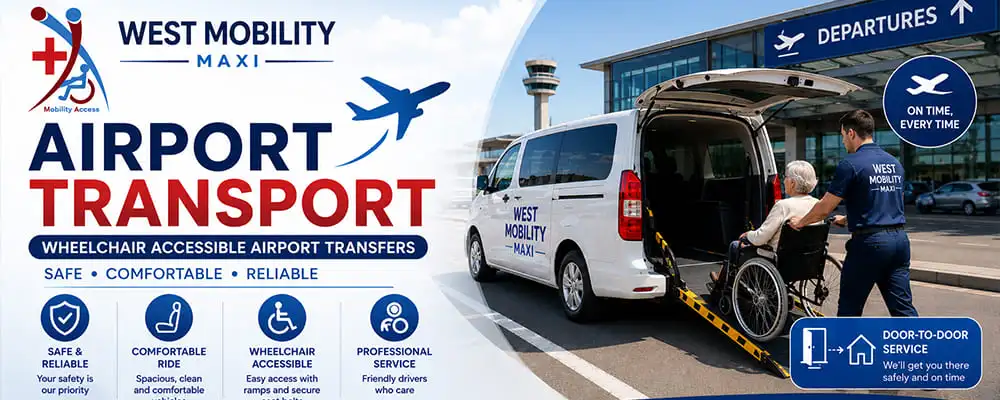
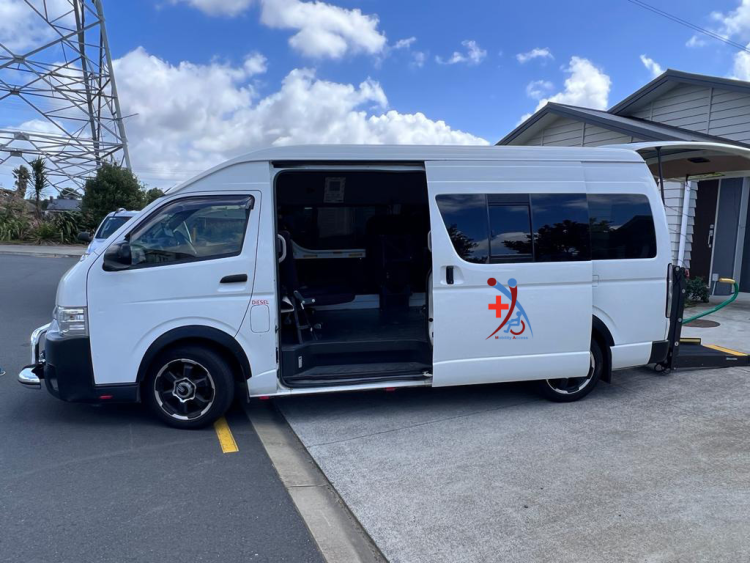
Selecting the right wheelchair accessible taxi isn't just finding a cab that can fit your wheelchair in. It's having the right ramp or lift, restraints to secure you in your seat, and enough room inside to be comfortable for the journey.
And as no two wheelchairs are the same, the setup for a manual wheelchair can be very different to a powered wheelchair.
For travelers booking airport transfers, providing this information at the point of booking can help the transport provider to prepare a vehicle that can meet the customer's needs when it arrives.
This is where wheelchair accessible airport transfer services are a part of the journey: to not just get the customer from address A to address B, but to ensure the transport stage is compatible with the airport experience.
Using Data to Improve the Experience
There is also a data-related benefit here.
A booking system for accessible transport can collect:
· Pickup location
· Flight number
· Departure or arrival time
· Number of passengers
· Wheelchair type
· Wheelchair size
· Extra mobility aids
· Luggage needs
· Whether they will stay in the wheelchair during the trip
· And more
The relevant information can then be used for operations.
The right vehicle can be allocated; the driver can be notified before they arrive; the projected travel time can be taken into account; the customer may not have to explain themselves repeatedly.
In business analysis terms, that means better resource management, exception handling and experience.
Designing for Exceptions
The other major takeaway here is that the happy path is never the whole journey.
What happens if the flight is delayed?
What if the customer's wheelchair is bigger than expected?
What if road traffic delays the journey?
What if the customer needs help outside business hours?
Good services have thought about this before it happens.
Melbourne Airport offers Mobility Hubs and pre-booked assistance for flying customers.
Business analysts would take this as proof that not only is the happy path complete, but so too are the exceptions.
Making the Experience Measurable
Another point is that accessibility is measurable.
A business analyst might assess:
· How many bookings exactly match the right vehicle on the first attempt.
· On-time pickups.
· How often the accessible vehicles arrived within a specified time window.
What That Can Teach Your Business
Accessible airport travel is a prime example of a more general business idea.
Customers don't see a company in a collection of units. They see a trip.
They don't need to know what function owns an issue, they simply need to know that it occurred to them.
Customer journey maps, requirements gathering, business processes, and service design are examples of business analysis techniques for the reason that it's not just about equipping a wheelchair, it's about providing the right vehicle for travel, which includes traveling arrangements, airline access assistance, wheelchairs, timing, airport access, inter-modal transportation, and more.
When you think about it as a trip and go through all the steps, it's not just about providing access to the exact service, it's about the customer experience in its totality, and business analysis techniques are essential tools to resolve this type of issue far beyond the airport.
What's Your Reaction?
























