How fractional CMO pricing models actually work
Retainer, day rate, or base plus percentage of spend. What each fractional CMO pricing model encourages, what it hides, and what to ask before signing.
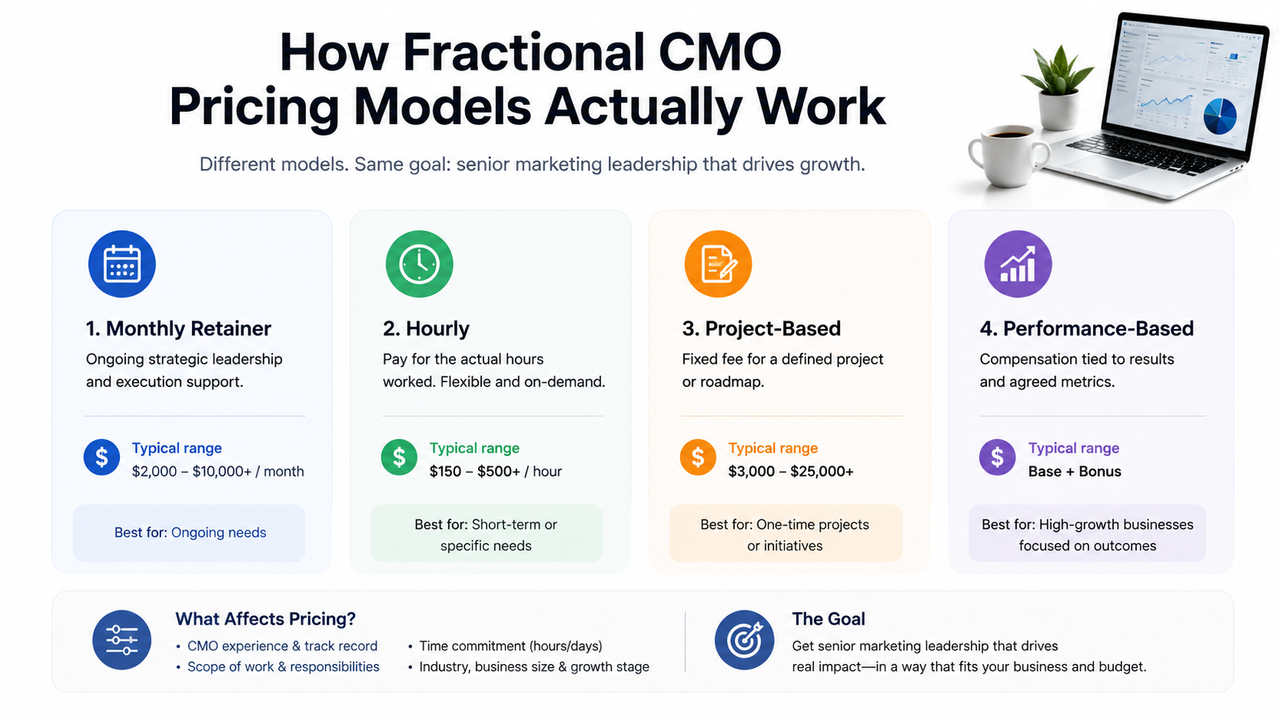
Fractional CMO pricing usually takes one of three shapes: a flat monthly retainer, a day rate billed against an agreed number of days per month, or a base fee plus a percentage of ad spend. Each buys the same seniority. What differs is what the structure quietly encourages, and what it hides from you.


What a flat monthly retainer buys
A fixed fee each month for an agreed scope of leadership. It is the simplest structure to budget against and the easiest to compare between providers, which is why most brands start here. What it encourages is stability: the fee is the same in a heavy month and a quiet one, so nobody is watching a clock, and the work can follow the problem rather than the invoice. What it hides is scope. A retainer that never states how many days it represents, what is included and what falls outside, can shrink without either side noticing, usually when the provider takes on a new client. Ask what the retainer assumes in terms of time and deliverables, and what happens in a month where the business needs materially more than that.
How day rates and fractional days work
Here you buy an agreed number of days a month, sometimes a set weekday, sometimes blocks. It encourages precision, and it suits brands that want a defined amount of senior attention without an open ended commitment. It also makes the value very visible, which cuts both ways. What it hides is that strategic work does not divide neatly into days. Thinking about a channel mix does not stop when the day ends, and the parts that matter most, being available for a fast decision or noticing something in the numbers on a Tuesday, sit awkwardly in a model that bills by attendance. If you buy days, get clarity on what happens between them: who answers an urgent question, and whether reporting and reviews come out of the same allocation.
Base fee plus a percentage of ad spend
A smaller fixed fee with a variable component tied to media spend. It encourages alignment in one direction only, and this is the model to think hardest about. The provider is paid more as spend rises, so any recommendation to scale carries a built in interest, and any recommendation to pull back costs them money. That does not make the model wrong, and some experienced operators run it well, but it does mean the incentive needs naming out loud. It is worth understanding how a fractional CMO engagement is scoped before agreeing to a variable fee, because the scope is what the percentage is really attached to. What it hides is the ceiling: a percentage that feels reasonable at your current spend can become a large number at several times that spend for the same amount of work.
Questions to ask before signing
The structure matters less than the terms attached to it, and these four make the difference:
-
What happens to the fee when spend scales, and is that written down?
-
Who owns the reporting, and does it stay with you if the engagement ends?
-
What is the notice period, and does it apply to both sides?
-
Is there a minimum term, and what does it cover?
Plaid Testing does not publish rates, because engagements are scoped individually against what a brand already has in place and what it is trying to do next. A number quoted before that conversation is a guess.
With a fashion apparel and accessories brand, we grew sales 249% and net profit 205% year over year with spend scaled 4x. New customer cost per acquisition and new-customer ROAS were tracked throughout, and reporting ran on blended sales and margin for the ownership team rather than on platform numbers.
Before comparing quotes, write down the four questions above and put every provider through the same set. Plaid Testing scopes every engagement from a free thirty minute audit first: tracking reviewed, account structure read, three fixes written down. Nothing is committed at that point.
What's Your Reaction?