Stainless Steel Dog Tags | Personalized Pet ID
Shop durable stainless steel dog tags with custom engraving. Strong, stylish, and made to keep your pet’s important information easy to read.

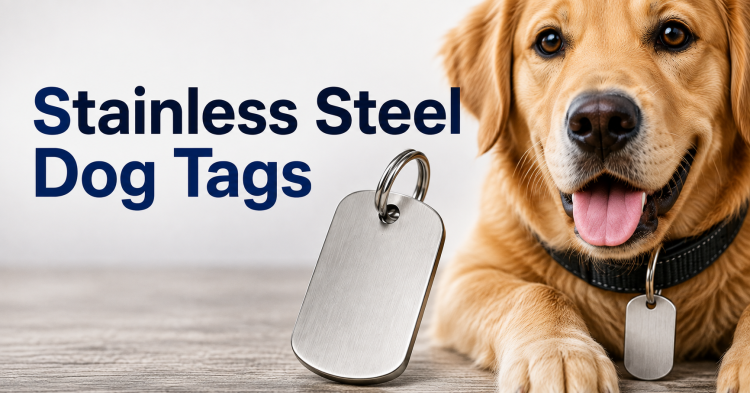
My neighbor's dog got out last spring. Nothing dramatic — the gate didn't latch all the way, and by the time anyone noticed, he was three blocks over, sniffing around someone's trash cans like it was the most normal thing in the world. He had a tag on though, so a fifteen-minute mistake stayed a fifteen-minute mistake instead of turning into something worse.


That's really what this whole article is about. Stainless steel dog tags aren't glamorous. Nobody brags about their dog's tag at a dinner party. But they do one job extremely well, and that job matters more than most people give it credit for.
I'm going to go through why stainless steel holds up better than the alternatives, how to pick one out without agonizing over it, and why, if you've been putting this off, you should probably just go order one today.
So What Is One, Exactly?
It's a small metal plate that hangs off the collar, usually with the dog's name and a phone number stamped into it. Some people throw in a second number, or a line like "on daily medication," just in case. Simple concept.
The difference with stainless steel, versus the plastic one your vet hands you for free or the cheap aluminum ones in the bin at the pet store, is that it actually lasts. Mud doesn't wreck it. Lake water doesn't wreck it. A dog that chews on everything within reach doesn't wreck it, usually.
Why Stainless Steel and Not Something Else
There's a reason this material keeps coming up when vets or trainers talk about pet ID tags.
It Won't Rust
Cheap tags start looking bad within a few months outside — spotty, discolored, sometimes the engraving just fades into a smudge. Stainless steel doesn't do that. Rain, sweat, snow, whatever, it holds up.
It's Gentle on Skin
A tag sits against a dog's neck all day, every day. If your dog's skin is at all sensitive, stainless steel is about as safe a metal as you'll find — way less likely to cause irritation than the alternatives.
The Engraving Actually Stays Readable
Doesn't sound like a big deal until you picture someone trying to squint at a half-worn phone number in bad lighting. A personalized ID tag is only useful if the text is still there to read.
It's Not as Heavy as People Assume
You'd think "durable" automatically means "heavy," but no — even a small terrier can wear one without it dragging the collar down.
A Story Worth Mentioning
A friend of mine, Sarah, has a golden retriever named Max — kind of the unofficial mascot of her street. One afternoon she left the gate cracked open just long enough to bring groceries inside. Five minutes, maybe. Max spotted a squirrel and that was that, he was gone.
She panicked, obviously, who wouldn't. But Max had a stainless steel personalized dog tag on with her number engraved into it, and a neighbor a few streets over recognized him, called her, and had him home inside twenty minutes.
Funny thing is, she almost didn't bother getting a real tag for him. Told herself he never leaves the yard anyway. That logic didn't age well. One small purchase turned what could've been a stressful, flyer-printing, door-knocking evening into basically a non-event.
Picking One Out: The Short Version
Doesn't need to be complicated. Here's roughly how it goes for most people.
Step 1: Pick a Shape and Size
Bone, circle, heart, whatever your dog's collar can handle without it looking silly. Smaller dogs generally do better with a smaller, lighter tag.
Step 2: Decide What Actually Goes on It
Name and a working phone number is the bare minimum. A backup number or a short medical note if it's relevant.
Step 3: Pick a Readable Font
Font matters more than people think. A nice cursive script looks fine on a screen, but at a glance, outdoors, in poor light — it's basically decorative at that point. Simple block lettering wins every time.
Step 4: Choose a Finish
Mostly personal taste — polished, matte, brushed. Doesn't change how well it holds up.
Step 5: Double-Check the Details
Check the phone number twice before ordering. I mean it. Typos on engraved metal are annoying to fix after the fact, if they're fixable at all.
Step 6: Attach It Properly
Once it arrives, use an actual sturdy split ring to attach it, not whatever thin wire loop came with the cheapest option. Check it now and then to make sure it hasn't worked itself loose.
A Few Other Things People Like About Them
Not everything here is about worst-case scenarios. A few smaller upsides too:
They look decent. There's a real range of shapes and finishes if you want the tag to match your dog's personality a bit.
They take some of the anxiety off your plate. Knowing there's a fast, obvious way for a stranger to reach you helps, especially if your dog has a habit of testing fences.
Dogs wearing a clear, legible tag tend to get picked up faster than ones without anything on their collartags at all — people are just more likely to stop and help.
And they back up a microchip nicely. A chip needs a scanner and a vet visit to actually work. A tag lets literally anyone on the sidewalk help out immediately, no equipment required.
Why Bother Getting One Now Instead of Later
Plastic tags crack. The cheap aluminum ones fade and rust out within a year, sometimes less. A proper stainless steel personalized pet ID tag is basically a one-and-done purchase — buy it, forget about it, it just keeps working.
Most sellers let you preview the engraving online before it ships, and it usually shows up within a few days. There's genuinely not much of an excuse to keep putting it off. Nobody plans for the gate to swing open at the wrong moment — that's exactly why it's worth handling before it happens, not scrambling afterward.
If this has been sitting on your to-do list for a while, consider this the nudge. It's a small purchase that quietly solves a fairly big problem.
Wrapping This Up
Dogs can't explain where they live to a stranger. That part's on us. A stainless steel dog tag is one of the cheapest, easiest ways to cover that gap — it holds up outdoors, it's easy on their skin, and like Sarah's story shows, it can turn a genuinely scary afternoon into a twenty-minute inconvenience instead. Get one made, double-check the engraving, and stop bracing every time someone leaves the gate open a little too long.
Frequently Asked Questions
Are stainless steel tags actually better than plastic or aluminum ones?
Generally, yeah. They hold up against rust and scratching far longer, and the engraving stays readable well past the point where cheaper tags have already worn smooth.
What should I put on the tag?
Name and a phone number that actually works, at minimum. Some people add a second contact or a short medical note if it applies.
Will it bother my dog's skin?
Not likely. It's one of the more skin-friendly metals out there, so it's usually a safe bet even for dogs prone to irritation.
How long do they last, realistically?
Years, typically, without much drop-off in how readable the engraving stays — assuming it's actual stainless steel and not a cheap look-alike.
My dog's already microchipped — is a tag still necessary?
Yes. A chip needs a scanner and a trip somewhere to read it. A visible tag means anyone who finds your dog can just call you, right then and there.
Can I pick the shape and style?
Yes, most sellers offer a decent range of shapes, colors, and finishes so it can match whatever look you're going for.
What's Your Reaction?