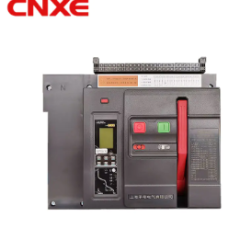
Why Does Intelligent Universal Circuit Breaker Need Smart Control?
Large electrical distribution systems require more than basic fault interruption. An Intelligent Universal Circuit Breaker can combine high-current protection with adjustable settings, monitoring, and communication functions, allowing the breaker to interact more closely with the distribution system around it. Current rating, installation type, controller functions, and communication requirements all become relevant when specifying a breaker for industrial or commercial equipment.
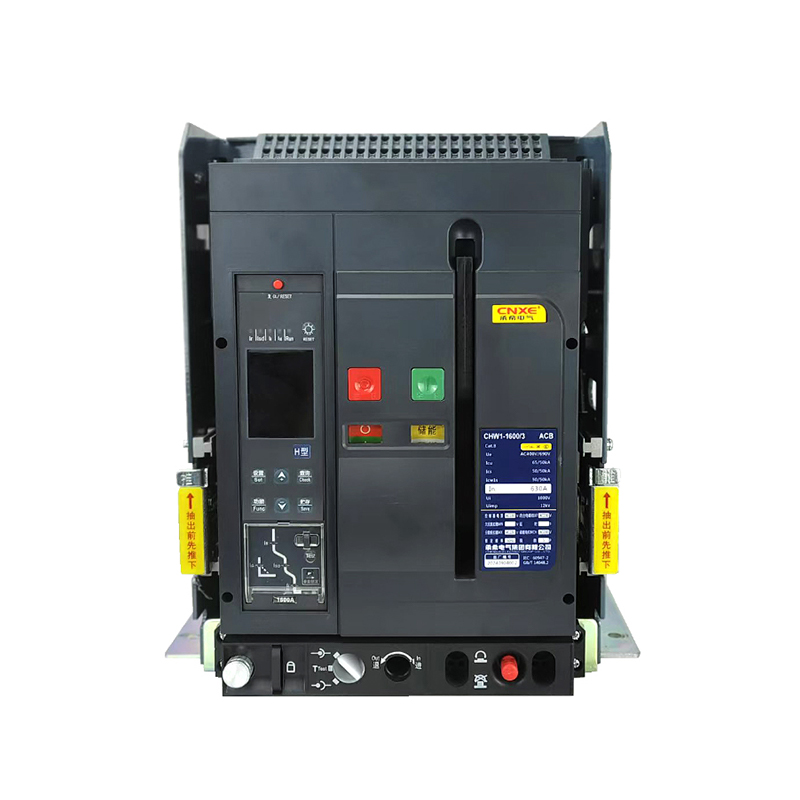
A frame circuit breaker installed in a large distribution cabinet has to deal with electrical conditions that can vary considerably between different applications. Rather than relying only on a fixed trip characteristic, an Intelligent Universal Circuit Breaker can use an intelligent controller to provide configurable protection functions. Depending on the configuration, these may include protection against overload, short circuit, undervoltage, and ground faults.


This flexibility becomes useful when the breaker is installed within a larger protection system. Main incoming circuits, busbar sections, and high-current feeders may each have different operating requirements. A breaker with adjustable protection settings allows the protection characteristics to be considered alongside the connected load and the other protective devices installed downstream.
Current capacity is another fundamental specification. Large frame breakers can cover substantially higher current levels than the molded-case breakers commonly used on smaller branch circuits. For example, the CHW1 series information covers rated operating currents from 400A to 6300A and rated operating voltages from 400V to 690V. The appropriate rating depends on the electrical system and the position of the breaker within the distribution network.
Installation format also affects equipment design. Fixed breakers remain mounted in their designated position, while withdrawable or drawer-type configurations allow the breaker to be moved relative to the cabinet structure. This changes how maintenance and replacement are approached and can be an important consideration when designing a distribution panel with limited service space.
Communication functions add another layer to the equipment. Certain intelligent controllers can exchange information with external control systems through communication interfaces. This allows operating information and some control functions to be incorporated into a centralized electrical management system rather than requiring every breaker to be checked independently at the cabinet.
For an Intelligent Universal Circuit Breaker, however, communication capability does not replace the need for appropriate protection settings. The controller still needs to correspond with the electrical characteristics of the installation. Protection thresholds, coordination between upstream and downstream devices, rated current, and connected loads all need to be considered together.
Accessories can further adapt the breaker to different applications. Depending on the configuration, components such as leakage current transformers or zero-sequence transformers can be incorporated for additional protection functions. This gives system designers more flexibility when the standard protection arrangement does not cover every requirement of the distribution network.
For electrical equipment manufacturers and system integrators, selecting an Intelligent Universal Circuit Breaker therefore involves several connected specifications. Rated current and voltage establish the basic operating range, while controller type, protection functions, communication interface, installation format, and available accessories determine how the breaker fits into the complete electrical architecture.
What's Your Reaction?