What Steel Gauge Suits A Brownie Tin?
The construction of a brownie pan has a direct effect on baking consistency, durability, and ease of handling. A brownie tin needs to maintain its shape through repeated heating and cooling while keeping the base and corners stable enough for consistent results. For buyers comparing bakeware suppliers, details such as steel gauge, corner construction, edge reinforcement, and coating application can reveal differences that are not obvious from a finished sample.
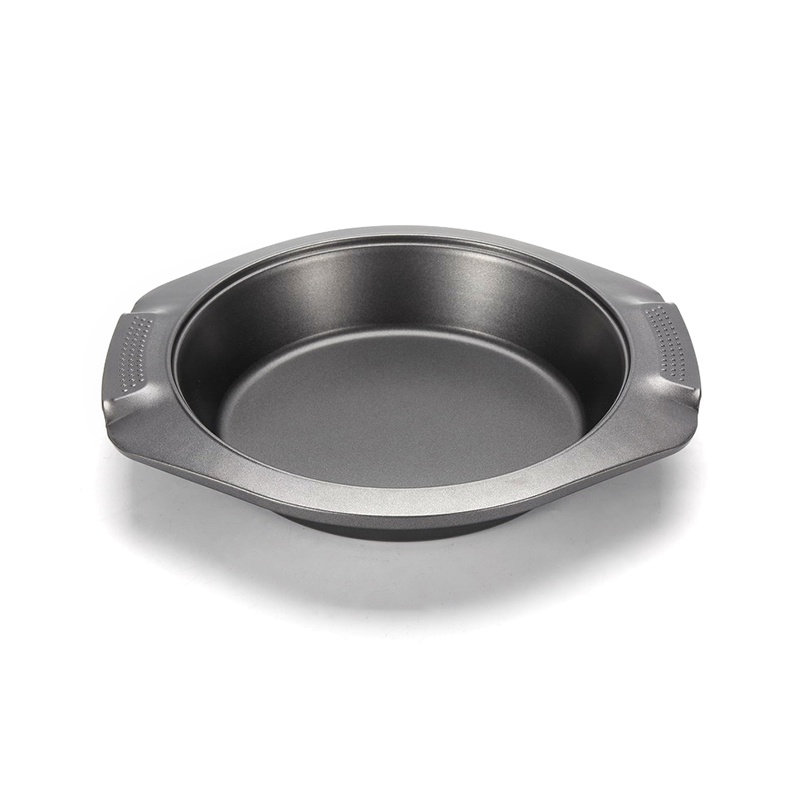
A brownie tin with square corners requires careful forming because the corners and base-to-wall transitions experience concentrated mechanical and thermal stress. Poorly formed joints may create gaps or dimensional inconsistencies, while accurate forming helps the pan maintain its intended geometry during repeated oven use.


Steel thickness is another important consideration. Lightweight steel can reduce unit weight and shipping costs, making it suitable for occasional household baking. However, frequent commercial baking places greater demands on the pan. Repeated exposure to high temperatures followed by cooling can cause thinner material to deform more easily. A heavier gauge can provide greater resistance to warping, although buyers need to balance durability against product weight and logistics costs.
The rim also contributes to structural stability. A rolled or folded edge is generally more resistant to bending than a raw cut edge, particularly when pans are repeatedly removed from ovens, washed, and stacked. This reinforcement can also reduce mechanical stress around the coating near the upper edge.
Coating coverage requires particular attention when the pan has defined corners. During application, coating thickness can vary between the flat base, vertical walls, and corner areas. If coverage becomes thinner at the corners, those locations may develop sticking or wear earlier than the rest of the surface. For bulk orders, buyers can therefore ask whether coating inspection includes different areas of the pan rather than relying only on a general surface check.
The transition between the base and side wall is another structural detail worth examining. A slightly rounded transition distributes stress more evenly than an extremely sharp internal angle, helping reduce localized stress during repeated thermal cycling. This can be especially relevant for bakeware intended for commercial kitchens.
Handle designs also affect durability. If a pan includes side handles, the attachment points carry additional load whenever the filled pan is lifted. Reinforcement around these areas can help prevent deformation or cracking during repeated handling.
For wholesale and commercial buyers, evaluating a brownie tin therefore involves more than checking its dimensions and appearance. Steel gauge, corner forming, edge reinforcement, coating consistency, base geometry, and handle construction all contribute to how the pan performs after repeated use.
What's Your Reaction?