What Shapes Can a Custom Lock Cylinder Take?
Locking systems are increasingly used in places beyond conventional residential doors. Electrical boxes, trailers, freezers, cabinets, furniture, and equipment enclosures can have limited or unusual installation spaces, making standard cylinders difficult to apply. A custom approach allows the cylinder's dimensions, external profile, internal structure, and key configuration to be developed around the actual locking system.
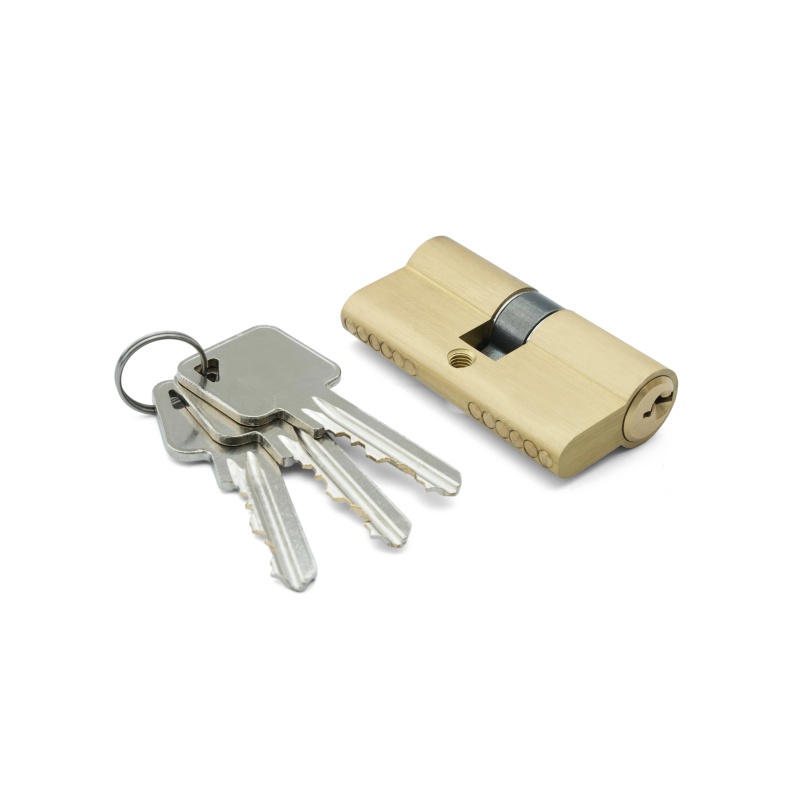
A Custom Lock Cylinder is not necessarily a completely different type of locking component. Its basic purpose remains the same: allowing a key to operate the internal mechanism and connect with the surrounding lock structure. What changes is how closely the cylinder needs to match the equipment around it. A residential door may provide plenty of space for a conventional cylinder, while an electrical enclosure or cabinet door may leave only a narrow area for the locking component.


Physical space is often the first issue to consider. Cylinder length, outside diameter, mounting position, keyway arrangement, and the connection between the cylinder and lock body can all affect installation. A half cylinder, for example, may be more suitable where the locking mechanism only needs to extend through part of a door or panel. Other equipment may require a special external profile because a standard round cylinder cannot fit the available structure.
The outside shape, however, is only one part of the development process. Internal components still need to operate correctly within the available housing. Pins, springs, key profiles, and rotating components have to work together while maintaining appropriate movement and alignment. When the cylinder body becomes shorter, narrower, or differently shaped, simply modifying the exterior of a standard product may not be enough. The internal arrangement may also need to be adjusted to suit the new dimensions.
This becomes particularly relevant for equipment manufacturers developing their own products. A freezer, trailer, electrical box, cabinet, or piece of furniture may already have a fixed locking structure, leaving little flexibility for changing the surrounding hardware. In such cases, developing the cylinder around the existing installation space can be more practical than redesigning the entire lock assembly. Special-shaped cylinders can also help when the available space or appearance requirements do not correspond with common catalog designs.
The development process can begin with more than an engineering drawing. An existing cylinder, lock body, physical sample, or dimensional information can provide a starting point for a new design. During sample evaluation, details such as key insertion, rotation, locking position, clearance, and interaction with the lock body can be checked before larger-scale production. This is especially useful for equipment manufacturers that need to verify compatibility before committing to a larger order.
For B2B buyers, the right Custom Lock Cylinder therefore depends on more than the cylinder's basic dimensions. The intended equipment, installation space, lock body, key configuration, material requirements, and production quantity all influence the final specification. A cylinder designed around these practical conditions can provide a more direct fit for specialized locking systems without forcing the application to follow a standard door-cylinder format.
What's Your Reaction?