What Makes Car Steering Handle Cover Fit More Securely?
The steering wheel is one of the most frequently handled parts of a vehicle interior, so its surface can have a noticeable effect on everyday driving. A steering cover adds another layer between the hands and the original wheel, bringing together surface protection, grip, material feel, and visual customization.
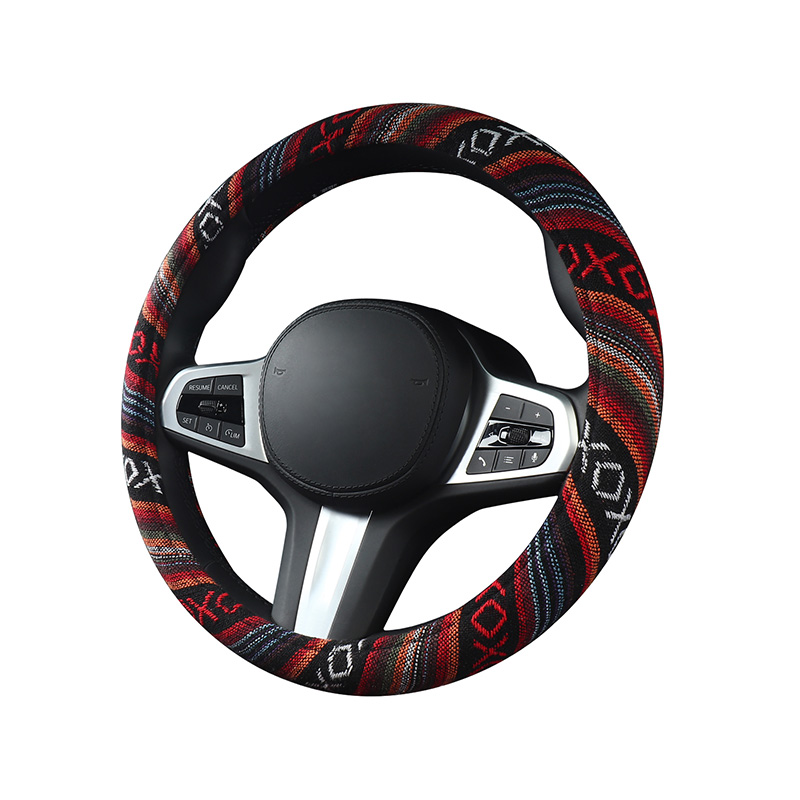
The steering wheel experiences constant contact during normal driving. Hands repeatedly move across its surface, while friction, moisture, temperature changes, and everyday use gradually affect the original covering. A Car Steering Handle Cover provides an additional surface that can change how the wheel feels while helping reduce direct wear on the original material.


Surface texture is one of the details that becomes noticeable over time. A completely smooth covering can create a different tactile response from a lightly textured or patterned surface. Some materials feel softer against the hands, while others provide more friction. These differences are not simply visual; they influence the way the driver interacts with the steering wheel during repeated use.
Material selection therefore plays an important role in the design of a Car Steering Handle Cover. Synthetic leather, microfiber, rubber-like materials, and fabric-based constructions can produce different combinations of flexibility, softness, grip, and durability. Thickness also changes the result. A thinner cover can preserve more of the original steering-wheel shape, while a thicker construction may create a more substantial surface under the hands.
Manufacturing becomes more complicated because the product needs to follow a curved component that is constantly handled. The cover has to maintain its intended shape around the steering wheel rather than simply lying flat. Cutting dimensions, elasticity, stitching, seam positioning, and material tension can all affect the finished fit.
An uneven fit can lead to wrinkles, loose areas, or unwanted movement during use. For manufacturers, controlling the relationship between the material and the steering-wheel dimensions is therefore an important part of production. Cutting and sewing processes need to remain consistent when different sizes or vehicle applications are involved.
A Car Steering Handle Cover also provides considerable room for visual customization. Since the steering wheel sits in a highly visible position, changes in color, stitching, texture, or material finish can noticeably alter the character of the interior. Two-tone combinations and contrasting stitching, for example, can create a different appearance without modifying the vehicle's original steering wheel.
For automotive accessory manufacturers, this allows multiple product variations to be developed from related constructions. Material combinations, surface treatments, decorative stitching, and color selections can be adjusted according to different vehicle interiors and aftermarket preferences.
Protection and tactile comfort can overlap in the same product. The cover protects the original steering surface from some direct contact while introducing a different material under the driver's hands. This makes material durability important, but so are the characteristics that remain noticeable after hundreds of hours of everyday handling.
The Car Steering Handle Cover has consequently developed beyond a simple protective layer. Its design now involves the interaction between material technology, fitting accuracy, surface texture, and interior appearance. For manufacturers and distributors, these details provide several ways to develop automotive interior accessories while keeping the steering area practical for regular driving.
What's Your Reaction?