What Makes A Weatherproof Enclosed Mobility Scooter Practical?
An enclosed mobility scooter has to solve several design problems that do not appear on an open scooter. Once the rider is surrounded by a roof, windshield, doors, and side panels, the cabin becomes part of the vehicle's overall structure. Visibility, seating position, controls, suspension, electrical equipment, and weight distribution all need to work together. These details become particularly important when the scooter is intended for use in changing outdoor weather conditions.
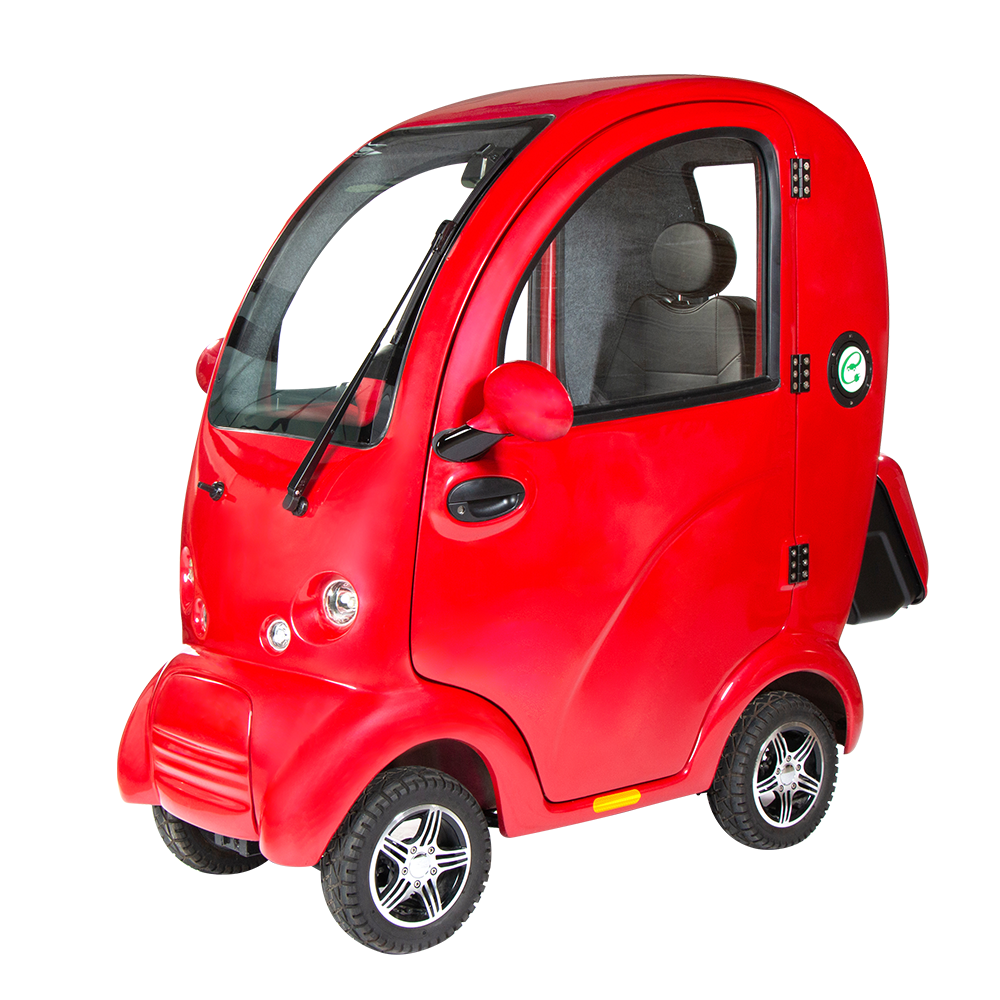
A Weatherproof Enclosed Mobility Scooter is designed around a cabin rather than simply adding a roof to an open scooter. The enclosed structure creates a defined space for the rider, which changes how the seat, dashboard, windshield, controls, and entry area are arranged. The CABIN X9, for example, uses a single-seat layout within a body measuring 162 × 80 × 150 cm. Its control panel includes a 5.5-inch display, while the handle uses an anti-slip surface designed around repeated steering movements.


Visibility becomes another consideration once the rider is inside an enclosed body. The windshield and side structures provide a different field of view from an open-frame scooter, particularly around the rear and sides. The CABIN X9 uses a high-definition rearview camera connected to an integrated display, giving the driver additional information when reversing. This can be useful in parking areas or other confined spaces where the cabin structure makes direct rearward observation more difficult. The vehicle's 230 cm turning radius also shows why low-speed maneuvering needs to be considered together with the cabin layout.
The enclosed body also adds weight, making the relationship between the chassis and propulsion system more important. The CABIN X9 weighs 215 kg without batteries and has a maximum loading weight of 210 kg. Its drive system uses a 1400W motor, two 12V 75Ah batteries, 14-inch front and rear tires, and 160 mm of ground clearance. These specifications work together rather than independently. Rider weight, road surface, gradients, tire dimensions, and total vehicle mass can all affect actual driving performance.
Suspension and tire design are particularly noticeable when the rider is seated inside a cabin. Road transitions, uneven pavement, ramps, and other surface changes transfer movement through the wheels and chassis before reaching the seat and cabin structure. The CABIN X9 uses a shock-absorption system together with larger 14-inch tires and 160 mm ground clearance to manage these conditions. For an enclosed vehicle, maintaining a stable cabin while allowing the chassis to respond to uneven ground is an important part of the overall design.
Electrical equipment also has to be integrated around the driver's limited interior space. The CABIN X9 can be equipped with features such as heated seating and heated handlebars for colder conditions, while GPS tracking with SOS and a cornering deceleration system are available as options. Its electromagnetic brake is part of the standard braking system. Because these functions rely on the vehicle's electrical system, battery capacity and energy consumption need to be considered alongside the driving range. The listed configuration uses two 12V 75Ah batteries, an 8.0A charger, and a stated travel range of 45 km.
Ultimately, the design of a Weatherproof Enclosed Mobility Scooter involves more than protecting the rider from rain or wind. The enclosure influences visibility, vehicle weight, control placement, suspension behavior, electrical integration, and maneuverability at the same time. Treating the cabin as part of the complete vehicle rather than as an external accessory helps explain why enclosed mobility scooters require a different approach to engineering and everyday use.
What's Your Reaction?