The Future of Skin Firming Starts with a Collagen Face Serum
Discover how a collagen face serum can support firmer, smoother-looking skin and elevate your anti-aging routine with effective, age-smart skincare.
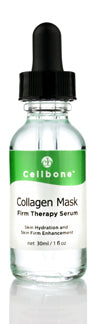
Skin that once felt bouncy and firm has a way of changing and most people don't notice it happening until they catch a certain angle in a mirror or a photo that doesn't quite look like them anymore. The loss of firmness is a little less defined along the jaw, a slight hollowing under the eyes, fine lines that seem to have settled in overnight. What's actually happening beneath the surface has been building for years. And increasingly, the conversation around addressing it is leading back to one ingredient, collagen and specifically, what a well-formulated collagen face serum can do when it becomes a consistent part of the routine.


Why Skin Loses Its Firmness in the First Place
To understand why collagen serums matter, it helps to understand what's actually changing in the skin as it ages.
Collagen is the structural protein that gives skin its bounce, thickness, and elasticity. Think of it as the scaffolding that holds everything in place. Starting in the mid-20s, the body's ability to produce new collagen begins to slow by roughly 1% per year. That decline is gradual enough that it goes unnoticed for a while, but the cumulative effect becomes visible in the 30s and 40s, and accelerates significantly around menopause, when estrogen levels drop and collagen loss speeds up considerably.
Sun exposure makes it worse. UV rays trigger enzymes in the skin called matrix metalloproteinases (MMPs) that actively break down existing collagen fibers. This is why two people of the same age can look very different depending on how much sun exposure their skin has had over the years. Pollution, chronic stress, and disrupted sleep all contribute too - they generate free radical activity that degrades collagen faster than the skin can repair it.
The result is skin that gradually loses the density, definition, and plumpness it once had. Moisturizers help but they work primarily at the surface. What's needed to address the structural side of aging skin is something that goes a layer deeper.
What a Collagen Face Serum Actually Does
This is where a lot of confusion tends to sit. If collagen molecules are too large to penetrate skin on their own, what is a topical collagen face serum actually accomplishing?
Quite a bit, as it turns out, just not in the way most people assume.
Modern collagen serums don't rely on intact collagen molecules sitting on the skin's surface. Instead, they use hydrolyzed collagen, collagen that has been broken down into smaller peptide chains. These fragments are able to penetrate the upper layers of the epidermis, where they do something important: they send a biological signal to the skin's own fibroblasts, the cells responsible for building new collagen, prompting them to increase production. It's a communication process. The peptides essentially tell the skin that collagen breakdown has occurred and that repair is needed and the skin responds.
At the same time, collagen serums deliver immediate surface-level benefits that a moisturizer can't replicate. The hydration they provide is deep and lasting, not just a surface-level seal. Skin looks visibly plumper, lines appear softened, and the overall texture feels more supple after consistent use.
The serum format matters here too. Because serums are lightweight, concentrated, and formulated without the heavier occlusive ingredients found in creams, the active ingredients they contain can reach the skin more efficiently.
Building a Firming Routine Around Collagen
A collagen face serum performs best when it's not working in isolation. The ingredients layered alongside it have a real impact on how well the firming results come through over time.
Vitamin C is one of the most important partners to collagen in a skincare routine. It plays a direct role in the body's collagen synthesis process; without adequate vitamin C, the skin can't produce structurally stable collagen. Applying a vitamin C serum before or alongside a collagen serum creates a synergistic effect that supports the skin's repair process from multiple angles. It also helps neutralize the free radicals that would otherwise accelerate collagen breakdown during the day.
For those looking to take a more advanced approach to cellular renewal, a stem cell cream brings a third layer of support into the routine. Plant stem cell technology, particularly extracts derived from apple fruit or alpine rose stem cells, works by protecting and activating the skin's own epidermal stem cells, the cells responsible for producing fresh, healthy skin cells over time. When used as a moisturizing step after a collagen serum, a stem cell cream rounds out the routine by supporting the skin's regenerative biology at the basal layer, not just its surface appearance.
Getting the Most Out of a Collagen Serum: Practical Tips
A few simple habits make a significant difference in how well a collagen serum performs over time.
Apply it to skin that's still slightly damp after toning. A lightly hydrated surface makes it easier for serum actives to absorb rather than evaporate. Give it a minute or two to fully sink in before layering anything on top - rushing this step means the serum doesn't get the contact time it needs.
Consistency matters more than frequency. A collagen serum used every morning and evening for twelve weeks will produce dramatically more visible results than one used irregularly for a year.
SPF is non-negotiable during the day. No collagen serum, mask, or moisturizer can outpace the rate of collagen degradation caused by unprotected UV exposure. Broad-spectrum sunscreen applied every morning protects the progress being built overnight.
Surface hydration and plumping are often visible within the first week of using a collagen serum. But the deeper structural improvements in firmness and skin density take time.
Conclusion
Skin firming is a process that happens over time, with the right ingredients working consistently at the right level of the skin. What's shifted in recent years is a better understanding of how topical collagen can actually contribute to that process as a genuine trigger for the skin's own structural renewal. A collagen face serum, used alongside the right supporting ingredients gives the skin what it needs to work with - consistently, week after week, until the results speak for themselves.
What's Your Reaction?