Smart Home Market to Reach USD 174.17B by 2034 Driven by IoT Growth and Rising Home Automation Deman
The global smart home market is expected to grow from USD 118.71B in 2025 to USD 174.17B by 2034 at a 5.4% CAGR. Growth is fueled by rising IoT adoption, AI-powered home automation, smart security solutions, and expanding 5G connectivity, with increasing demand for convenience, energy efficiency, and connected living.
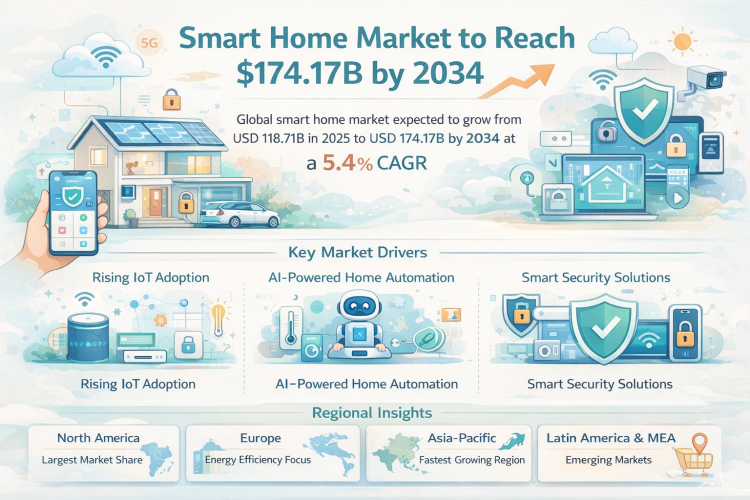


According to a new report from Intel Market Research, the global Smart Home market was valued at USD 118.71 billion in 2025 and is projected to reach USD 174.17 billion by 2034, growing at a steady CAGR of 5.4% during the forecast period. This growth trajectory reflects the accelerating adoption of IoT-enabled residential automation solutions worldwide, with over 13 million smart home units sold globally in 2025 alone.
What is Smart Home Technology?
Smart Home systems represent an interconnected ecosystem of devices, sensors, and software platforms that enable automated or remote control of residential functions. These solutions encompass everything from security and lighting to climate control and entertainment systems, all integrated through wireless protocols like Wi-Fi 6 and the emerging Matter standard. With gross margins typically ranging between 30-60% depending on product category, the market continues to attract both established tech giants and innovative startups.
This comprehensive report provides an in-depth analysis of the global Smart Home landscape, covering market size evaluations, competitive dynamics, segmentation analysis, and regional adoption patterns. It offers critical insights for manufacturers, service providers, investors, and policymakers navigating this rapidly evolving industry.
The report's analytical framework helps stakeholders understand market positioning, evaluate growth strategies, and identify emerging opportunities. By examining key players' market shares, product portfolios, and technological advancements, it provides actionable intelligence for strategic decision-making.
???? Download Sample Report: Smart Home Market - View in Detailed Research Report
Key Market Drivers
1. Rising Consumer Demand for Convenience and Security Solutions
The modern homeowner's appetite for seamless automation continues to fuel market expansion. Security systems and voice-controlled assistants now feature in over 35% of households across developed markets, with adoption climbing 12-15% annually. Beyond convenience, increasing safety concerns have made devices like smart locks and video doorbells among the first smart home products consumers purchase.
2. Advancements in IoT and AI Integration
Technological evolution remains a powerful growth catalyst. The rollout of 5G networks has dramatically improved device responsiveness, while machine learning enables increasingly sophisticated automation scenarios. The IoT component of the market alone is projected to reach $158 billion by 2026, demonstrating how connectivity remains central to market expansion. Notably, smart thermostats have proven particularly impactful, reducing household energy consumption by up to 15% according to operational data.
- Government smart city initiatives are accelerating adoption through infrastructure investments
- Energy efficiency regulations are driving HVAC system upgrades
- Aging population needs are increasing demand for assistive technologies
Market Challenges
- High Implementation Costs: Premium installations ranging from $10,000-$40,000 create barriers for mainstream adoption, with 42% of consumers citing complexity as a major deterrent.
- Interoperability Issues: The absence of universal standards leads to fragmented ecosystems, causing consumer frustration with incompatible devices from different manufacturers.
- Data Security Concerns: High-profile breaches involving connected devices have left 58% of consumers concerned about network vulnerabilities, particularly around cameras and voice assistants.
Emerging Opportunities
The Asia-Pacific region represents a particularly promising frontier, where urbanization and rising disposable incomes are creating massive new markets. China and India alone are projected to account for 35% of global device sales by 2028 - a $28 billion opportunity. Key enablers include:
- Expanding 5G infrastructure enabling robust IoT deployments
- Local manufacturing reducing device costs for regional markets
- Government-backed digital transformation initiatives
- Growing middle class with increasing tech awareness
???? Download Sample Report: Smart Home Market - View in Detailed Research Report
Regional Market Insights
- North America: Leads in adoption with advanced infrastructure and tech-savvy consumers, particularly in integrated security solutions and voice-controlled ecosystems.
- Europe: Shows strong preference for energy management systems, with GDPR compliance shaping privacy-focused product development.
- Asia-Pacific: Fastest-growing region driven by manufacturing capabilities and digital urbanization initiatives across China, Japan and South Korea.
- Latin America: Security concerns dominate purchasing decisions, with Brazil emerging as the regional leader in smart home adoption.
- Middle East & Africa: Luxury developments in GCC countries drive high-end installations, while South Africa shows promising growth potential.
Market Segmentation
By Product Type
- Smart Security & Access Control
- Lighting Control Systems
- HVAC & Energy Management
- Smart Appliances
- Entertainment Systems
By Application
- Residential
- Commercial
- Hospitality
- Retail
By Control Method
- Voice-Activated
- Mobile App
- Automated
By Region
- North America
- Europe
- Asia-Pacific
- Latin America
- Middle East & Africa
???? Get Full Report Here: Smart Home Market - View Detailed Research Report
Competitive Landscape
The market features intense competition between technology heavyweights and specialized providers. Amazon and Google continue to dominate voice-controlled ecosystems through their Alexa and Nest platforms, while Samsung's SmartThings maintains strong positioning in device interoperability. Traditional security companies like ADT and Vivint have successfully transitioned into comprehensive smart home providers.
The report provides detailed competitive analysis of major players including:
- Amazon (Alexa ecosystem)
- Google (Nest)
- Apple (HomeKit)
- Samsung (SmartThings)
- ADT
- Honeywell
- Siemens
- Schneider Electric
- Xiaomi
- Specialized innovators like Lutron, Ecobee, and Ring
Report Deliverables
- Comprehensive market sizing and forecasts through 2034
- Technology trend analysis and adoption roadmaps
- Competitive benchmarking and market share analysis
- Pricing trends and business model evaluations
- Regulatory landscape across key markets
- Strategic recommendations for market entry and expansion
???? Get Full Report Here: Smart Home Market - View Detailed Research Report
???? Download Sample Report: Smart Home Market - View in Detailed Research Report
About Intel Market Research
Intel Market Research is a leading provider of strategic intelligence, offering actionable insights in technology, consumer electronics, and IoT infrastructure. Our research capabilities include:
- Real-time competitive benchmarking
- Global technology adoption tracking
- Country-specific regulatory analysis
- Over 500+ technology reports annually
Trusted by Fortune 500 companies, our insights empower decision-makers to navigate complex markets with confidence.
???? Website: https://www.intelmarketresearch.com
???? Asia-Pacific: +91 9169164321
???? LinkedIn: Follow Us
What's Your Reaction?