On-Site Security vs. Remote Video Monitoring: Why Cameras Alone Aren't Enough
As commercial security technology advances, remote video monitoring powered by high-definition CCTV, motion sensors, and central control rooms—has become an attractive option for facility managers looking to cut operational costs. The promise of managing an entire property from a screen is appealing, but relying solely on remote monitoring introduces critical vulnerabilities that smart technology alone cannot solve.
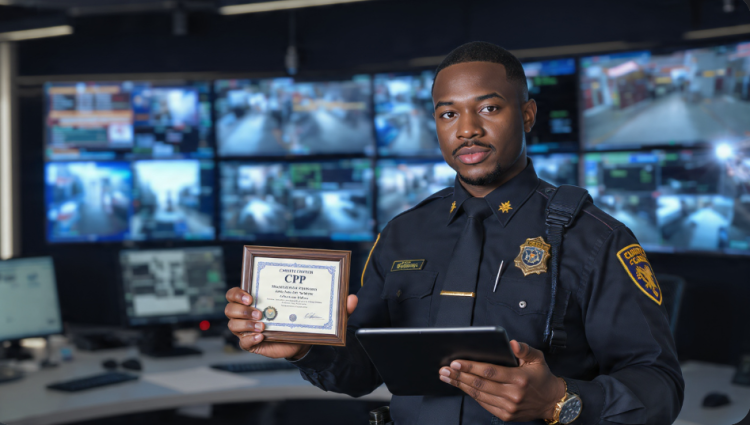
As commercial security technology advances, remote video monitoring powered by high-definition CCTV, motion sensors, and central control rooms—has become an attractive option for facility managers looking to cut operational costs. The promise of managing an entire property from a screen is appealing, but relying solely on remote monitoring introduces critical vulnerabilities that smart technology alone cannot solve.


While surveillance cameras excel at visual recording and broad perimeter monitoring, they lack the physical presence, instant intervention capabilities, and human judgment required to resolve real-time security breaches.
The most resilient physical security strategies treat technology as an intelligence tool not a complete replacement for on-site security officers. Here is why cameras alone are not enough to protect high-value commercial properties.
The Limitations of Remote Video Monitoring
1. Cameras Observe; They Do Not Intervene
The fundamental weakness of remote video monitoring is its passivity. A camera can capture a trespasser cutting a perimeter fence or breaking a warehouse window in high definition, but it cannot physically stop them. By the time a off-site monitoring operator notices the alert, verifies the footage, and calls local emergency services, intruders have often secured valuable tools, raw materials, or corporate hardware and fled the scene.
2. High Rates of False Alarms and Delayed Police Response
Remote camera systems routinely trigger false alerts due to environmental factors like swaying tree branches, roaming animals, heavy rain, or passing vehicle headlights. Constant false alarms lead to operator fatigue and delayed verification times. Furthermore, many municipal police departments prioritize physical crime-in-progress calls over unverified camera alerts, leading to extended police arrival times that leave your property exposed.
3. Susceptibility to Technical Failures and Blind Spots
Even the most advanced camera networks have inherent physical limitations:
-
Visual Blind Spots: Stacked inventory pallets, large vehicles, heavy equipment, and complex architectural structures create blind spots that static camera lenses cannot see around.
-
Power and Network Outages: Cut power lines, lost internet connectivity, or hardware failures can blind a remote monitoring system entirely without immediate on-site fallback support.
-
Environmental Interference: Dirt, cobwebs, condensation, heavy fog, and direct sun glare can obscure camera lenses, rendering high-tech surveillance useless when you need it most.
The Irreplaceable Value of On-Site Security Officers
1. Immediate, Zero-Delay Physical Intervention
An on-site security officer provides an active, physical response the second a breach occurs. Whether confronting an unauthorized intruder, securing a broken lock, or intercepting a tailgate attempt at an access gate, on-site officers defuse threats in real time before damage or theft occurs.
2. Human Instinct and Contextual Judgment
Security challenges are rarely black and white. Artificial intelligence and central control room operators lack human context and situational awareness. An on-site officer can immediately distinguish between:
-
An employee who forgot their access badge vs. an unauthorized intruder attempting to tailgate into a restricted suite.
-
A confused delivery driver looking for the loading bay vs. a suspicious vehicle scouting property vulnerabilities.
-
A minor verbal dispute between tenants vs. an escalating physical threat requiring immediate de-escalation.
3. Customer Service, Access Control, and Hospitality
Security personnel do far more than guard perimeters. In commercial office towers, healthcare facilities, and corporate headquarters, on-site officers serve as front-desk ambassadors. They welcome guests, assist tenants, manage high-volume visitor badging, handle lost-and-found requests, and guide emergency evacuations tasks a remote camera feed can never perform.
The Optimal Strategy: A Hybrid Physical-Digital Defense
Rather than choosing between on-site security officers and remote video monitoring, industry leaders combine both into an integrated, hybrid security model:
-
Cameras as the "Eyes": AI surveillance and remote monitoring scan wide perimeters, dark alleyways, and distant fence lines continuously to detect anomalies.
-
Guards as the "Hands": On-site security officers receive instant mobile alerts from the camera system, allowing them to respond directly to the exact location of a verified threat within seconds.
Upgrade Your Site Defense Model
Relying solely on cameras leaves your property vulnerable to fast-moving theft, property damage, and technical blind spots. Technology provides valuable visual awareness, but protecting your physical assets, employees, and tenants requires the active authority and rapid response of dedicated on-site security officers.
What's Your Reaction?