How to Reduce Returns Evening Wear Ecommerce Brands Can Fix at the Page Level
Fix evening wear returns right on the product detail page. Learn how sizing, 3D video, and CRO strategies can slash returns and boost margins.
For executive leadership in luxury fashion, returns are no longer just an operational nuisance, they are an existential margin killer. While standard apparel experiences return rates around 20-30%, the evening wear segment often suffers from return rates exceeding 40% to 50%.

The primary culprit is not post-purchase buyer’s remorse; it is pre-purchase uncertainty. Shoppers frequently resort to bracketing ordering three sizes of the same dress with full intent to return two. Fortunately, the most effective place to solve this problem is directly on your Product Detail Page (PDP).
By optimizing the PDP environment, luxury retailers can protect their bottom line while creating a frictionless shopping experience. Here is how brands can reduce returns evening wear ecommerce teams struggle with by addressing the issue right at the page level.
Move Beyond Generic Size Charts to Dynamic Fit Intelligence
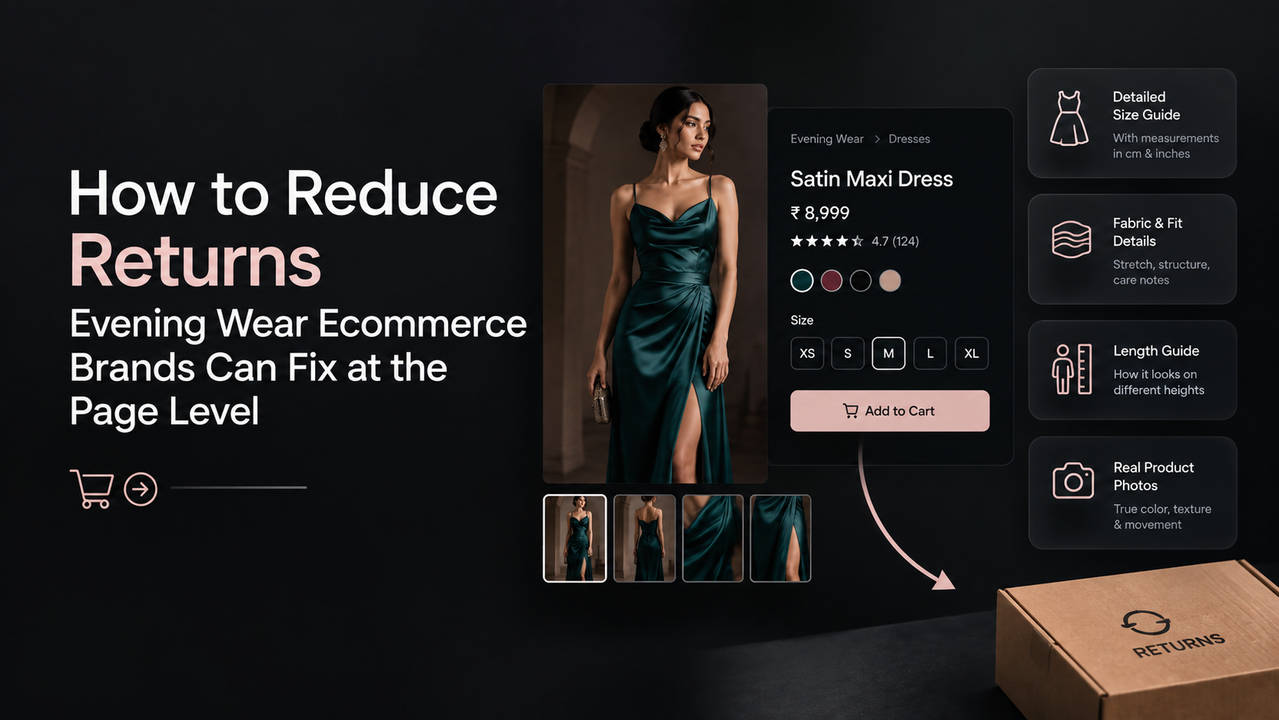
Traditional size charts are built on static chest-waist-hip measurements that fail to convey how a structured evening gown actually fits. Formalwear involves rigid fabrics like silk micado, delicate tulle, or boned corsetry where even a quarter-inch deviation leads to a return.
To combat fit anxiety:
-
Incorporate AI-Driven Size Recommendations: Tools that calculate size based on height, weight, body shape, and known brand preferences drastically improve accuracy over static tables.
-
Provide Specific Garment Measurements: Publish exact finished-garment dimensions (e.g., total length from shoulder to hem, sleeve circumference, and fabric stretch percentage).
-
Highlight Model Proportions: List the model's exact measurements along with the size she is wearing to give shoppers a true visual baseline.
Leverage High-Fidelity 3D Video and Realistic Lighting
Evening wear fabrics interact dynamically with light and movement. Satin reflects differently under warm indoor light versus natural daylight, and heavy embellishments alter a dress’s natural drape. When the physical garment fails to match the digitized expectation, a return is guaranteed.
Replacing flat photography with high-definition video clips (10-15 seconds showing a model walking, turning, and sitting) lets customers see fabric movement and silhouette flow in real time. Combining high-resolution zoom capabilities with realistic video significantly bridges the sensory gap inherent to online luxury shopping.
Harness Strategic Conversion Rate Optimization (CRO)
Fixing your PDP requires looking at the entire user journey holistically. Comprehensive conversion rate and funnel optimization ensures that user flow, micro-copy, and visual cues direct customers toward the single right purchase rather than multiple tentative ones.
Key page-level CRO adjustments for formal wear include:
-
Prominent Fit Warnings: Clearly state if a garment runs small, lacks give, or requires specific undergarments directly above the "Add to Bag" button.
-
Tailored User-Generated Content (UGC): Allow verified buyers to upload photos and filter reviews by height, weight, and ordered size so prospective buyers can see how gowns look on real body types.
Conclusion
To effectively reduce returns evening wear ecommerce CEOs must stop treating returns as a logistics issue and start addressing them as a PDP design challenge. By prioritizing fit precision, rich visual media, and tailored conversion strategies, brands can eliminate buyer hesitation, cut reverse-logistics expenses, and build long-term brand loyalty.
What's Your Reaction?