How Is 100% ABS Luggage Shell Material Controlled?
100% ABS luggage uses ABS as the shell material rather than combining ABS with polycarbonate. This mono-material construction affects molding, surface consistency, impact performance, color matching, and end-of-life handling, making material selection an important specification for luggage buyers.
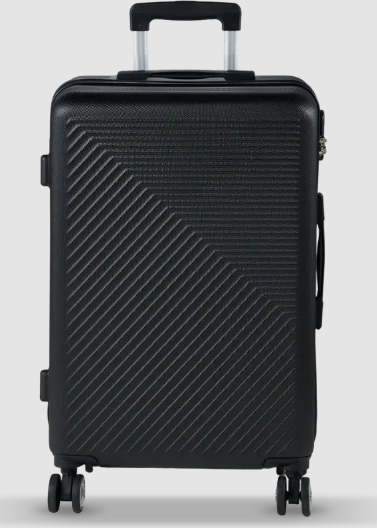
100% ABS luggage uses a single ABS resin throughout the hard shell, which creates a different production approach from luggage made with an ABS and polycarbonate blend. The difference is not simply a matter of material labeling. Using one resin means the molding process can be controlled around the flow, cooling, and shrinkage characteristics of ABS without having to manage the interaction between two different plastics.


The mono-material approach can also make production consistency easier to monitor. When the same resin is used throughout a 100% ABS luggage shell, factors such as color, surface texture, and molding behavior can be evaluated against one material specification. Buyers ordering several production batches should still request color samples and production records, since processing temperature, pigment concentration, and cooling conditions can affect the final appearance even when the resin itself remains unchanged.
Impact resistance is where pure ABS and ABS+PC luggage need to be distinguished more carefully. Polycarbonate generally contributes greater impact resistance to a blended shell, while ABS offers a more economical material route for luggage intended for lighter-duty travel. A 100% ABS luggage product should therefore be specified according to its intended use and price range rather than being treated as directly equivalent to a polycarbonate-containing shell.
Surface appearance can be another consideration. ABS can provide a consistent molded finish and predictable color response when processing parameters remain stable. This is useful for buyers ordering luggage in specific colors across multiple batches, especially when the products will be displayed together. A sample approved before production should ideally be retained as the reference for subsequent color and surface inspections.
The shell is only one part of the finished suitcase, however. Wheels, handles, zippers, corner structures, lining, and frame components all contribute to the final travel experience. Buyers evaluating 100% ABS luggage should therefore avoid judging overall durability solely from the shell material. A well-formed shell can still be paired with hardware that does not match the expected usage frequency.
Mono-material construction can also simplify material identification at the end of the product's service life. A shell made from a single polymer is generally easier to identify for recycling than a structure containing multiple blended plastics, although the actual recyclability of the complete suitcase still depends on how easily the shell can be separated from other components.
For distributors, material communication is particularly important. A 100% ABS luggage line can occupy a different position from an ABS+PC range, and retailers should understand the distinction before presenting the products to customers. Clear material specifications help prevent expectations of polycarbonate-level impact resistance from being attached to a pure ABS case.
For OEM orders, buyers can also establish the material requirement directly in the product specification, including resin type, shell thickness, color reference, surface finish, and dimensional tolerances. This gives the manufacturer a clearer production target and makes incoming quality inspection easier.
Ultimately, 100% ABS luggage is best understood as a specific material and manufacturing choice rather than simply a cheaper version of blended luggage. Its value depends on matching the consistent molding characteristics and cost structure of ABS with the durability expectations of the intended travel application.
What's Your Reaction?