How Does Decentralized Exchange Development Implement Multi-Chain Liquidity Routing?
Learn how Decentralized Exchange Development implements multi chain liquidity routing using liquidity aggregation cross chain connectivity and smart contracts.
Introduction
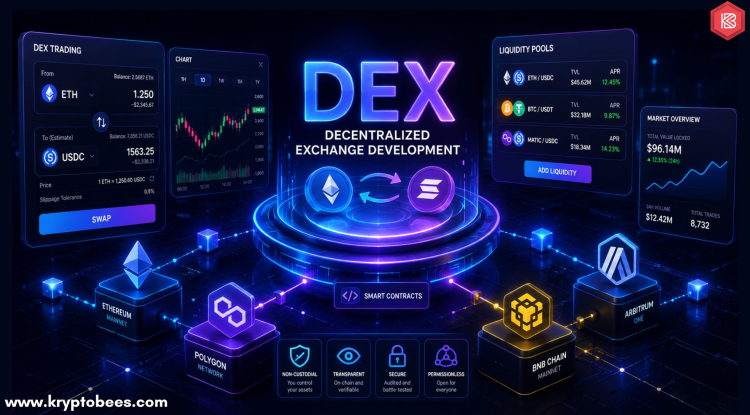
Multi chain liquidity routing allows traders to access liquidity from different blockchain networks through a single platform. Instead of limiting trades to one blockchain the exchange identifies the best route by comparing available liquidity token prices and transaction costs across supported networks. Decentralized Exchange Development makes this possible by integrating routing mechanisms that connect multiple blockchain ecosystems and execute trades through the most suitable liquidity source.


Understanding Multi Chain Liquidity Routing
A decentralized exchange can connect with multiple blockchain networks such as Ethereum BNB Chain Polygon Avalanche and Arbitrum. The routing engine checks liquidity pools across these networks and selects the most efficient path for each trade. This process helps improve trade execution while reducing price differences caused by limited liquidity.
Liquidity Aggregation Across Networks
A decentralized exchange development company builds liquidity aggregation systems that combine liquidity from multiple decentralized exchanges and automated market makers. Instead of depending on a single liquidity pool the platform gathers liquidity from several sources giving users access to better trading opportunities and improved order execution.
Cross Chain Asset Transfer
To support trading between different blockchains decentralized exchange development services integrate cross chain bridges and interoperability protocols. Smart contracts handle token transfers and verify transactions between supported networks. This enables users to trade assets without manually moving funds between blockchains.
Smart Contract Based Routing
A DEX development company develops smart contracts that automatically calculate the best trading route. These contracts evaluate available liquidity network fees and token exchange rates before executing the transaction. The routing process happens automatically helping users complete trades through the most suitable path.
Security and Network Compatibility
Security is an essential part of Decentralized Exchange Development. Developers use audited smart contracts transaction validation and continuous network monitoring to support reliable cross chain transactions. Regular updates also help maintain compatibility with blockchain protocol changes and newly supported networks.
Conclusion
As blockchain ecosystems continue to grow Decentralized exchange development focuses on improving connectivity between multiple networks. By implementing multi chain liquidity routing businesses can build decentralized exchanges that provide broader liquidity access efficient trade execution and support for assets across different blockchain ecosystems.
What's Your Reaction?