Global Thalassemia Market Insights & Growth Trends | CAGR 9.2% (2025–2031)
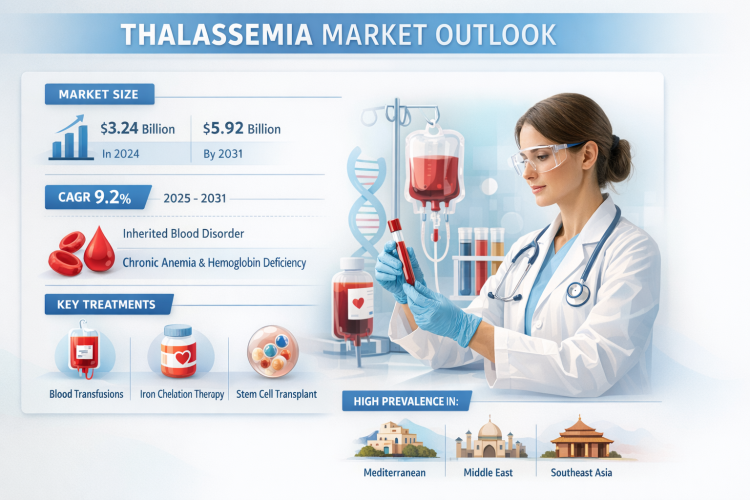
According to a newly published market research report by 24LifeSciences, global thalassemia market was valued at USD 3.24 billion in 2024 and is projected to reach USD 5.92 billion by 2031, growing at a compound annual growth rate (CAGR) of 9.2% during the forecast period 20252031.


Thalassemia, an inherited blood disorder characterized by abnormal hemoglobin production, leads to excessive destruction of red blood cells and chronic anemia. This condition requires lifelong management through blood transfusions, iron chelation therapy, or potentially curative stem cell transplants. Its prevalence is particularly high in Mediterranean, Middle Eastern, and Southeast Asian populations, driving substantial demand for treatment solutions.
Download a Free Sample Report (PDF): https://www.24lifesciences.com/download-sample/15711/thalassemia-market
Rising Genetic Disorder Prevalence and Treatment Advancements Drive Market Growth
The increasing global burden of thalassemia, with over 60,000 children born annually with severe forms, remains the primary growth driver. Technological breakthroughs in gene therapy and precision medicine have revolutionized treatment paradigms, particularly since the FDA approval of betibeglogene autotemcel (Zynteglo) for transfusion-dependent -thalassemia in 2022.
Expanding newborn screening programs and government initiatives in high-prevalence regions further accelerate market expansion. Countries like India, Thailand, and Saudi Arabia have implemented nationwide prevention strategies, combining genetic counseling with advanced diagnostics.
Next-Generation Therapies Transform Treatment Landscape
Recent FDA approvals for gene therapies have marked a paradigm shift from symptom management to potential cures, with clinical trials demonstrating 80% transfusion independence rates in treated patients. CRISPR-based gene editing technologies, now in late-stage trials, promise more targeted treatments with improved safety profiles.
Simultaneously, advancements in iron chelation drugs and bone marrow transplantation techniques are enhancing patient outcomes. These innovations address critical unmet needs in chronic disease management while creating new revenue streams for market players.
Market Challenges: Cost Barriers and Healthcare Disparities
Despite strong growth fundamentals, the market faces significant obstacles:
-
Extremely high treatment costs, with gene therapies exceeding $2 million per patient
-
Inadequate healthcare infrastructure in developing countries where prevalence is highest
-
Stringent regulatory requirements for novel therapies (10-15 year follow-up periods)
-
Limited donor availability for stem cell transplants
These challenges create substantial access disparities, particularly in regions needing these treatments most. Price pressures from payers and governments further complicate market dynamics for manufacturers.
Get the Complete Report & Table of Contents: https://www.24lifesciences.com/thalassemia-market-15711
Middle East & Africa Leads in Prevalence and Treatment Innovation
The Middle East & Africa region dominates the global landscape, accounting for the highest disease burden due to genetic and cultural factors. Countries like Saudi Arabia, Iran, and Cyprus have implemented:
-
Mandatory premarital screening programs covering >90% of populations
-
Specialized treatment centers with advanced capabilities
-
Government-subsidized treatment access initiatives
-
Leading research in stem cell transplantation
While North America currently leads in revenue due to premium therapy adoption, Asia-Pacific shows the highest growth potential, driven by expanding healthcare access and local generic production.
Hospitals Remain Core Treatment Centers
By application, hospitals represent the dominant care setting due to the complex infrastructure required for transfusions and specialized therapies. The transfusion therapy segment holds majority share currently, though gene therapies are rapidly gaining traction.
Pediatric care constitutes a critical focus area, with newborns and children requiring early intervention to prevent complications. This segment drives demand for screening technologies and family counseling services alongside clinical treatments.
Competitive Landscape: Innovation Drives Strategic Moves
The market features a mix of pharmaceutical giants and specialized biotech firms, with increasing consolidation through acquisitions. Notable developments include Pfizer's $5.4 billion acquisition of Global Blood Therapeutics and Novartis maintaining strong positions through its iron chelation portfolio.
Key companies profiled in the report include:
-
Novartis
-
Pfizer
-
Bluebird Bio
-
Emmaus Medical
-
Global Blood Therapeutics
-
Sangamo Biosciences
-
CRISPR Therapeutics
-
and More
These players compete on treatment efficacy, regulatory approvals, and market access strategies, with gene therapy IP becoming increasingly valuable in this space.
Market Opportunities: Emerging Economies and Precision Medicine
Significant untapped potential exists in developing nations through:
-
Public-private partnerships to improve treatment affordability
-
Localized manufacturing of generic iron chelators
-
Telemedicine applications for rural patient management
Additionally, the development of biomarker-driven therapies and next-generation gene editing tools presents lucrative R&D avenues. Medical tourism for advanced treatments is emerging as a distinct market segment in countries like India and Thailand.
Access the Full Report
Download a Free Sample Report (PDF):
https://www.24lifesciences.com/download-sample/15711/thalassemia-market
Get the Complete Report & Table of Contents:
https://www.24lifesciences.com/thalassemia-market-15711
About 24LifeSciences
24LifeSciencesis a leading provider of market intelligence and strategic research reports across pharmaceuticals, biotechnology, medical devices, and healthcare technologies. Our reports are designed to support data-driven decision-making for manufacturers, healthcare providers, investors, consultants, and policy makers worldwide.
Follow us on LinkedIn:
https://www.linkedin.com/company/lifesciences24/
What's Your Reaction?