Discover Endless Adventures and Classic Action in D2R by U4GM
The skill system establishes the foundation. Each class has multiple abilities and paths that encourage specialization. Players must decide which abilities deserve investment and how different skills complement one another.
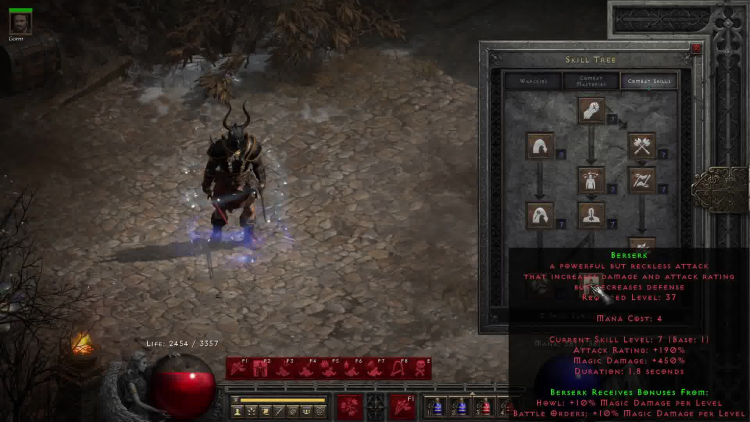
Character building is at the heart of Diablo II: Resurrected. While defeating demons provides the immediate action, the larger objective is to construct a character capable of handling increasingly difficult challenges efficiently.


That process begins with class selection but quickly becomes much more complicated. Skills, statistics, equipment, resistances, and playstyle all interact to create the final build.
One of the game's most compelling qualities is that there is rarely a single universal definition of a perfect character. Different builds emphasize different objectives. Some prioritize speed, others survivability, and others specialized damage.
This variety gives players room to experiment.
The skill system establishes the foundation. Each class has multiple abilities and paths that encourage specialization. Players must decide which abilities deserve investment and how different skills complement one another.
Equipment then modifies those decisions.
A powerful item can provide bonuses that make a particular skill more effective. Alternatively, equipment may solve a defensive problem and allow the player to invest more heavily in offensive capabilities.
This interaction creates the game's famous theorycrafting culture.
Players can spend hours analyzing equipment combinations and considering how small improvements affect overall performance. D2R Items may sound like a straightforward shopping concept, but the deeper issue is understanding which equipment actually contributes value to a particular build.
A rare item is not automatically ideal. A less glamorous piece can sometimes provide exactly the resistance, attribute, or skill bonus that a character needs.
This makes optimization contextual.
The process also changes as characters progress. Equipment that is excellent during the campaign may eventually be replaced by something better suited to endgame content. Skills that feel dominant early can become less effective against later enemies.
The player therefore has to adapt.
This adaptation is one of the reasons Diablo II remains engaging after the main storyline. Character development does not stop when the campaign ends. Instead, endgame activities provide reasons to refine the build further.
Players can target specific areas, farm equipment, test alternative setups, and pursue more efficient versions of their existing characters.
Efficiency becomes its own game.
A player may begin by asking, “Can my character defeat this enemy?” Later, the question becomes, “How quickly can my character defeat this enemy without sacrificing safety?”
That shift marks the transition from basic progression to optimization.
For players searching for cheap D2R Ladder Items, this distinction matters. Equipment acquisition should be understood as part of a broader character-building process. The best outcome is not simply owning powerful objects. It is creating a coherent combination in which every component contributes to the desired playstyle.
This also explains why community guides can be useful. Diablo II has a huge strategic vocabulary, and experienced players have spent years identifying efficient combinations. Yet copying a build is not necessarily the final goal.
Understanding why a build works is more valuable.
Once players understand the principles behind a successful character, they can adapt those principles to different circumstances. They can substitute equipment, change skills, or develop hybrid approaches.
That flexibility is one of the strongest signs of a well-designed system.
Diablo II: Resurrected succeeds because character progression remains a puzzle rather than a checklist. There is always another variable to examine, another weakness to address, or another improvement to pursue.
The perfect character may never truly exist because the definition of perfection changes with the player's objective.
For one player, perfection might mean clearing areas as quickly as possible. For another, it could mean surviving the most dangerous encounters. Someone else might prioritize an unusual build simply because it is entertaining.
The game supports all of these motivations.
Ultimately, Diablo II: Resurrected turns character development into an ongoing creative process. Skills establish possibilities, equipment modifies them, and player decisions determine the final result.
That combination gives the game a depth that remains impressive decades after the formula was first established.
What's Your Reaction?