Future of Marketing Automation enhancing engagement metrics
Explore the Future of Marketing Automation with AI-powered all-in-one suites, predictive analytics, and integration strategies that optimize campaigns and customer engagement. Discover the Future of Marketing Automation with AI-driven all-in-one suites and predictive analytics for smarter, more efficient campaigns.
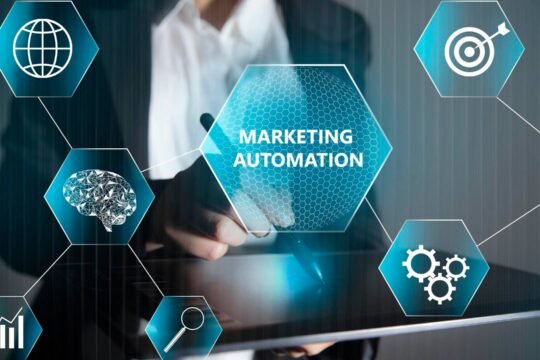
The marketing landscape is entering a transformative era where technology drives personalization, efficiency, and measurable results. The Future of Marketing Automation is no longer about simply sending emails or scheduling posts; it is evolving into sophisticated, AI-powered all-in-one suites that streamline campaigns, analyze data in real time, and deliver predictive insights. Businesses adopting these next-generation solutions are poised to gain a competitive edge by enhancing customer engagement and optimizing operational efficiency.


For more info https://www.martechcube.com/future-of-marketing-automation/
Understanding Marketing Automation Evolution
Marketing automation has progressed far beyond its early roots of scheduling emails and simple lead scoring. The future promises fully integrated systems capable of orchestrating campaigns across multiple channels while providing deep insights into customer behavior. These platforms unify marketing, sales, and customer service functions, ensuring that businesses operate efficiently and deliver consistent, personalized experiences.
Martech articles consistently highlight that companies leveraging advanced automation see significant improvements in ROI and customer satisfaction. The integration of AI enables predictive analysis, allowing brands to anticipate customer needs before they arise, transforming marketing from reactive to proactive.
Key Benefits of All-in-One Suites
All-in-one marketing automation suites consolidate tools for email, social media, content management, analytics, and CRM into a single platform. This consolidation eliminates data silos, allowing teams to access accurate, real-time insights. The future of marketing automation emphasizes not just efficiency but intelligence, with features that help marketers deliver hyper-personalized content at scale.
Predictive analytics, machine learning, and AI-driven recommendations are now standard features in top-tier suites. Martech news consistently reports that companies implementing integrated platforms experience enhanced lead nurturing, faster campaign execution, and more precise audience segmentation. Additionally, automated reporting and dashboards reduce manual tasks, giving marketing teams more time to focus on strategy.
Challenges in Adopting Marketing Automation
Despite the promise of all-in-one suites, businesses often face challenges during adoption. Legacy systems may not integrate easily, leading to potential disruptions in workflows. Data quality remains a crucial issue; incomplete or inconsistent information can reduce the effectiveness of automated campaigns. Moreover, marketers must balance automation with personalization to avoid generic interactions that alienate customers.
Organizational change is another hurdle. Teams may resist adopting new tools, especially if they require learning complex platforms. Companies that invest in training, clear documentation, and support see smoother adoption and faster returns on their automation investments. Martech articles emphasize that successful integration requires both technical and cultural alignment.
Best Practices for Future-Proof Automation
To maximize the impact of marketing automation, businesses should first define clear goals and map the customer journey. Identifying critical touchpoints ensures automation enhances the overall experience rather than complicating it. Prioritizing platforms that support open APIs and real-time data sharing facilitates integration with existing systems.
Automation strategies should focus on personalization, predictive analytics, and actionable insights. Data governance and compliance measures are critical to maintaining trust and accuracy. For marketers seeking deeper insights and strategies, the resource at Inhouse-Techhub : https://www.martechcube.com/inhouse-techhub/ offers advanced guidance on implementing next-generation automation effectively.
Cross-department collaboration is also essential. Marketing, sales, and customer service teams must align to ensure campaigns deliver consistent messaging. Continuous testing, monitoring, and feedback loops help refine automated workflows and optimize performance over time.
The Role of AI and Predictive Analytics
AI and predictive analytics are at the heart of the future of marketing automation. By analyzing historical data, AI models forecast customer behavior, enabling proactive engagement strategies. This allows marketers to create highly targeted campaigns, increase conversions, and reduce churn.
The integration of natural language processing and machine learning algorithms further enables automated content creation, sentiment analysis, and real-time decision-making. Martech news highlights that companies embracing AI-driven automation outperform competitors in engagement metrics and overall campaign effectiveness.
Integrating Marketing Automation with Existing Systems
For businesses to unlock the full potential of automation, seamless integration with existing platforms such as CRMs, e-commerce solutions, and analytics tools is critical. Integrated systems provide a unified view of the customer, ensuring that campaigns are relevant, timely, and impactful.
The future of marketing automation is not just about technology adoption but creating a cohesive ecosystem where data flows freely and informs every customer interaction. By prioritizing integration, organizations can optimize their marketing efforts while providing a seamless experience across all touchpoints.
Conclusion
The Future of Marketing Automation is set to revolutionize how businesses engage customers, streamline processes, and derive actionable insights. All-in-one suites powered by AI and predictive analytics will become central to effective campaigns. Organizations embracing these technologies, as highlighted in Martech articles and Martech news, can expect higher ROI, stronger customer relationships, and the ability to stay ahead in a competitive digital landscape.
This marketing news inspired by MarTech Cube: https://www.martechcube.com/
What's Your Reaction?










![[ Latest Report ] Annatto Market Located Worldwide Trends and Application](https://likelylike.com/assets/img/bg_slider.png)