Common Mistakes to Avoid When Buying a Home Golf Simulator
Do not select a system solely because it lists a large number of measurements. Understand which data points are important for your training goals and how reliably the system captures them.
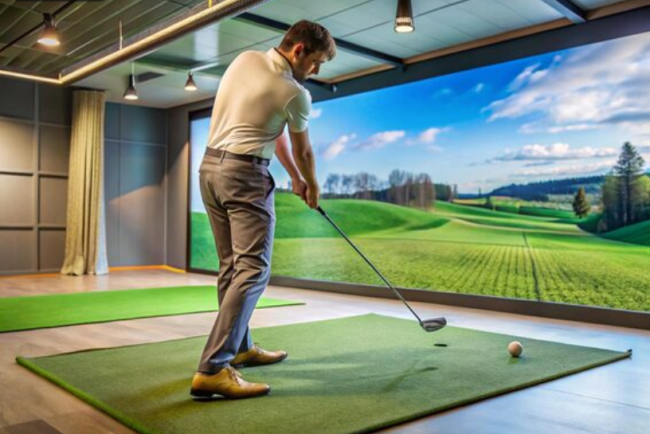


Buying a simulator can be exciting. There is something appealing about having the ability to practise without depending on weather, daylight, or travel time. Yet enthusiasm can sometimes lead buyers to focus on impressive specifications while overlooking practical details.
The best purchasing decision is rarely based on a single feature. Room dimensions, software, tracking accuracy, installation requirements, maintenance, and future usability all deserve attention. Understanding common mistakes before spending money can make the entire process much smoother.
Choosing Equipment Before Measuring the Room
One of the most frequent mistakes is purchasing equipment first and figuring out the room afterward.
A simulator needs adequate space for the golfer, equipment, screen, and surrounding movement. Ceiling height is particularly important because a full swing requires more vertical clearance than many people initially expect.
Measure the intended room carefully. Consider the golfer's height, swing style, handedness, and distance from the screen.
Do Not Forget Side Clearance
A setup that works for a right-handed player may feel restrictive for a left-handed player.
If several people will use the room, account for both sides of the hitting area. This provides greater flexibility and reduces the risk of creating a space that only one person can comfortably use.
Buying Based on Features You Will Never Use
More features do not necessarily mean a better experience.
Some buyers become attracted to long lists of technical capabilities without considering whether those functions will improve their actual practice.
Prioritise the features that directly support your goals. A straightforward system that is easy to use may provide greater satisfaction than a complicated installation filled with unnecessary functions.
Forgetting Future Upgrades
Technology evolves. A system that feels advanced today may eventually become outdated.
When evaluating a Golf Simulator, check whether hardware and software can be upgraded. Look at connection options, compatibility, and replaceable components.
Planning for change does not mean buying the most expensive system. It means avoiding a setup that becomes difficult to modify.
Focusing Only on Price
Budget matters, but the cheapest option is not automatically the most economical.
Low-cost equipment may have limitations in tracking, software compatibility, durability, image quality, or upgrade potential. Conversely, paying for features that will never be used can also waste money.
The better approach is to identify how the system will actually be used.
Will it mainly support practice? Will children use it? Is entertainment important? Will the room host several players? Answers to these questions help determine which features deserve investment.
Ignoring the Launch Monitor
The tracking system is central to the experience.
A launch monitor collects information about ball movement and, depending on the technology, club characteristics. Accuracy and consistency therefore matter considerably.
Do not select a system solely because it lists a large number of measurements. Understand which data points are important for your training goals and how reliably the system captures them.
A serious practice environment benefits from dependable feedback rather than an impressive specification sheet.
Forgetting About Software
Hardware receives considerable attention, but software determines much of what users actually do with the system.
Look at available practice modes, virtual courses, multiplayer features, game options, updates, and compatibility. Also check whether subscriptions or additional fees are required for certain functions.
A system may be excellent technically but disappointing if its software does not suit your preferences.
Check Long-Term Costs
The initial purchase is only one part of the financial picture.
Consider installation, replacement components, software subscriptions, projector maintenance, protective materials, and possible upgrades.
Calculating the expected ownership cost gives a more realistic comparison than looking at the initial price alone.
Underestimating Installation
Some buyers assume that setting up a simulator is simply a matter of placing equipment in a room.
In reality, alignment, screen positioning, projector placement, electrical connections, cable management, flooring, and safety can all affect performance.
Poor installation can make excellent hardware perform poorly.
If professional installation is being considered, ask what is included. Clarify whether room preparation, mounting, calibration, wiring, and testing are part of the service.
Choosing a Screen Without Considering Impact
The impact screen is exposed to repeated ball strikes. Its durability matters.
The screen should also be appropriately sized for the room and positioned at a safe distance. Wrinkles or poor tension can affect the visual experience.
Consider the surrounding wall and floor as well. A proper enclosure or protective treatment can reduce the chance of accidental damage.
Neglecting Safety
Golf balls move quickly. Safety should therefore be part of the design rather than a final consideration.
Avoid placing fragile furniture, glass objects, or valuable decorations inside the active area. Make sure spectators have a clearly defined safe position.
The hitting mat should remain stable, while loose cables should be secured away from walking paths.
A Smarter Way to Make the Purchase
A successful buying process begins with the room, not the product catalogue.
Measure the available space, define the purpose, establish a realistic budget, compare tracking technology, review software, understand installation requirements, and calculate ongoing expenses.
A Home Golf Simulator can be a valuable long-term investment when selected according to actual needs rather than marketing claims.
The goal should be simple: create a system that fits the room, supports the player's objectives, remains enjoyable to use, and continues to deliver value long after installation day.
What's Your Reaction?