Business Intelligence Services: A Comprehensive Guide for Data-Driven Organizations
Business Intelligence Services empower organizations to turn data into actionable insights, improve performance, predict trends, and make faster, data driven decisions
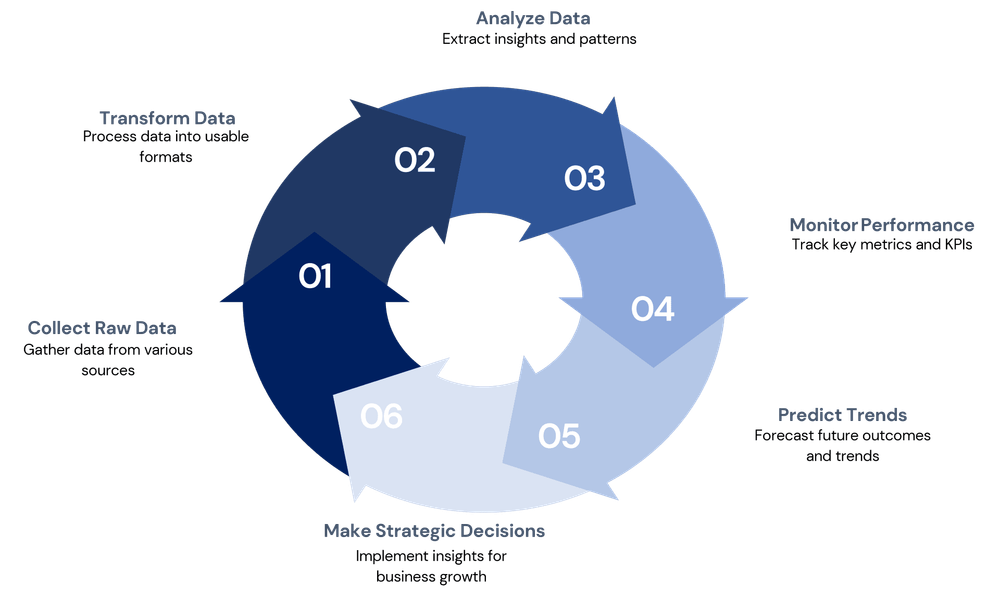
Data has become one of the most valuable resources for modern organizations. Every business generates information through transactions, customer interactions, operations, and digital platforms. However, raw data alone does not provide clarity. To extract meaning and guide decision-making, organizations rely on Business Intelligence Services to transform complex datasets into structured, understandable insights.


This guide explains what Business Intelligence Services are, how they work, and why they are essential for organizations seeking accurate analysis and informed decision-making.
What Are Business Intelligence Services?
Business Intelligence Services are a set of technologies, processes, and methodologies used to collect, process, analyze, and present business data. The primary objective of BI is to support decision-making by delivering accurate, timely, and relevant information.
These services consolidate data from multiple sources and convert it into reports, dashboards, and analytical models. Instead of relying on manual spreadsheets or fragmented systems, organizations gain a centralized view of performance across departments and operations.
Business Intelligence focuses on answering key questions such as:
-
What is happening in the business right now?
-
How has performance changed over time?
-
Which trends and patterns require attention?
Core Components of Business Intelligence Services
Effective Business Intelligence Services consist of several interconnected components that work together to produce reliable insights.
Data Integration
Data integration involves collecting information from multiple systems, such as customer databases, financial platforms, operational tools, and third-party sources. This step ensures that data is standardized and accessible from a single environment.
Data Visualization
Visualization tools convert complex datasets into charts, graphs, and interactive dashboards. These visual formats make it easier for users to interpret results, compare performance, and identify anomalies.
Reporting and Monitoring
Standardized reports and performance metrics allow businesses to track key indicators consistently. Automated reporting reduces manual effort and improves data accuracy.
Predictive and Advanced Analytics
Advanced analytics use statistical models and algorithms to identify trends and forecast future outcomes. These capabilities help organizations move from descriptive analysis to predictive insights.
Business Intelligence and Data Analytics Services Explained
While traditional BI focuses on reporting and historical analysis, business intelligence and data analytics services expand these capabilities by incorporating advanced techniques such as forecasting, pattern recognition, and scenario analysis.
These services help organizations:
-
Identify root causes behind performance changes
-
Anticipate future risks and opportunities
-
Optimize processes through data-driven modeling
By combining BI with analytics, businesses gain a deeper understanding of both past performance and potential future scenarios, enabling more proactive planning.
Self-Service Business Intelligence
Self-service BI is an increasingly important aspect of modern Business Intelligence Services. It enables non-technical users to explore data independently without relying heavily on IT teams.
Key benefits of self-service BI include:
-
Faster access to insights
-
Reduced dependency on technical specialists
-
Improved collaboration across departments
-
Increased data literacy within the organization
With intuitive interfaces and drag-and-drop tools, users can create customized reports and dashboards that align with their specific needs.
How Organizations Use Business Intelligence Services
Business Intelligence Services support decision-making across a wide range of business functions:
Financial Analysis
BI helps finance teams monitor budgets, analyze revenue trends, and evaluate profitability with greater accuracy.
Sales and Marketing Insights
Sales performance tracking, customer segmentation, and campaign analysis allow teams to refine strategies and improve results.
Operational Efficiency
Operational dashboards help identify inefficiencies, optimize workflows, and improve resource utilization.
Supply Chain Management
BI supports demand forecasting, inventory management, and supplier performance analysis.
Customer Experience Analysis
Customer data analysis enables organizations to understand preferences, measure satisfaction, and improve service delivery.
Importance of Data Quality and Governance
The effectiveness of Business Intelligence Services depends heavily on data quality. Inconsistent, incomplete, or inaccurate data can lead to misleading insights and poor decisions.
Strong data governance frameworks ensure:
-
Data accuracy and consistency
-
Clear ownership and accountability
-
Secure access controls
-
Compliance with regulatory requirements
Organizations that prioritize data governance gain more reliable BI outcomes and greater trust in their analytics.
Challenges in Implementing Business Intelligence Services
Despite their value, BI initiatives can face several challenges:
-
Data silos across systems and departments
-
Complexity in integrating legacy systems
-
Limited user adoption due to poor usability
-
Difficulty in selecting appropriate tools
Addressing these challenges requires careful planning, stakeholder involvement, and collaboration with experienced business intelligence services companies that understand data architecture and organizational needs.
Role of Business Intelligence Services Companies
Business intelligence services companies assist organizations in designing, implementing, and maintaining BI solutions. Their expertise helps ensure that BI initiatives align with business objectives and technical requirements.
These companies typically provide:
-
BI strategy and roadmap development
-
Data modeling and integration support
-
Dashboard and reporting implementation
-
Ongoing optimization and support
By working with specialized providers, organizations can accelerate BI adoption and maximize the value of their data assets.
Conclusion
Business Intelligence Services play a vital role in helping organizations navigate today’s data-driven environment. By transforming raw data into structured insights, BI enables informed decision-making, performance monitoring, and strategic planning.
Through the integration of analytics, visualization, and governance, business intelligence and data analytics services provide organizations with the clarity needed to respond to change and plan for the future. As data volumes continue to grow, the importance of well-designed BI solutions will only increase.
Connect with us today and turn your data into a powerful driver of growth and success.
What's Your Reaction?