How Athleisure Ad Spend Should Shift as Customer Acquisition Cost Efficiency Changes
Learn how top apparel CEOs optimize athleisure ad spend as CAC fluctuates. Balance paid social, retention, and performance creative strategy.
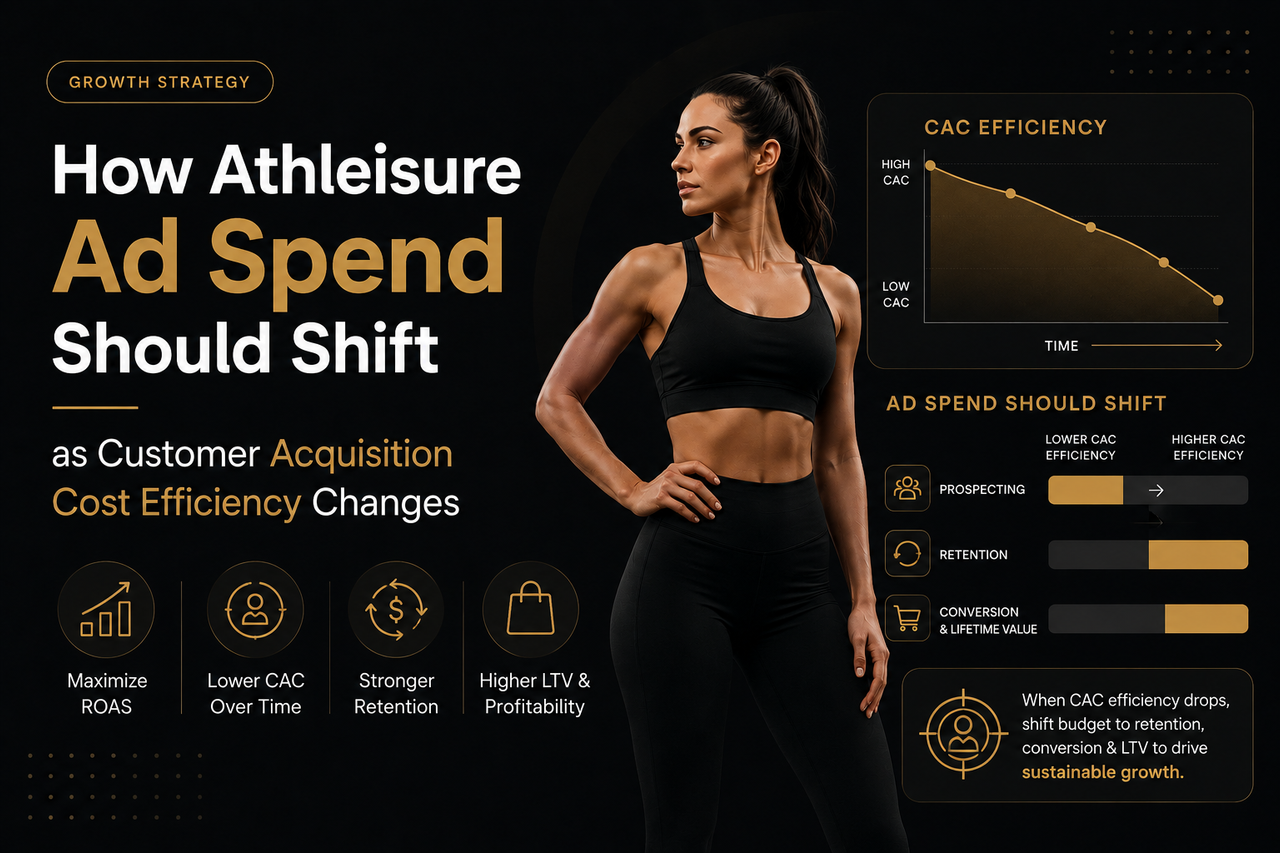
The direct-to-consumer (DTC) apparel landscape has undergone a seismic transformation over the last few years. Rising privacy regulations, saturated social feeds, and intensified competition have turned digital advertising into a volatile cost center. For brand executives, watching Customer Acquisition Cost (CAC) fluctuate feels like navigating unpredictable weather. One quarter yields efficient conversions, and the next leaves margins severely compressed.


When CAC efficiency drops, the gut reaction for many brand leaders is to immediately slash budgets across the board. Conversely, when CAC drops, brands often flood top-of-funnel channels with unbridled capital. Neither blanket approach is sustainable. Managing athleisure ad spend requires a dynamic, data-backed portfolio strategy that scales up or down based on acquisition efficiency.
Here is how modern e-commerce leaders and founders should reallocate their capital as CAC efficiency moves through its cycles.
What Drives CAC Volatility in the Apparel Sector?
Before shifting dollars, it is vital to understand why acquisition metrics swing. In the activewear market, CAC changes are typically driven by three primary triggers:
- Ad Platform Dynamics: Increased bid competition during peak retail seasons (Q4, New Year fitness booms) spikes CPMs (cost per thousand impressions).
- Creative Fatigue: High-frequency targeting on platforms like Meta and TikTok leads to diminishing returns as audiences tune out familiar ads.
- Macro Economic Shifts: Changes in discretionary consumer spending directly alter conversion rates at the bottom of the funnel.
Recognizing these drivers helps brands diagnose whether an inefficient CAC is an industry-wide platform issue or an internal conversion bottleneck.
Strategy 1: How to Shift Spend When CAC Spikes (Low Efficiency)
When CAC rises and Return on Ad Spend (ROAS) drops below your threshold, throwing money at broad top-of-funnel campaigns only burns cash. Instead, pivot from aggressive user acquisition to structural margin protection.
1. Defend the Core and Protect Mid-Funnel Conversions
Divert a portion of paid media away from cold audiences and double down on high-intent remarketing and dynamic product ads. High-intent search campaigns (e.g., Google Search for brand and specific product terms) should remain fully funded.
2. Shift Capital to Owned Media and Retention
Customer lifetime value (LTV) becomes your primary buffer against high CAC. Reallocate performance budget toward customer retention mechanisms:
- VIP email and SMS loyalty flows.
- Bounce-back offers for first-time buyers.
- Cross-selling complementary lines (e.g., matching sports bras with leggings).
3. Upgrade Your Creative Engine
When ad costs rise, media buying tactics cannot save bad ad copy or stale imagery. This is the moment to invest heavily in an agile performance creative strategy. Testing UGC hooks, native video formats, and problem-solution angles lowers cost-per-click (CPC) by lifting organic engagement on paid platforms.
Strategy 2: Scaling Capital When CAC Drops (High Efficiency)
When CAC falls and advertising efficiency surges, staying conservative means leaving market share on the table. However, reckless scaling can quickly break campaign learning algorithms and spike your acquisition costs back up.
1. Incremental Budget Scaling
Avoid doubling campaign budgets overnight. Scale athleisure ad spend by 15% to 20% every 48 to 72 hours on winning ad sets to maintain algorithmic stability.
2. Expand Broad Prospecting & Lookalikes
Capitalize on high conversion rates by feeding top-of-funnel broad targeting options. Test new geographic regions, broader interest groups, and interest-stacked lookalike audiences.
3. Leverage Whitelisted Influencer Content
Boost high-performing creator posts directly through brand partner handles. Meta and TikTok users respond strongly to creator-led content, making this one of the most cost-efficient channels during favorable market conditions.
Realizing Long-Term Brand Equity
Managing athleisure ad spend is not a static decision. It requires weekly monitoring of your Marketing Efficiency Ratio (MER) and CAC-to-LTV ratios. By establishing rigid spend reallocation rules before market shifts occur, executives ensure their brands protect profitability during lean cycles and capture outsized market share when acquisition efficiency hits its stride.
What's Your Reaction?