Antivirus Software Market to Decline to USD 3.01B by 2032 Amid Rise of Integrated Endpoint Security
The global antivirus software market is projected to decline from USD 3.19B in 2024 to USD 3.01B by 2032 at a -0.9% CAGR. Market shifts toward integrated endpoint security platforms, built-in OS protections, and free alternatives are reshaping demand despite rising cyber threats and enterprise security needs.
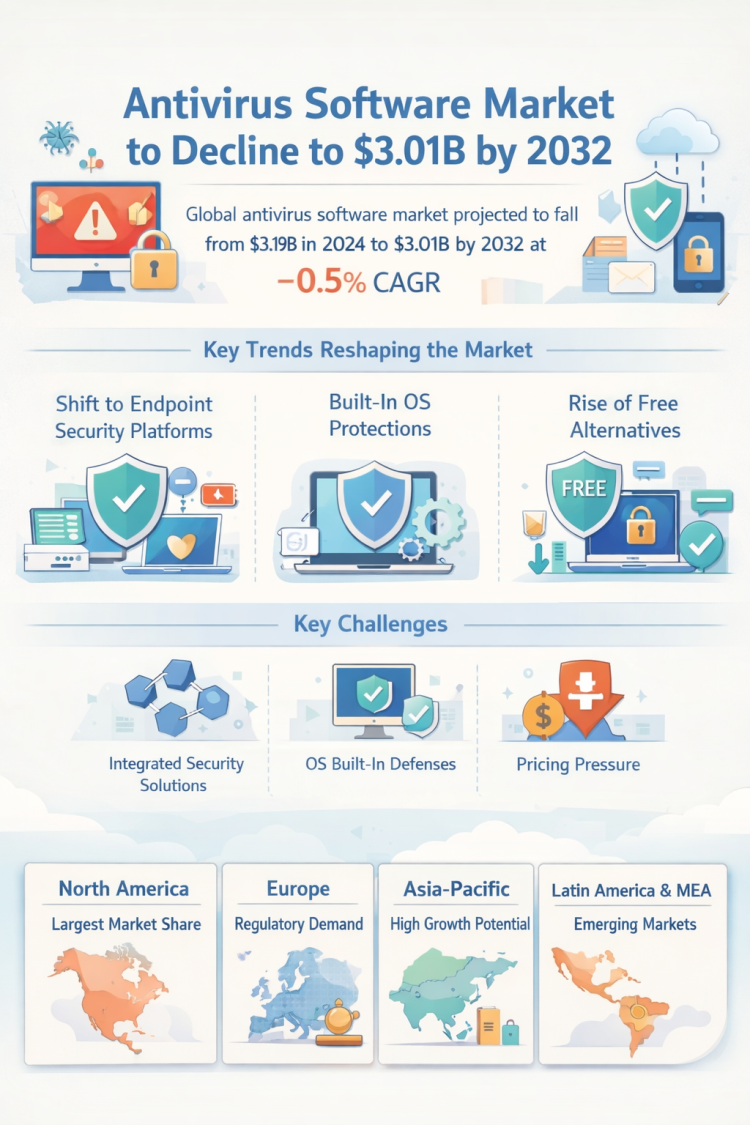


According to a new report from Intel Market Research, the global Antivirus Software market was valued at USD 3.19 billion in 2024 and is projected to decline to USD 3.01 billion by 2032, exhibiting a CAGR of -0.9% during the forecast period (2025–2032). This market evolution reflects a structural transformation as the cybersecurity industry shifts toward integrated endpoint security platforms, despite facing pressure from built-in operating system protections and mature market saturation.
What is Antivirus Software?
Antivirus software is a foundational cybersecurity solution designed to detect, prevent, and remove malicious software, including viruses, worms, trojans, ransomware, and spyware. It provides critical real-time protection by continuously scanning system memory, the operating system (OS), and files through a combination of signature-based detection, heuristic analysis, and behavioral monitoring. Modern antivirus solutions have evolved beyond traditional malware detection to incorporate advanced features like firewalls, email filtering, and network threat prevention, creating comprehensive digital defense systems.
This report provides a deep insight into the global Antivirus Software market covering all its essential aspects—from a macro overview of the market to micro details such as market size, competitive landscape, development trends, niche markets, key drivers and challenges, SWOT analysis, and value chain analysis.
The analysis helps the reader understand competition within the industry and strategies for enhancing profitability. Furthermore, it provides a framework for evaluating and accessing the position of a business organization. The report also focuses on the competitive landscape of the Global Antivirus Software Market, introducing market share, performance, product positioning, and operational insights of major players. This helps industry professionals identify key competitors and understand the competition pattern.
In short, this report is a must-read for industry players, investors, researchers, consultants, business strategists, and all those planning to foray into the Antivirus Software market.
???? Download FREE Sample Report: Antivirus Software Market - View in Detailed Research Report
Key Market Drivers
1. Escalating Sophistication and Frequency of Cyber Threats
The global antivirus software market continues to be driven by the relentless evolution of cyber threats. The emergence of sophisticated attack vectors, including ransomware-as-a-service (RaaS), fileless malware, and AI-powered threats has created sustained demand for robust endpoint protection. High-profile attacks targeting critical infrastructure, healthcare systems, and financial institutions have elevated cybersecurity from an IT concern to a core business priority. For instance, the average cost of a data breach reached $4.45 million globally in 2023, pushing organizations across all sectors to maintain or upgrade their antivirus and endpoint protection capabilities despite market consolidation trends.
2. Enterprise Digital Transformation and Expanded Attack Surfaces
The massive shift to remote and hybrid work models has dramatically expanded corporate attack surfaces, necessitating advanced endpoint protection. The proliferation of IoT devices, cloud infrastructure, and mobile endpoints creates additional vulnerability points requiring security coverage. Enterprise adoption of bring-your-own-device (BYOD) policies has increased the demand for comprehensive security suites that can protect distributed workforces, with organizations seeking solutions that offer centralized management, real-time threat intelligence, and automated response capabilities that go beyond traditional antivirus functionality.
3. Regulatory Compliance Requirements
Increasingly stringent data protection regulations worldwide, including GDPR in Europe, CCPA in California, and various industry-specific mandates like HIPAA for healthcare and PCI DSS for payment processing, compel organizations to implement robust cybersecurity measures. Antivirus software forms the foundational layer of these compliance frameworks, driving consistent demand particularly in regulated sectors such as finance, healthcare, and government where data protection is mandated by law.
Market Challenges
- Competition from Integrated Security Platforms – The traditional antivirus market faces significant pressure from comprehensive endpoint protection platforms (EPP) and extended detection and response (XDR) solutions that offer broader security capabilities beyond malware detection.
- Built-in Operating System Security – Major operating systems now include robust, free security features that meet basic protection needs, reducing the perceived necessity for third-party antivirus products among casual users.
- Pricing Pressure from Free Alternatives – The availability of competent free antivirus solutions creates pricing challenges for premium products, forcing vendors to demonstrate clear value differentiation through advanced features and services.
Emerging Opportunities
The cybersecurity landscape is undergoing rapid transformation, creating new opportunities for antivirus software providers who can adapt their offerings. The convergence of several technological and market trends presents significant growth potential, particularly in the SMB sector, emerging markets, and specialized industry verticals. Key opportunity drivers include:
- Expansion into integrated security suites with additional features like VPN, password managers, and identity theft protection
- Growing demand for cloud-based security solutions that offer centralized management and real-time updates
- Increasing adoption in emerging economies as digital transformation accelerates and cyber awareness grows
- Development of specialized solutions for IoT devices, mobile platforms, and critical infrastructure protection
Collectively, these factors are expected to drive innovation and create new revenue streams for antivirus software providers who can successfully navigate the market transition.
???? Download Sample PDF: https://www.intelmarketresearch.com/download-free-sample/14439/antivirus-software-market
Regional Market Insights
- North America: North America maintains the largest market share, driven by high cybersecurity awareness, stringent regulatory requirements, and early adoption of advanced security technologies. The region's mature cybersecurity ecosystem includes numerous leading antivirus providers and sophisticated enterprise security infrastructures.
- Europe: Europe represents a significant market characterized by strong data protection regulations and high cybersecurity spending. The implementation of GDPR and NIS Directive has heightened security requirements across the region, driving consistent demand for compliant security solutions.
- Asia-Pacific: Asia-Pacific presents the highest growth potential, fueled by rapid digitalization, expanding internet penetration, and increasing cybersecurity awareness. Countries like China, India, and Japan are driving regional growth through digital transformation initiatives and rising cyber threat awareness.
- Latin America and Middle East & Africa: These emerging regions show gradual market development, with growth concentrated in countries with stronger digital infrastructure and cybersecurity initiatives, such as Brazil, Mexico, UAE, and Saudi Arabia.
Market Segmentation
By Type
- PC Antivirus
- Mobile Antivirus
- Tablet Security
By Application
- Individual Users
- Enterprise Users
- Government Users
- Others
By Deployment
- On-Premises
- Cloud-Based
By End-User
- BFSI
- Healthcare
- IT & Telecom
- Retail
- Others
By Region
- North America
- Europe
- Asia-Pacific
- Latin America
- Middle East & Africa
???? Get Full Report Here: Antivirus Software Market - View Detailed Research Report
Competitive Landscape
While NortonLifeLock, McAfee, and Trend Micro continue to dominate the consumer antivirus segment, the enterprise market features intense competition among specialized endpoint security providers. The competitive environment is characterized by ongoing consolidation as larger security companies acquire specialized vendors to enhance their technology portfolios and market reach.
The report provides in-depth competitive profiling of key players, including:
- NortonLifeLock (Symantec)
- McAfee
- Trend Micro
- Bitdefender
- ESET
- Kaspersky
- Avast (Gen Digital)
- Others developing advanced endpoint protection and threat intelligence solutions
Report Deliverables
- Global and regional market forecasts from 2025 to 2032
- Strategic insights into product developments, partnerships, and market positioning
- Market share analysis and SWOT assessments
- Pricing analysis and business model evolution
- Comprehensive segmentation by product type, deployment, end-user, and geography
???? Get Full Report Here: Antivirus Software Market - View Detailed Research Report
???? Download FREE Sample Report: Antivirus Software Market - View in Detailed Research Report
About Intel Market Research
Intel Market Research is a leading provider of strategic intelligence, offering actionable insights in technology, cybersecurity, and digital infrastructure. Our research capabilities include:
- Real-time competitive benchmarking
- Global technology adoption and market trend analysis
- Country-specific regulatory and market entry analysis
- Over 500+ technology and cybersecurity reports annually
Trusted by Fortune 500 companies, our insights empower decision-makers to drive innovation with confidence.
???? Website: https://www.intelmarketresearch.com
???? International: +1 (332) 2424 294
???? Asia-Pacific: +91 9169164321
???? LinkedIn: Follow Us
What's Your Reaction?