Understanding LLM Inference Costs in Production Environments
Learn how enterprises can achieve LLM inference cost reduction by optimising infrastructure, prompts, and cost-efficient production deployments.
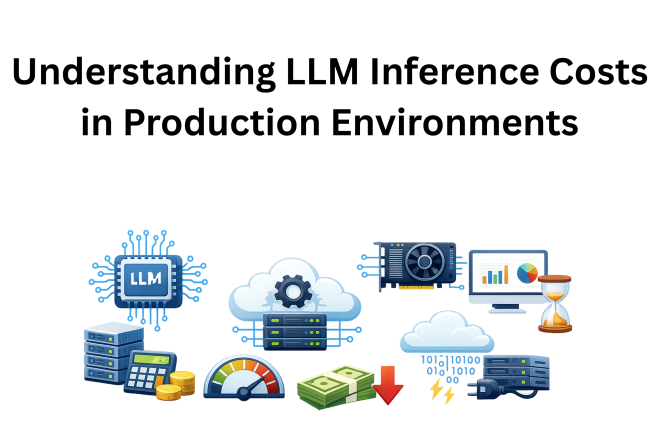
The way businesses approach automation, analytics, and decision-making has been revolutionised by large language models (LLMs). Businesses are quickly incorporating AI into their operations, from document processing systems to intelligent assistants. But as these models advance from testing to practical implementation, inference cost starts to take center stage in discussions.


Any company considering long-term AI adoption must comprehend inference costs and how to control them. Strategies centred on LLM inference cost reduction can have a substantial impact on scalability, profitability, and operational efficiency for companies and CEOs assessing AI investments.
What is LLM Inference?
The process by which a trained language model produces results depending on user input is known as inference. A model executes inference each time it evaluates a prompt, summarises a document, or responds to a query.
These processes are ongoing in production settings. While workplace knowledge assistants may handle a lot of internal queries, customer support bots may manage thousands of chats per day. AI running costs are directly impacted by the computational resources used in each interaction.
Organisations must give LLM inference cost reduction a priority as part of their AI infrastructure strategy due to this continuous demand.
Why Inference Costs Increase in Production
AI models usually manage modest workloads during testing stages. However, utilisation increases quickly if it is implemented across enterprise platforms.
The increase in inference costs is caused by several factors:
High Volume of Requests
Thousands or even millions of AI queries can be produced daily by production systems. Processing power is needed for every request, increasing infrastructure costs over time. Operational costs can rapidly increase if LLM inference cost reduction is not planned for.
Pricing Models Based on Tokens
A lot of AI platforms charge according to how many tokens they process. Both produced responses and input prompts are examples of tokens. The cost increases with the duration of the interaction.
Token usage rises dramatically in business environments where complicated queries or huge documents are typical. To maintain predictable budgets, LLM inference cost reduction techniques must be put into practice.
Infrastructure Requirements
Running advanced models requires powerful GPUs or specialized hardware. Maintaining this infrastructure. Whether on-premise or in the cloud, can become a major operational expense.
Businesses that scale AI without focusing on LLM inference cost reduction often face unexpected infrastructure costs.
Strategies for Managing Inference Costs
Enterprises that successfully scale AI deployments typically combine multiple optimization strategies.
Model Optimization
Not every business task requires a massive language model. Many organizations reduce costs by using optimized or smaller models for routine tasks. This approach improves efficiency while supporting LLM inference cost reduction.
Prompt Engineering
Carefully designed prompts can significantly reduce token usage. By structuring inputs efficiently, enterprises can achieve accurate results while minimizing processing overhead.
Prompt optimization is a simple but effective technique for LLM inference cost reduction in high-volume environments.
Caching and Reusing Responses
Caching AI responses can avoid needless model calls for frequently asked enquiries or repetitive activities. Both latency and operating costs are decreased as a result.
Caching systems are a common component of larger LLM inference cost reduction methods used by businesses.
Hybrid AI Architectures
Some companies use numerous AI systems, saving larger models for complicated thinking and using smaller models for common tasks. This multi-layered strategy strikes a balance between cost effectiveness and performance.
Hybrid architectures are increasingly recognized as a practical path toward sustainable LLM inference cost reduction.
The Significance of Cost Awareness in Enterprise AI
Adoption of AI is becoming a commercial strategy rather than only a technological choice. Leaders need to make sure AI systems produce quantifiable benefits without incurring unmanageable operating costs.
Organisations can anticipate budgets, plan infrastructure investments, and scale AI responsibly by having a solid understanding of inference economics. Businesses can create AI systems that continue to be effective even as demand increases by giving LLM inference cost reduction first priority.
Managing inference costs will be crucial to the long-term success of businesses looking to operationalise AI across departments.
What's Your Reaction?