Future Trends and Innovation Pipeline in the Neuroendocrine Carcinoma Market
One of the most prominent trends shaping the future of this market is the growing emphasis on molecular profiling and biomarker-driven therapy selection.
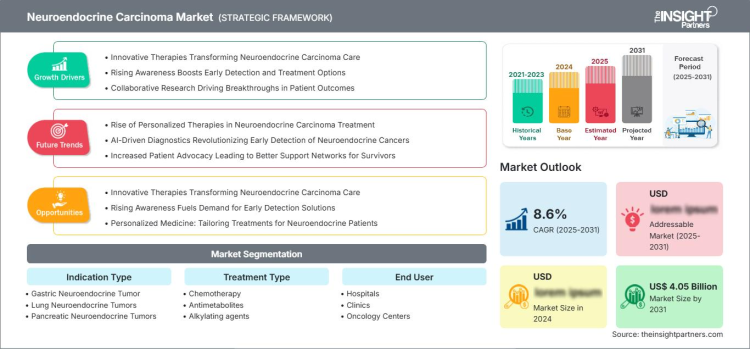
The Neuroendocrine Carcinoma Market is entering a phase of accelerated innovation as pharmaceutical companies, healthcare providers, and research institutions focus on improving treatment efficacy and patient outcomes. With the market expected to reach US$ 4.05 billion by 2031 and expand at a CAGR of 8.6% from 2025 to 2031, future trends are centered on precision medicine, novel drug classes, and enhanced diagnostic integration.


Neuroendocrine carcinomas are highly heterogeneous, and understanding tumor-specific genetic alterations is becoming essential for personalized treatment planning. This trend is driving demand for advanced diagnostics and strengthening collaboration between pharmaceutical companies and oncology centers.
Innovation within the targeted therapy segment is also expected to play a major role in market growth. Continued development of tyrosine kinase inhibitors and mTOR inhibitors aims to improve efficacy while minimizing side effects. These therapies are particularly promising for pancreatic neuroendocrine tumors, where resistance to conventional chemotherapy remains a challenge.
Somatostatin analogs are expected to maintain strong relevance in future treatment protocols. Ongoing research is focused on improving receptor affinity and extending drug half-life, which may enhance tumor control and symptom management across gastric, lung, and appendiceal neuroendocrine tumors.
While chemotherapy remains essential, especially for high-grade lung neuroendocrine carcinomas, innovation within this segment is targeting better-tolerated formulations of antimetabolites, alkylating agents, and natural products. Combination therapies that integrate chemotherapy with targeted agents are also gaining traction, offering synergistic treatment benefits.
End-user trends indicate increasing reliance on specialized oncology centers for advanced therapy administration and clinical trial participation. Hospitals continue to dominate overall treatment delivery, while clinics and ambulatory surgical centers expand their role in long-term disease monitoring and outpatient care.
Leading pharmaceutical companies such as Novartis AG, F. Hoffmann-La Roche Ltd, Pfizer Inc, and Ipsen Pharma are actively investing in research pipelines focused on rare and difficult-to-treat neuroendocrine malignancies. AbbVie Inc, Amgen Inc, LEXICON PHARMACEUTICALS, INC, Mateon Therapeutics, Inc, and Mallinckrodt are contributing through innovation, strategic alliances, and expanded global reach.
In conclusion, the future of the neuroendocrine carcinoma market will be defined by scientific advancement, targeted innovation, and patient-centric care models, positioning the market for sustained growth through 2031.
Related Reports –
Stomach Cancer Market Developments and Forecast by 2030
Sunitinib Malate Market Dynamics and Developments by 2031
About Us -
The Insight Partners provides comprehensive syndicated and tailored market research services in the healthcare, technology, and industrial domains. Renowned for delivering strategic intelligence and practical insights, the firm empowers businesses to remain competitive in ever-evolving global markets.
Contact Information
Email: sales@theinsightpartners.com
Website: theinsightpartners.com
Phone: +1-646-491-9876
Also Available in :Korean German Japanese French Chinese Italian Spanish
What's Your Reaction?