Must-Have Features for Online Courier Delivery App Development
Most delivery apps don’t fail because of poor tech. They fail because they miss what actually matters in real operations.
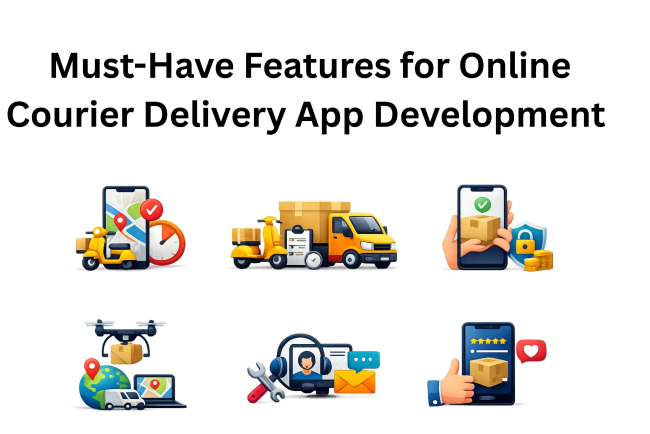
Most delivery apps don’t fail because of poor tech. They fail because they miss what actually matters in real operations.


A business might invest heavily in a courier delivery app, but if it doesn’t support dispatch, tracking, and customer communication properly, it becomes just another tool teams avoid using.
So the real question is not what features look good, but what features solve daily delivery friction.
Let’s get into what actually matters.
Start With The Core: Order And Dispatch Management
This is where everything begins. If order flow is messy, the rest of the system won’t hold.
An online courier delivery app must handle order creation, allocation, and dispatch without delays or manual dependency.
What this should include:
-
Quick order booking with minimal inputs
-
Auto-assignment based on location and availability
-
Manual override for operational control
Without this, even the best interface won’t fix backend chaos.
Real-Time Tracking That Actually Works
Customers expect tracking. Operations depend on it.
But basic GPS tracking isn’t enough anymore.
A courier delivery app should offer accurate, real-time updates across every stage of delivery. Not delayed data. Not approximations.
Key capabilities:
-
Live driver location tracking
-
Real-time status updates (picked, in transit, delivered)
-
Accurate ETA calculations
This reduces support queries and improves customer trust at the same time.
Smart Route Optimisation
Delivery delays often come from poor route planning, not traffic.
A strong online courier delivery app should automatically optimize routes based on distance, traffic, and delivery priority.
What this improves:
-
Faster deliveries without adding more drivers
-
Reduced fuel costs
-
Better time management for fleets
This is one of those features that quietly drives major cost savings over time.
Seamless Customer Communication
Most delivery complaints come from lack of communication.
Customers don’t mind delays as much as they mind uncertainty.
A courier delivery app should include built-in communication features that keep customers informed without manual effort.
Must-have elements:
-
Automated SMS or push notifications
-
Live delivery status updates
-
Easy contact with the delivery agent
This removes friction without increasing workload.
Proof Of Delivery (POD)
Disputes happen. And without proof, they become expensive.
Every online courier delivery app should include a solid proof of delivery system.
This typically includes:
-
Digital signatures
-
OTP-based confirmation
-
Photo proof at delivery
It protects both the business and the customer. And it reduces unnecessary conflicts.
Scalable Admin Dashboard
Operations teams need visibility. Not just data, but usable data.
A courier delivery app should come with a central dashboard that gives full control over orders, drivers, and performance.
What matters here:
-
Real-time order monitoring
-
Driver performance tracking
-
Delivery success/failure insights
This is where decision-making becomes faster and more accurate.
Payment And Billing Integration
Manual billing slows everything down.
An online courier delivery app should support multiple payment options and automated invoicing.
Key features include the following:
-
Online payments (UPI, cards, wallets)
-
Cash on delivery tracking
-
Automated invoice generation
This simplifies finance operations and reduces errors.
Cost Awareness Starts At The Feature Level
Many businesses ask about courier delivery app development cost too late in the process.
The truth is, cost is directly linked to feature selection. Basic apps are cheaper. But they often fail under real-world pressure.
When evaluating courier delivery app development costs, businesses should focus on:
-
Essential vs optional features
-
Integration complexity
-
Scalability requirements
Because overbuilding wastes money. But underbuilding creates bigger losses later.
Integration With Existing Systems
Enterprises don’t operate in isolation.
Your courier delivery app should connect with existing systems like ERP, CRM, or inventory tools.
Why this matters:
-
Eliminates duplicate data entry
-
Improves operational efficiency
-
Keeps all systems aligned
This is often overlooked early but becomes critical at scale.
Analytics That Drive Decisions
Data is only useful if it leads to action.
An online courier delivery app should provide insights that teams can actually use.
What to track:
-
Delivery time trends
-
Failed delivery reasons
-
Peak order hours
These insights help businesses continuously improve operations instead of reacting to issues.
Balancing Features And Investment
There’s always a trade-off between features and budget.
That’s why understanding the courier delivery app development cost upfront is important. Not just as a number, but as a strategic decision.
The right approach is simple. Build for what your operations need today. But leave room for what they’ll need tomorrow. Because rebuilding later costs far more than building right the first time.
Final Thoughts
A good delivery app looks clean. A great one works under pressure. The difference comes down to features that support real operations. An online courier delivery app is not just a digital interface. It’s the backbone of your delivery system.
And when built right, it doesn’t just manage deliveries. It improves speed, reduces cost, and strengthens customer experience.
That’s where the real value lies.
What's Your Reaction?