How to Choose Warmth Without Hindering Movement
Discover how to stay warm in cold weather without sacrificing comfort or mobility. This guide covers insulation, fit, layering, breathability, and practical jacket features that help you stay warm, protected, and free to move.
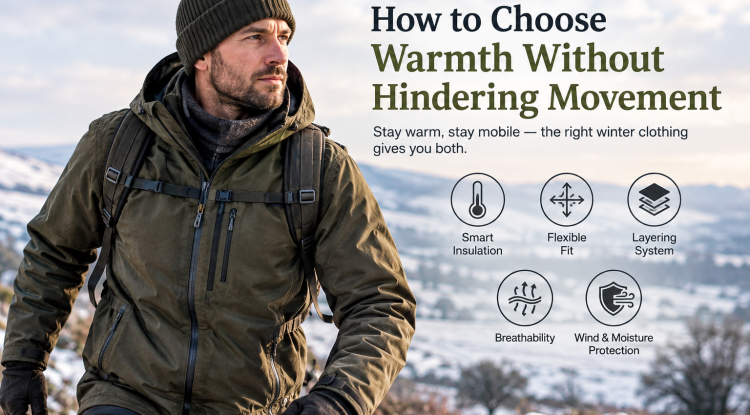
Staying warm in cold weather should never mean feeling stiff, bulky, or restricted. Whether you are spending long hours outdoors, walking the dog, commuting in winter, or taking part in field sports, the right clothing needs to balance insulation with freedom of movement. This is especially important when layering for active use, where a garment that traps heat well but limits your shoulders, elbows, or torso can quickly become frustrating. For example, choosing a practical winter shooting jacket is less about thickness alone and more about how the cut, fabric, and layering system work together to keep you comfortable and mobile.


The challenge is that warmth and movement are often seen as opposites. In reality, well-designed clothing can provide both if you know what to look for. The key is to understand how materials insulate, how fit affects mobility, and how layering can be used to regulate temperature without unnecessary bulk. This article explains the main considerations in a clear, practical way so you can make better choices for winter wear.
Key points
- Warmth depends on insulation, wind resistance, and moisture management, not just thickness.
- Freedom of movement comes from smart fit, flexible materials, and thoughtful design details.
- Layering is usually more effective than relying on one heavy garment.
- Breathability matters because trapped moisture can make you colder, not warmer.
- Small features such as articulated sleeves, adjustable cuffs, and stretch panels can make a major difference.
Understanding the balance between warmth and movement
Clothing keeps you warm by slowing down heat loss. However, the more material you add, the more likely it is to interfere with natural movement. A winter jacket that is too heavy or too rigid can make it difficult to raise your arms, bend at the waist, or carry out repetitive tasks. That is why the best winter clothing is designed with both thermal performance and mobility in mind.
When assessing a garment, think about how you will actually use it. Someone standing still for long periods needs different insulation from someone who is walking, lifting, or working outdoors. Active users often generate their own heat, so excessive padding can cause overheating. Once sweat builds up, the body cools quickly when activity drops, which can leave you feeling colder than before.
Choose insulation that suits the activity
Natural insulation
Materials such as wool have long been valued for their ability to retain warmth even when conditions are damp. Wool is breathable, resilient, and comfortable for many winter settings. It is often a good choice for mid-layers because it helps regulate temperature without feeling overly restrictive.
Synthetic insulation
Synthetic fills are popular because they are lightweight, quick-drying, and effective in damp weather. They can provide excellent warmth without adding too much weight, which helps preserve movement. This makes them useful for people who need a jacket that performs well in changeable British weather.
Down insulation
Down offers a high warmth-to-weight ratio and can feel very light on the body. It is especially effective in dry, cold conditions. The main drawback is that it loses much of its insulating ability when wet unless treated for moisture resistance. For active use, down works best when paired with a weather-resistant outer layer.
Fit matters as much as fabric
A common mistake is assuming that a looser garment automatically allows more movement. In fact, excess material can bunch up, catch on other layers, or shift awkwardly when you move. A better approach is to look for a fit that is comfortable in motion without being oversized. You should be able to lift your arms, rotate your shoulders, and crouch without the garment pulling across the back or under the arms.
Pay attention to the shape of the sleeves and shoulders. Raglan sleeves, articulated elbows, and action backs are all features that improve mobility. These design details may seem minor, but they can make a noticeable difference during repeated movement. A well-cut jacket should feel like it moves with your body rather than against it.
Layering: the most reliable way to stay warm
Layering remains one of the most effective ways to manage cold weather comfort. Rather than depending on one thick coat, a layered system allows you to adapt to changing conditions. It also helps avoid overheating during periods of activity.
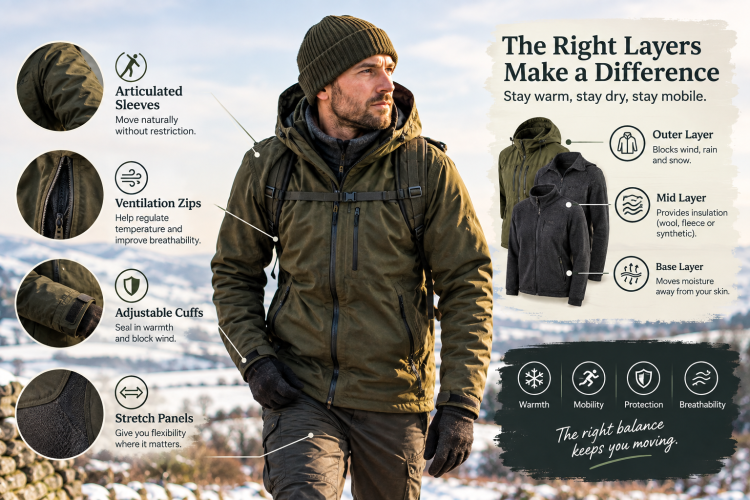
- Base layer: Worn next to the skin, this should move moisture away from the body.
- Mid-layer: Provides insulation, often through fleece, wool, or lightweight synthetic fill.
- Outer layer: Protects against wind, rain, and snow while allowing excess heat to escape.
The advantage of layering is flexibility. If you become too warm, you can remove a layer before you start sweating. If conditions worsen, you can add one back. This adaptability is particularly useful in the UK, where weather can change quickly throughout the day.
Why breathability should never be ignored
Breathability is often overlooked, yet it plays a major role in comfort. When moisture from the body cannot escape, it collects inside the clothing. Damp fabric loses insulating value and can leave you chilled once activity slows down. Breathable fabrics help manage this by allowing heat and moisture to move outward.
For active winter wear, breathability is especially important around the back, underarms, and chest. Some garments use ventilation zips or mesh-lined sections to improve airflow. These features can be very useful if you expect to move frequently or work up heat during the day.
Look for movement-friendly design features
Good winter clothing often includes small construction details that improve usability. These are not decorative extras, but practical features that support comfort and performance.
Articulated sleeves and elbows
These are shaped to follow the natural bend of the arm, reducing resistance when reaching or lifting. They help prevent the fabric from tightening when the arm is extended.
Stretch panels
Panels made from elastic or flexible material can be placed in areas that need more give, such as the shoulders, sides, or lower back. They are useful for active movement and can reduce the feeling of restriction.
Two-way zips and adjustable hems
Two-way zips allow more freedom when sitting, crouching, or accessing pockets beneath the jacket. Adjustable hems and cuffs help seal in warmth without making the garment feel too tight.
Room for layering
A jacket should allow enough space underneath for a base layer and mid-layer without becoming tight. However, it should not be so large that heat escapes easily. Finding that middle ground is essential.
Think about wind and moisture protection
Cold weather often feels harsher because of wind and dampness. A jacket that blocks wind effectively can feel much warmer than one with more insulation but less protection from airflow. Similarly, a water-resistant outer layer helps preserve warmth by keeping the insulation dry.
In the British climate, this is particularly relevant. Rain, drizzle, and wind can appear in the same day, so versatile outerwear is often more useful than highly specialised cold-weather kit. Materials that resist wind and shed light rain can significantly improve comfort without adding much bulk.
Test mobility before committing
If possible, try on winter clothing and move around in it before deciding. Do not just stand still in front of a mirror. Raise your arms, twist your torso, bend your knees, and sit down if you can. These movements reveal whether the garment will work in real use.
When testing, ask yourself a few practical questions:
- Does the jacket pull across the shoulders?
- Can you reach into pockets easily?
- Does the hem ride up when you lift your arms?
- Does the collar sit comfortably when fully zipped?
If the answer to several of these is no, the garment may look suitable but fail in everyday use.
Choose warmth that matches your routine
The best winter clothing is not necessarily the warmest on paper. It is the one that suits your actual routine. If you spend most of your time walking between indoor and outdoor spaces, you may need moderate insulation and strong breathability. If you are outdoors for long periods with limited movement, you may need a warmer, more protective layer. If your activity level changes throughout the day, adaptability becomes the priority.
By thinking carefully about movement, weather, and layering, you can choose clothing that keeps you comfortable without feeling cumbersome. Warmth should support what you do, not limit it.
Conclusion
Choosing warmth without hindering movement is mainly about making informed decisions rather than buying the thickest option available. Focus on insulation that suits your activity, a fit that allows natural motion, and layers that can be adjusted as conditions change. Pay attention to breathability, weather protection, and practical details such as sleeve construction and ventilation. When all of these elements work together, winter clothing becomes far more comfortable and effective.
The right approach helps you stay warm, remain mobile, and cope better with the unpredictable conditions that come with colder months. Instead of compromising on either comfort or function, you can aim for both.
FAQ
What is the best way to stay warm without feeling bulky?
Layering is usually the best method. A moisture-wicking base layer, an insulating mid-layer, and a protective outer layer give you warmth while keeping the system flexible and adjustable.
Is a thicker jacket always warmer?
Not necessarily. Warmth depends on insulation type, wind resistance, fit, and breathability. A lighter jacket with well-designed insulation can be warmer in practice than a bulky one that traps moisture or allows cold air in.
What fabric is best for active winter wear?
That depends on use, but breathable synthetics and wool are often strong choices. They balance warmth with moisture control and tend to support movement better than rigid, heavy materials.
How can I tell if a jacket restricts movement?
Try lifting your arms, bending, and twisting while wearing it. If the shoulders feel tight, the hem rises too much, or the sleeves pull at the elbows, the jacket may limit movement during normal use.
Why does breathability matter in cold weather?
Because sweat trapped inside clothing can make you colder once you stop moving. Breathable clothing helps moisture escape, keeping the insulating layers dry and more effective.
Should winter clothing be loose or fitted?
It should be comfortable rather than overly loose or tight. A good fit allows room for layering and movement without excess fabric that can catch, bunch, or let heat escape.
What's Your Reaction?