How real estate operators can build a scalable perks ecosystem
Real estate operators are under constant pressure to differentiate, retain residents, and increase lifetime value. Pricing and amenities alone are no longer enough. Today, the advantage lies in delivering continuous, everyday value.
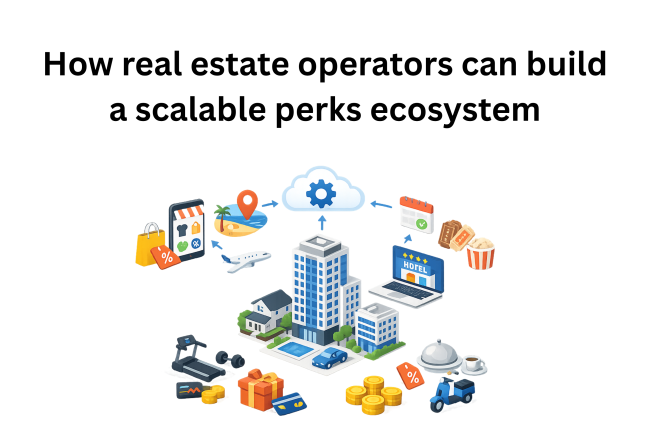
Real estate operators are under constant pressure to differentiate, retain residents, and increase lifetime value. Pricing and amenities alone are no longer enough. Today, the advantage lies in delivering continuous, everyday value.


One proven approach is building a curated perks marketplace. If you’re exploring how to structure this, this guide on creating a curated perks ecosystem for tenants and owners breaks down the foundation.
A scalable perks ecosystem is not a side initiative. It’s a strategic layer that drives engagement, retention, and revenue across the renter lifecycle.
What does a scalable perks ecosystem mean?
A scalable perks ecosystem is designed to grow across properties, geographies, and tenant segments—without increasing operational complexity.
Instead of one-off partnerships or static offers, a curated perks marketplace enables:
-
Centralized perk management
-
Consistent resident experience
-
Automated delivery and tracking
The focus shifts from manual curation to system-driven value creation.
Why scalability is critical for operators
Many operators experiment with perks but fail to scale them. The result is fragmented experiences and low adoption.
Scalability ensures:
-
Uniform experience across multiple properties
-
Lower cost of managing partnerships
-
Faster rollout of new benefits
-
Measurable impact on retention and engagement
Without scalability, perks remain marketing gimmicks, not business drivers.
Step 1: Define clear business outcomes
Before building a perks ecosystem, align it with business goals.
Ask:
-
Are you trying to improve renewals?
-
Do you want higher digital adoption?
-
Are you aiming to increase resident satisfaction?
A curated perks marketplace should map directly to these outcomes.
For example:
-
Retention → everyday savings perks
-
Engagement → app-based rewards
-
LTV growth → partner-driven offers
Clarity here ensures the ecosystem is purpose-built, not generic.
Step 2: Focus on high-frequency value
Scalability depends on relevance. The more frequently perks are used, the higher their impact.
Prioritize:
-
Grocery and food delivery offers
-
Transportation and fuel savings
-
Utility-related benefits
-
Daily lifestyle services
These categories drive repeated engagement. They also create habit loops that keep residents connected to your platform.
Step 3: Build a curated, not crowded marketplace
More perks do not equal more value. In fact, too many options reduce engagement.
A curated perks marketplace should:
-
Limit options to high-value categories
-
Personalize based on renter profiles
-
Remove low-performing offers
Curation improves:
-
Redemption rates
-
User satisfaction
-
Perceived value
Think quality over quantity.
Step 4: Integrate perks into the resident journey
Perks should not exist in isolation. They must be embedded into key touchpoints.
Key integration moments:
-
Move-in onboarding
-
Monthly rent payments
-
Renewal cycles
-
Resident app interactions
For instance:
-
Offer moving discounts during onboarding
-
Provide rewards for on-time payments
-
Introduce lifestyle perks during renewal periods
This ensures perks feel contextual, not promotional.
Step 5: Leverage technology for automation
Manual systems cannot scale. Technology is the backbone of a successful ecosystem.
A scalable setup requires:
-
Automated perk distribution
-
API-based integrations with resident platforms
-
Real-time analytics and reporting
-
Personalization engines
Platforms like Paylode simplify deployment across multiple properties.
Step 6: Align perks with behavioral nudges
Perks are not just benefits—they are incentives for behavior.
Operators can use them to drive the following:
-
Digital rent payments
-
Paperless adoption
-
App engagement
-
Referral programs
Step 7: Create a cross-industry ecosystem
Scalability increases when perks extend beyond real estate.
Operators can partner with:
-
Telecom and ISP providers
-
Financial services platforms
-
Local and national brands
In telecom and MVNO ecosystems, perks are already used to reduce churn and increase stickiness. Real estate can adopt similar models to enhance retention.
A curated perks marketplace becomes more powerful when it connects multiple industries into one seamless experience.
Step 8: Standardize across properties
For multi-property operators, consistency is key.
Standardization ensures:
-
Same quality of perks across locations
-
Unified branding and experience
-
Easier management and reporting
However, allow for light localization where needed—such as city-specific offers.
This balance enables scale without losing relevance.
Step 9: Measure, optimize, repeat
A scalable ecosystem is data-driven.
Track:
-
Redemption rates
-
Engagement frequency
-
Retention improvements
-
Cost per engagement
Use these insights to:
-
Remove underperforming perks
-
Introduce new high-impact categories
-
Personalize offers further
Continuous optimization ensures long-term success.
Common mistakes to avoid
Even well-intentioned programs fail due to poor execution.
Avoid:
-
Overloading users with irrelevant perks
-
Treating perks as short-term campaigns
-
Ignoring data and feedback
-
Lack of integration with resident platforms
A curated perks marketplace must be intentional, not experimental.
The long-term impact of scalable perks ecosystems
When executed well, perks ecosystems deliver compounding value.
For operators:
-
Higher retention and occupancy
-
Lower marketing and acquisition costs
-
Stronger brand differentiation
For residents:
-
Daily savings and convenience
-
Better living experience
-
Increased loyalty
This transforms the operator-resident relationship from transactional to experiential.
Conclusion: build once, scale everywhere
A scalable perks ecosystem is not about adding more benefits; it’s about building the right system.
By focusing on:
-
Relevance
-
Integration
-
Automation
-
Measurement
Real estate operators can create a curated perks marketplace that grows with their portfolio and consistently delivers value. Ready to scale your perks strategy? Take the next step toward building a high-impact ecosystem and explore the Paylode platform.
Start building a scalable perks ecosystem that drives retention and long-term growth.
What's Your Reaction?