How Chronic Care Management Telemedicine Providers Use Patient Data to Improve Follow-Up Care?
Learn how a Chronic Care Management telemedicine provider uses patient data and remote vitals monitoring to improve follow-up care, identify risks, and support timely interventions.
A patient’s condition rarely changes only during a scheduled appointment. Blood pressure can rise between visits, glucose levels can fluctuate overnight, medication routines can change, and early symptoms may appear long before the next consultation. This creates a critical gap in chronic disease management: clinicians may have the right information at the wrong time.


Telemedicine is helping close that gap by turning patient-generated health data into an ongoing source of clinical insight. A chronic care management telemedicine provider can use information collected between appointments to understand how a patient is progressing, identify concerning trends, and make follow-up care more responsive.
Moving From Periodic Check-ups to Continuous Patient Insight
Traditional follow-up care often depends on information collected during occasional office visits. While these appointments remain important, they provide only a snapshot of a patient’s health.
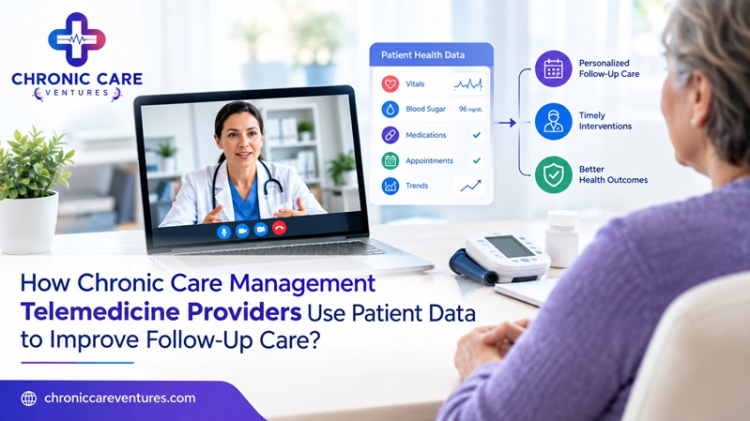
Telemedicine expands that snapshot into a broader timeline. Care teams can collect patient-reported symptoms, medication updates, blood pressure readings, glucose measurements, weight changes, and other health information remotely and review it as part of ongoing care.
This approach allows care teams to compare current information with previous readings rather than evaluating every appointment in isolation. A gradual change that may not be obvious during a single consultation can become more apparent when viewed across several weeks.
How Remote Vitals Monitoring Strengthens Follow-Up Care?
One of the most valuable components of data-driven chronic care is remote vitals monitoring. Depending on the patient’s condition and care plan, connected devices may capture measurements such as blood pressure, heart rate, oxygen saturation, weight, or blood glucose.
The clinical value is not simply in collecting more numbers. The goal is to identify meaningful changes that may require attention.
For example, repeated increases in blood pressure could prompt a care team to review medication adherence, lifestyle factors, or the need for a clinical evaluation. Similarly, unexpected weight changes in a patient with certain chronic conditions may warrant additional assessment.
By receiving relevant measurements outside the clinic, providers can make follow-up decisions based on a more complete picture of the patient’s day-to-day health.
Identifying Trends Before They Become Bigger Problems
Patient data becomes particularly useful when it reveals trends rather than isolated abnormalities.
A single elevated reading may have several explanations, including temporary illness, stress, activity, or measurement error. However, repeated changes over time can provide stronger evidence that a patient’s condition may be shifting.
A chronic care management telemedicine provider can establish monitoring protocols that help care teams recognize these patterns. Depending on the clinical program, data may be reviewed according to predefined thresholds or care-team workflows.
This can support earlier follow-up when appropriate, rather than waiting until a patient experiences worsening symptoms or reaches the next routine appointment.
Personalizing Follow-Up Based on Patient-Specific Data
Chronic conditions do not affect every patient in the same way. Consequently, effective follow-up care should not rely exclusively on standardized schedules.
Patient data can help clinicians determine which individuals may need closer monitoring and which patients are maintaining stable readings. Care teams can use information from previous encounters, reported symptoms, medication changes, and monitoring data to make follow-up more relevant to the individual.
This personalization can also improve communication. Instead of asking broad questions about whether a patient is “doing better,” clinicians can discuss specific changes in readings or symptoms and investigate potential causes.
Supporting Medication and Care-Plan Management
Medication adherence is another area where ongoing data can improve chronic care. During a telemedicine follow-up, clinicians can review reported medication use alongside changes in relevant health measurements.
If readings remain outside the expected range, the care team may investigate whether the issue relates to adherence, dosage, side effects, lifestyle changes, or disease progression. This does not mean technology determines treatment on its own. Rather, it gives qualified clinicians additional information to support clinical decision-making.
The same principle applies to broader care plans involving nutrition, physical activity, symptom management, and scheduled monitoring.
Turning Data into Actionable Follow-Up
Collecting patient information is only the first step. The real value of telemedicine comes from transforming that information into appropriate clinical action.
Effective programs typically combine data collection with established workflows for reviewing measurements, documenting findings, communicating with patients, and escalating concerns when necessary. This helps prevent patient data from becoming an overwhelming stream of numbers without clinical purpose.
When implemented appropriately, data-driven telemedicine can make follow-up care more proactive, targeted, and continuous. Patients remain connected to their care teams between traditional appointments, while clinicians gain greater visibility into changes that might otherwise go unnoticed.
Conclusion
Chronic care management is increasingly moving beyond the examination room. With telemedicine and remote vitals monitoring, patient data can provide clinicians with valuable insight into how chronic conditions evolve between visits.
A chronic care management telemedicine provider can use these insights to identify trends, personalize follow-up, support medication management, and facilitate timely clinical intervention. The objective is not simply to monitor patients more frequently, it is to make each piece of health data contribute to a more informed and coordinated approach to ongoing care.
What's Your Reaction?